About Denis Paraskevatos
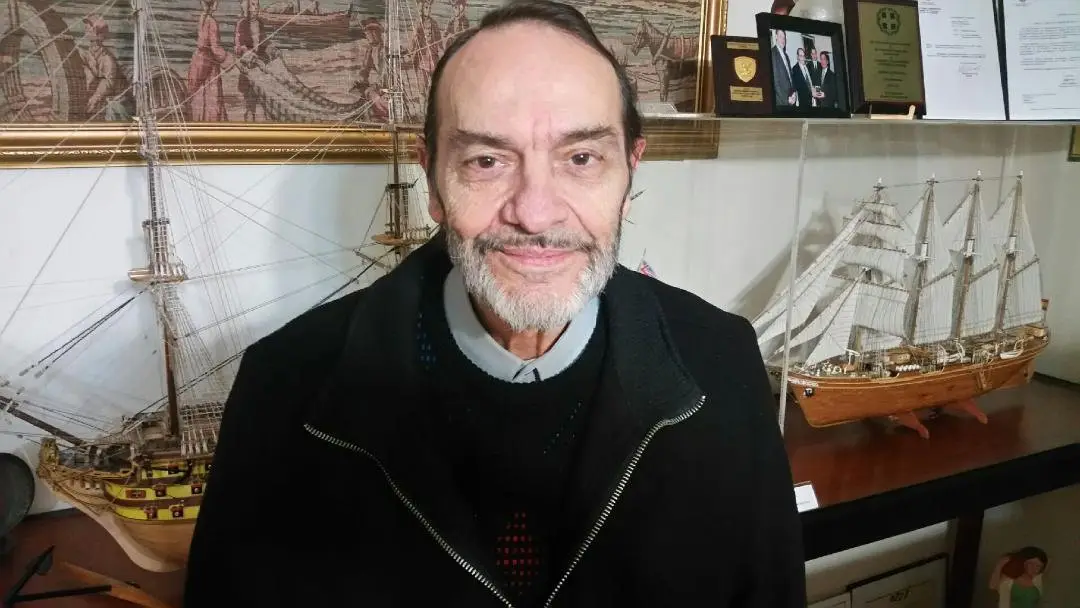
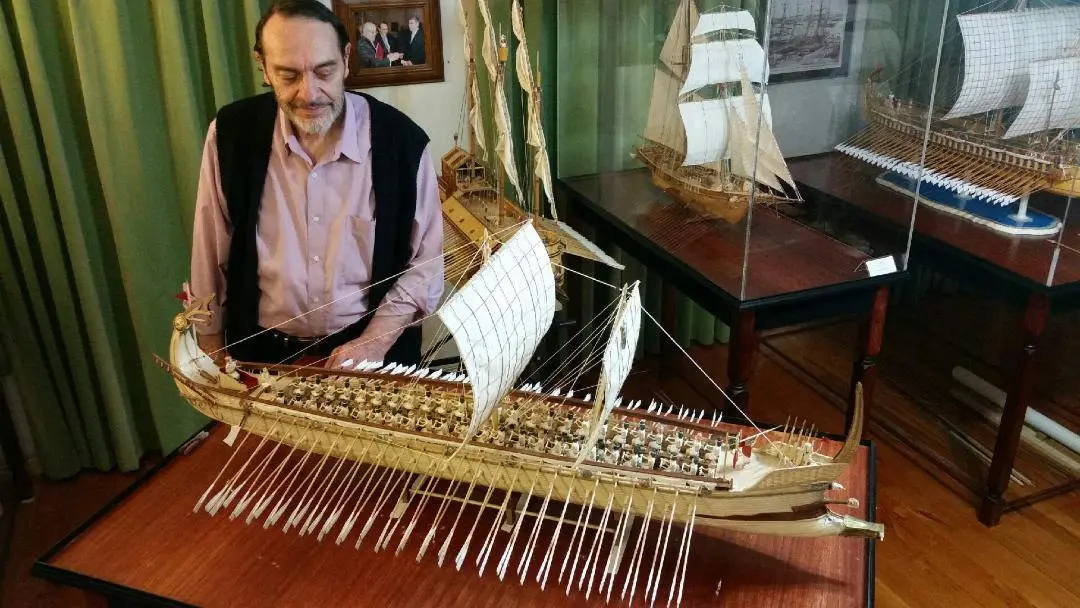
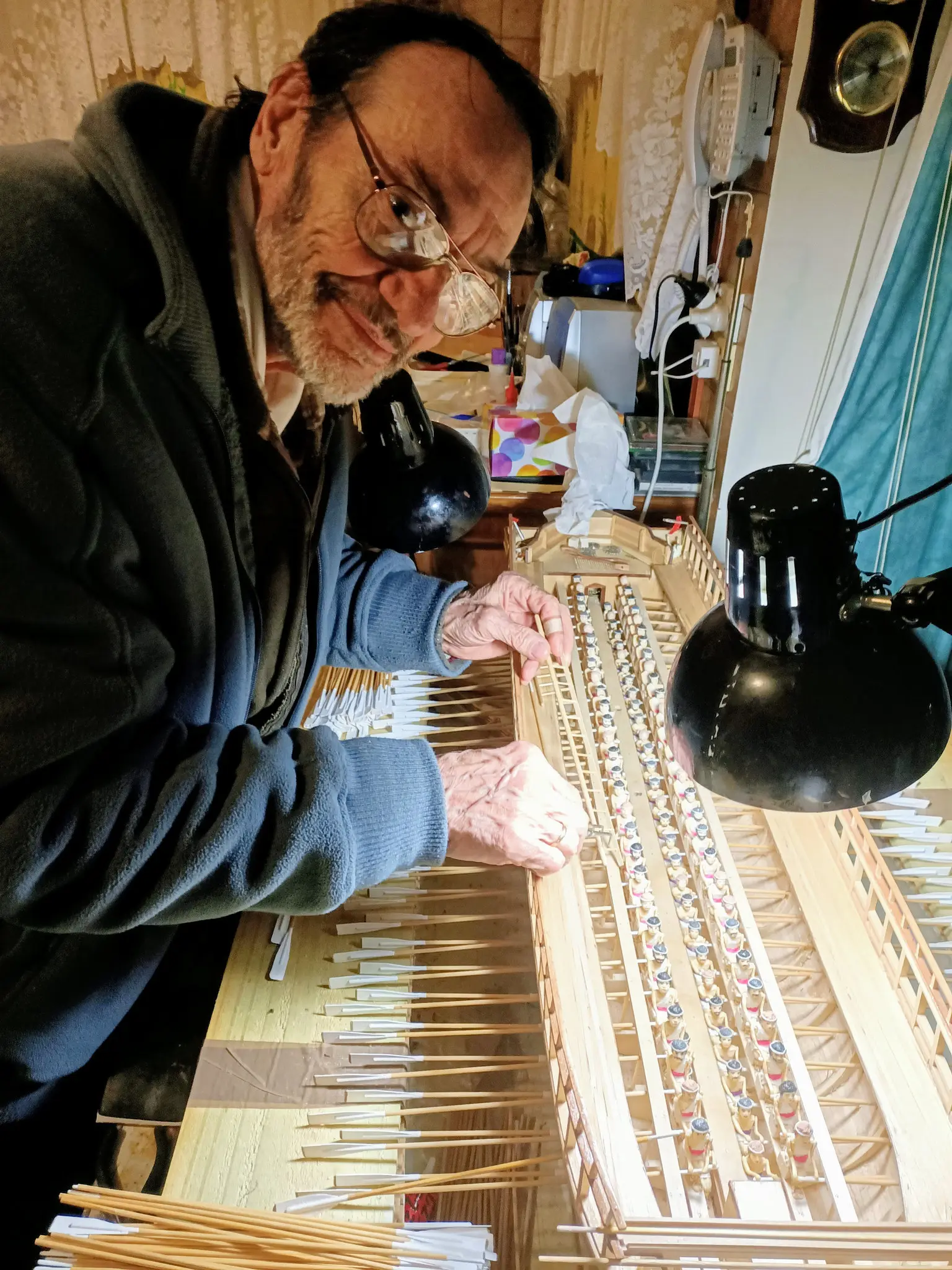
Denis (Dionysius) Paraskevatos is a marine engineer and master craftsman of museum-quality replica ships. He has been building them for more than forty years. Each one begins with months of historical research, mathematical calculations and drawings. He then shapes thousands of parts by hand: every hull plank is bent, glued and nailed into place, many metres of rigging are threaded and knotted around the masts, and every deadeye, belaying pin, block, grating, ladder, cannon and barrel is made individually. He casts the oarsmen for his galleys himself, in polyurethane, from moulds of his own design, and fixes their separate, movable arms on with tiny nails.
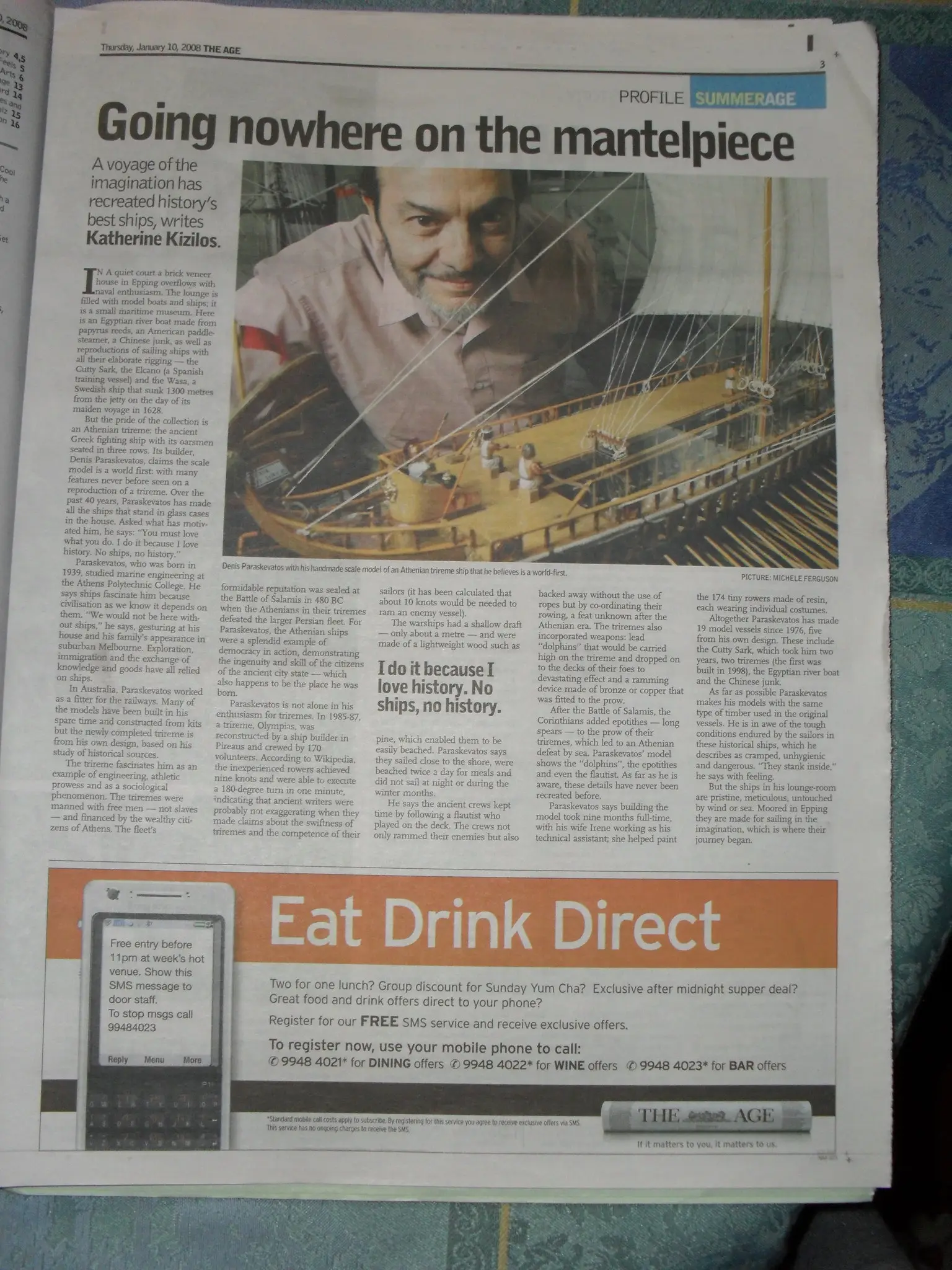
“You must love what you do,” he told The Age in 2008. “I do it because I love history. No ships, no history.”
A life shaped by the sea
Denis was born in Athens in 1939. As a twelve-year-old schoolboy he learned about the Battle of Salamis (480 BC), where a Greek fleet of oared triremes defeated a much larger Persian force. “I was only 12 years old and I could not believe that the Greeks were able to win with only half the ships,” he recalls. “It became a flame for me to read many histories and philosophers from Ancient Greece.”
He studied marine engineering at the Athens Polytechnic College and served as a marine engineer in both the Greek navy and the merchant navy. In 1976 he emigrated to Australia with his family and worked full-time as a fitter with the Victorian Railways. He has also been a volunteer broadcaster on the Greek-language programmes of community radio stations 3CR and 3ZZZ, and took part in union campaigns that won reforms for the wider community.
Ships, he says, are the foundation of the life he and his family have built. “We would not be here without ships,” he told The Age: exploration, migration and the exchange of knowledge and goods have all depended on them.
The craftsman at work
According to the Centre for Eye Research Australia, each ship takes Denis around eighteen months. Some, especially those he designs himself from scholarly estimates rather than from a kit or plans, take years. Wherever possible he uses the same kind of timber as the original vessel.
Building ships has been a family undertaking. His wife Irene (Rena) has worked as his technical assistant, painting the tiny rowers of his triremes in their individual costumes, and his son Kostas and daughter Maria have helped with construction and with research and translation.
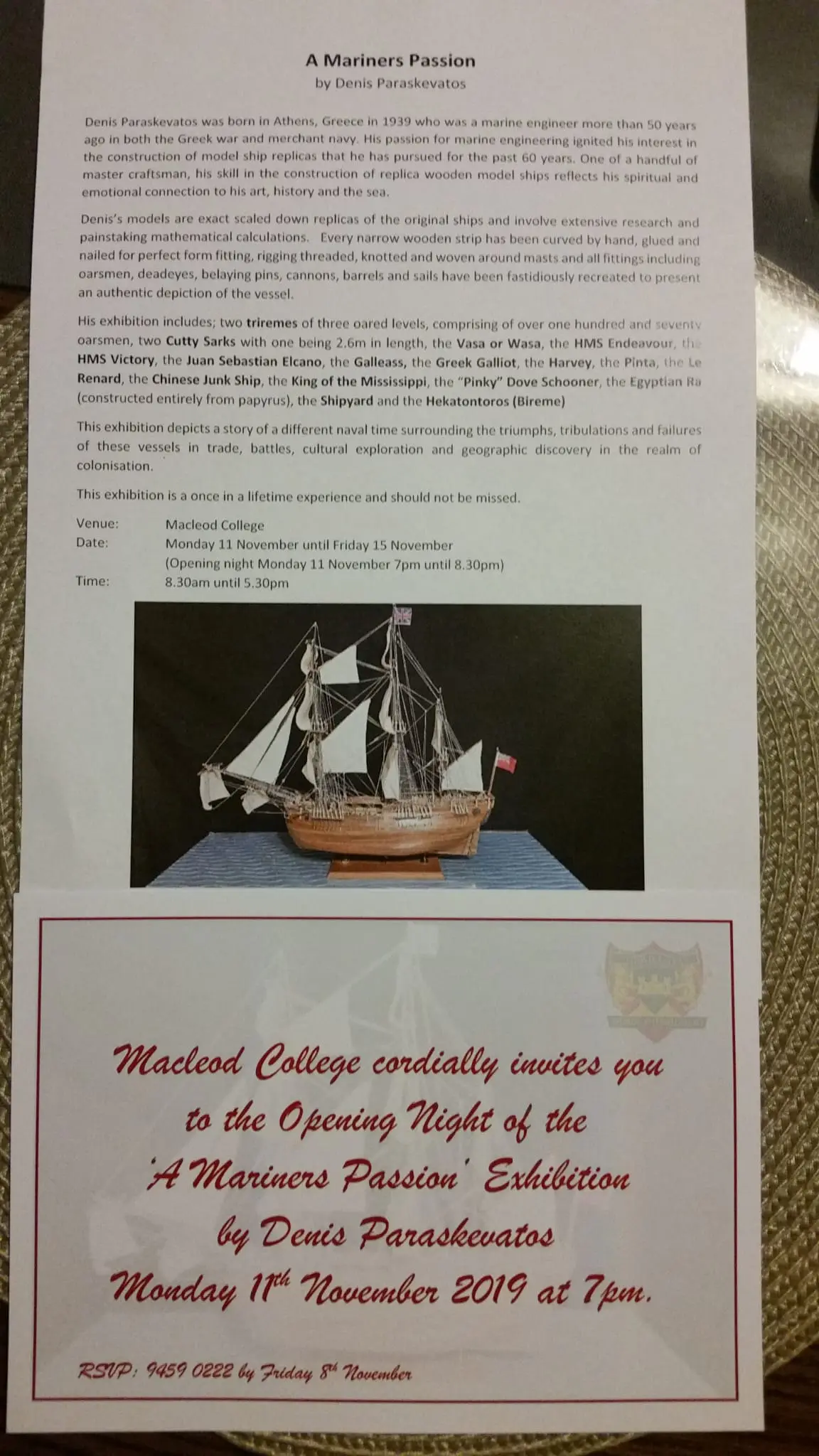
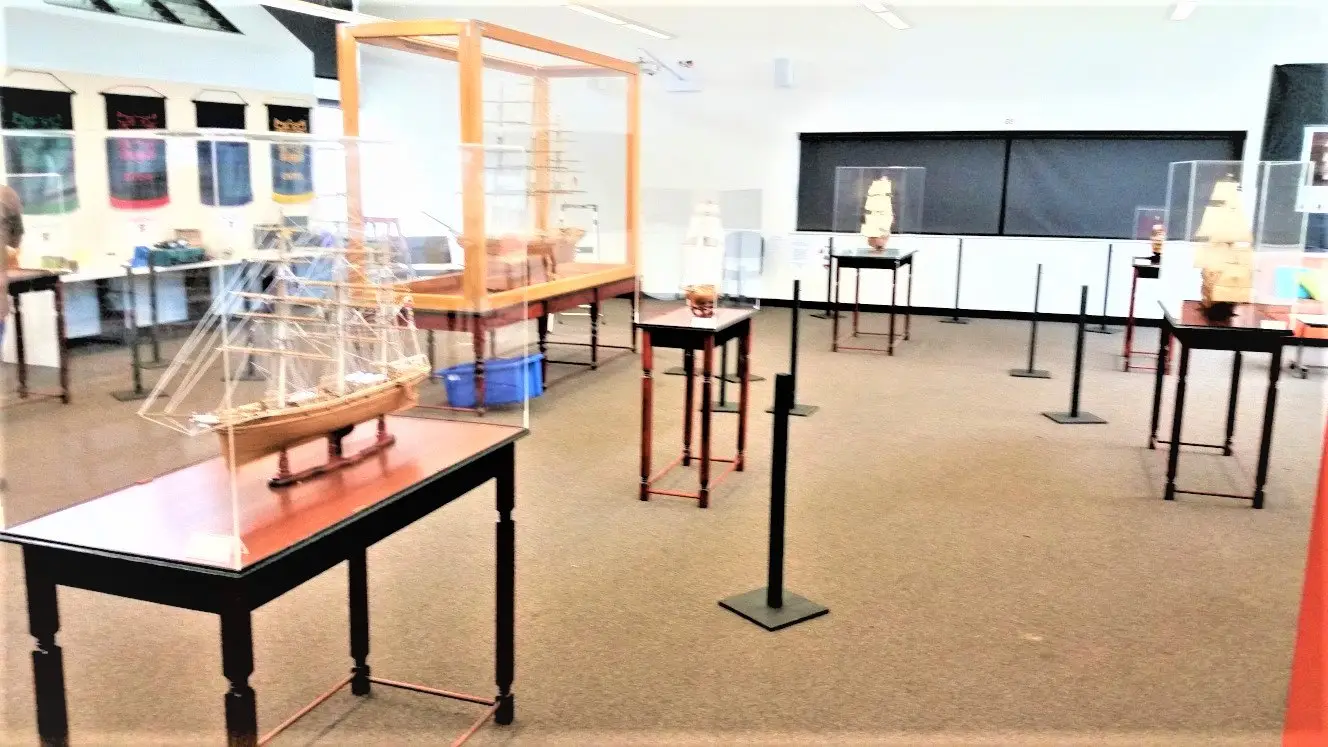
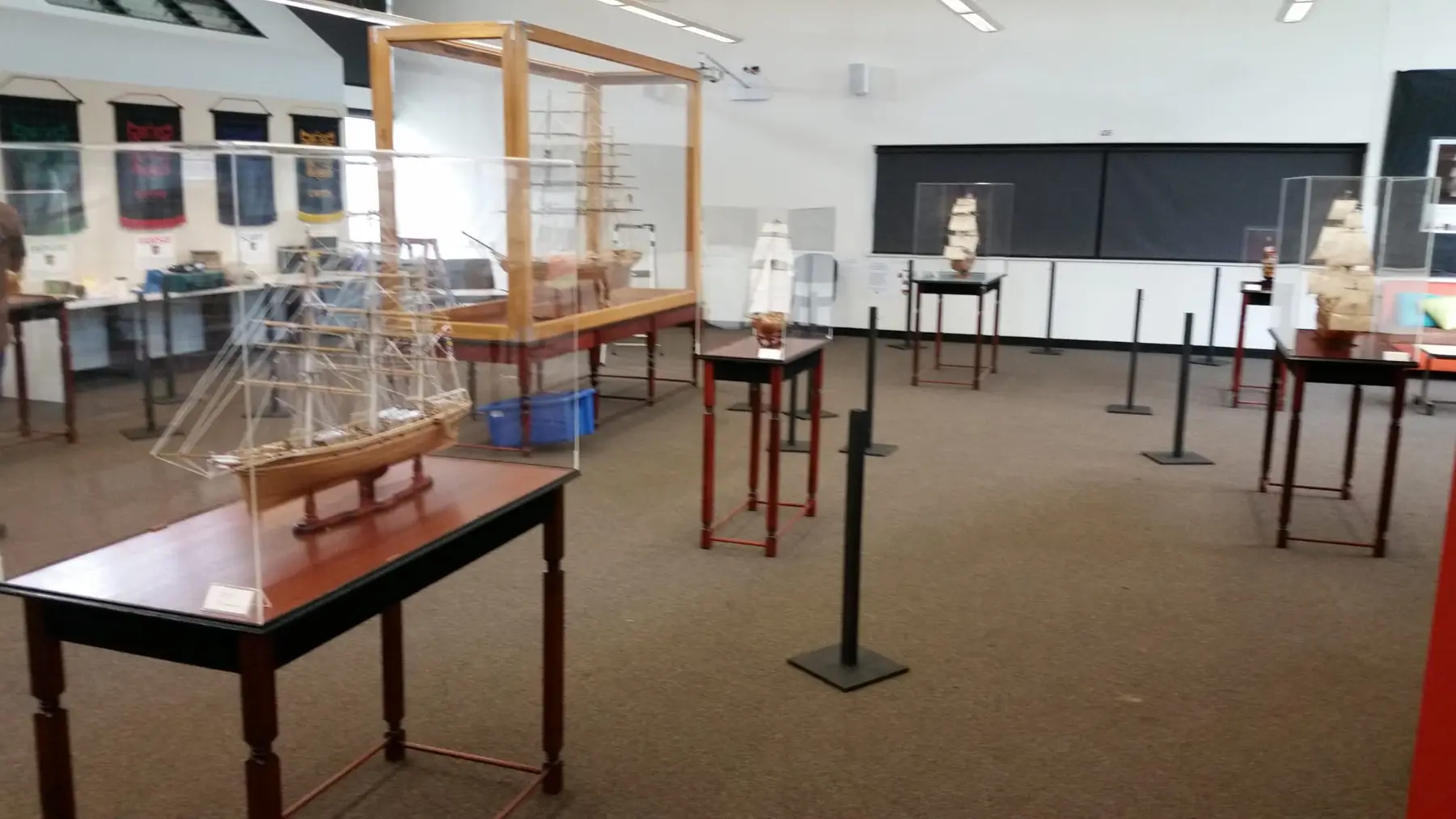
His collection fills a permanent exhibition in his home in Melbourne. It has been visited by politicians, academics, architects, lawyers, musicians, journalists, actors and authors. It includes two triremes with 170 to 174 oarsmen on three levels, two Cutty Sarks (the larger about 2.6 metres long), the Vasa, HMS Endeavour, HMS Victory, the Juan Sebastián Elcano, the galleass, the Greek galliot, the Harvey, La Pinta, Le Renard, the Chinese junk, the King of Mississippi, the schooner Dove, the Egyptian Ra built entirely from papyrus, the shipyard diorama and the Hekatontoros bireme with its 100 oarsmen. He has also donated ten of his ships to organisations.
Since 2002, Denis has lived with age-related macular degeneration. After losing the sight of his right eye to the disease he continued to work with his left eye and a magnifying glass. In January 2020, aged 80, he was at work on his 33rd ship, an ancient penteris of around 9,000 pieces with 320 oarsmen over five levels, his most ambitious project yet.
Exhibitions and honours
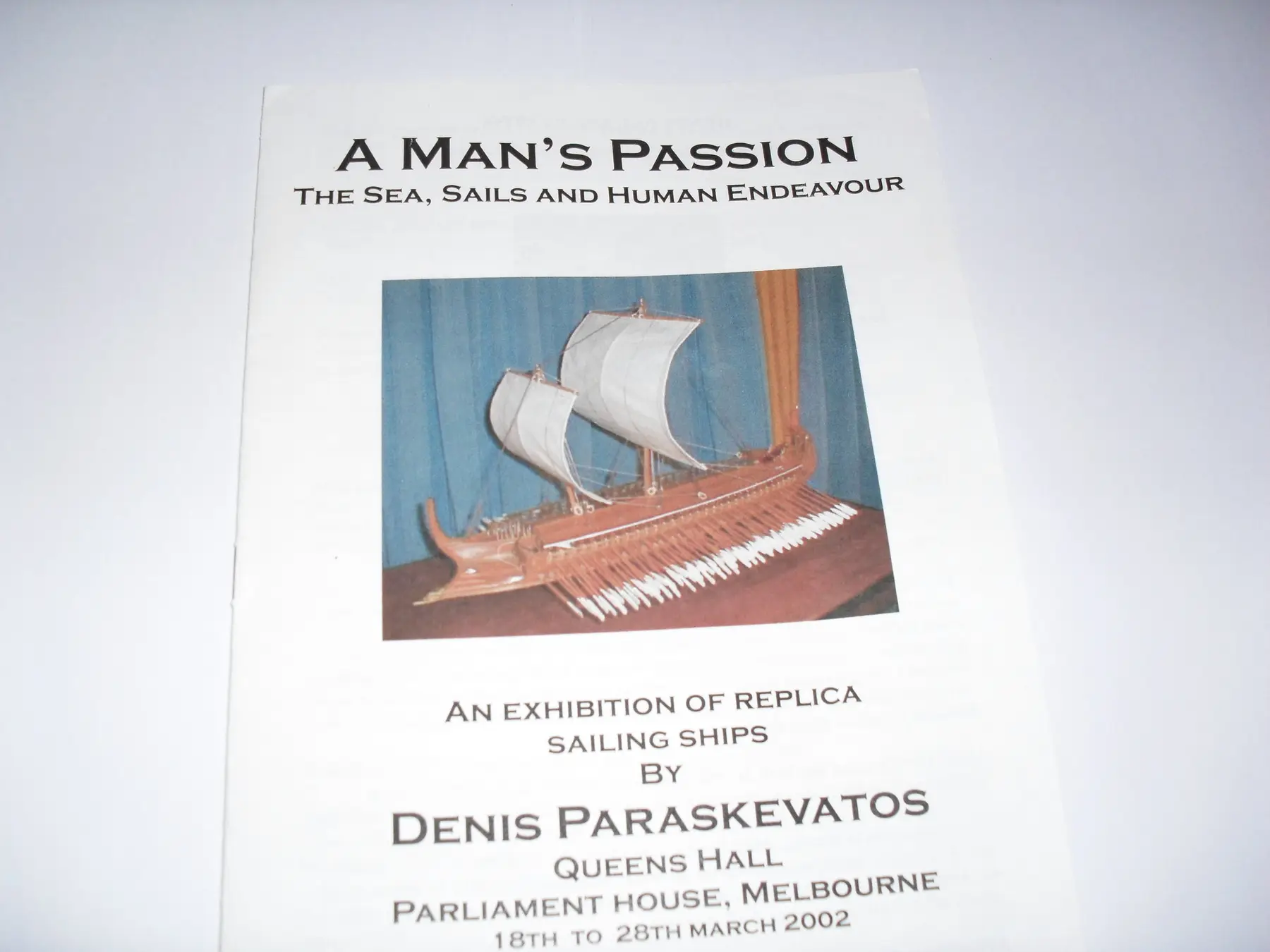
- 2002, Parliament House, Melbourne. A Man’s Passion: The Sea, Sails and Human Endeavour, an exhibition of replica sailing ships in Queen’s Hall, 18–28 March 2002. It was his first exhibition.
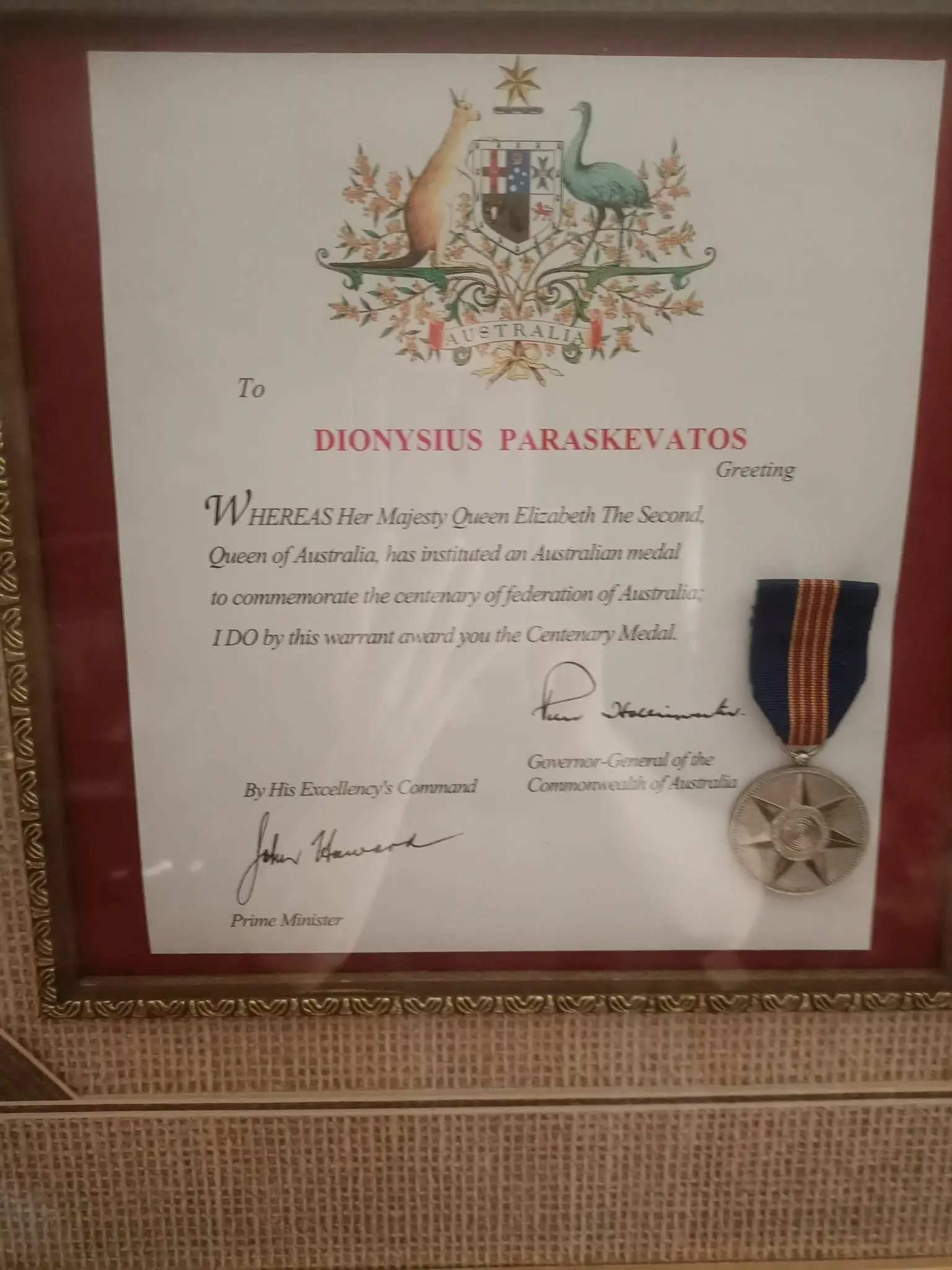
- 2002, Commonwealth Centenary Medal, “for service to the arts as an artist reconstructing ancient sea vessels and service to the community”.
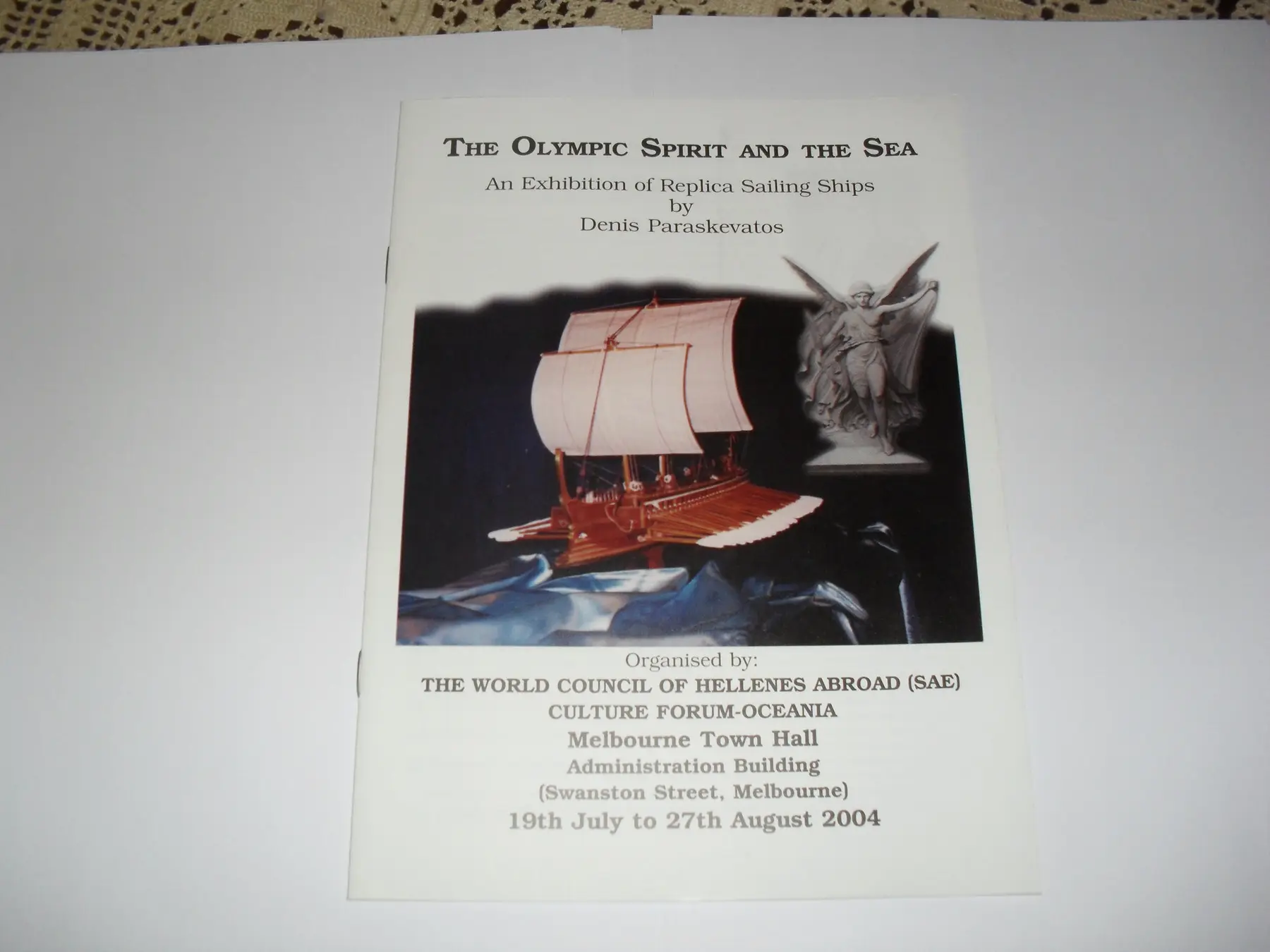
- 2004, Melbourne Town Hall. The Olympic Spirit and the Sea, organised by the World Council of Hellenes Abroad (SAE) for the Athens 2004 Olympic Games, 19 July to 27 August 2004.
- La Trobe University, Bundoora. An exhibition at the National Centre for Hellenic Studies and Research, intended to interest students in marine engineering. Denis donated a bireme to the university.
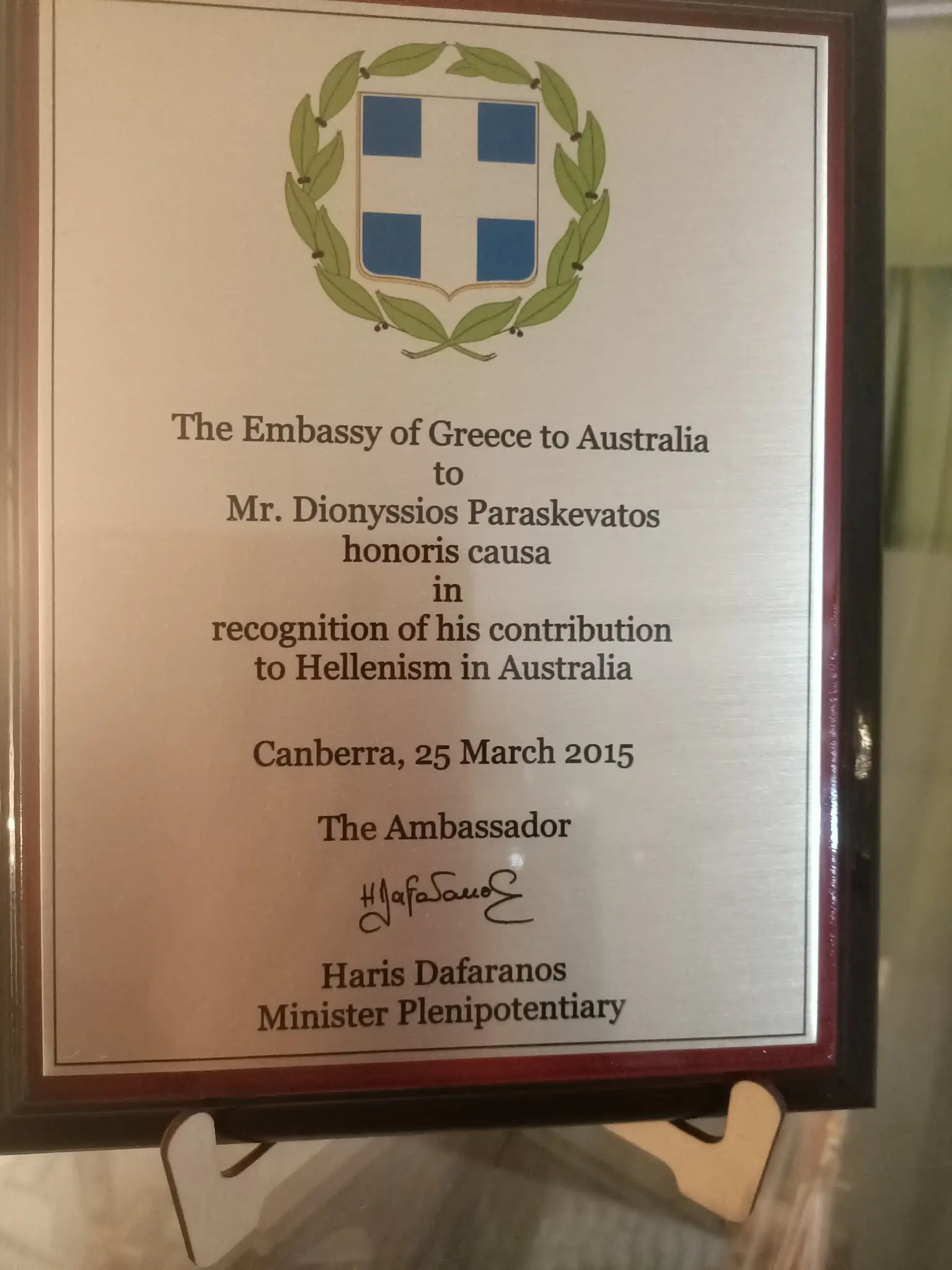
- 2015, Embassy of Greece, Canberra. A trireme donated for Greek National Day. The Embassy presented him with a plaque honoris causa “in recognition of his contribution to Hellenism in Australia” (Canberra, 25 March 2015).
- 2018, Zenon Education Centre. An exhibition of the Hekatontoros bireme.
- 2019, Macleod College, Melbourne. A Mariner’s Passion, opened on 11 November 2019, with a week of seminars for students. The exhibition was free and non-commercial: Denis asked for no sponsorship from the school or any other body.
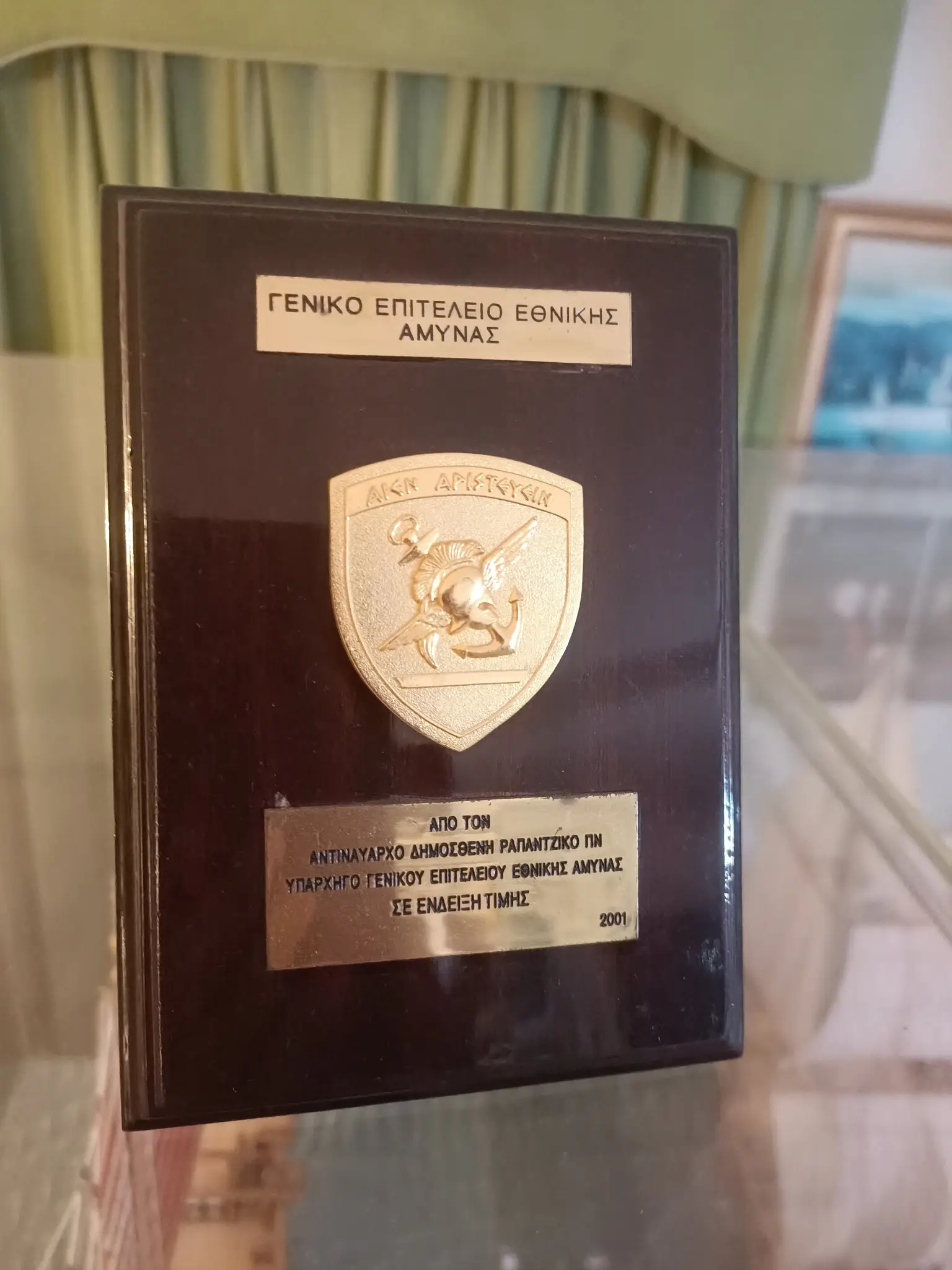
- Hellenic National Defence General Staff. A plaque from the Greek armed forces’ general staff (see photographs below).
In the press
The Age: “Going nowhere on the mantelpiece” (2008)
In January 2008 Katherine Kizilos visited the brick-veneer house in Epping and found “a small maritime museum”: an Egyptian river boat of papyrus reeds, an American paddle-steamer, a Chinese junk, the Cutty Sark, the Elcano and the Vasa, all in glass cases. The pride of the collection was a newly completed Athenian trireme. Denis designed it himself from historical sources, and he believes it was the first model to show the lead “dolphins” dropped onto enemy decks, the Corinthian epotithes and the flute player who kept the rowers in time. It took nine months of full-time work.
For Denis, the Athenian triremes were a splendid example of democracy in action. Their rowers were free citizens, not slaves, and the fleet was paid for by the wealthy citizens of Athens. By then he had built 19 vessels since 1976, five of his own design. Of the real sailors’ living conditions he said: “They stank inside.”
Embassy of Greece: an Athenian trireme for Canberra (2015)
A press release by Iakovos Garivaldis of the Plutarch Project announced Denis’s gift of a handmade Athenian trireme to the Embassy of Greece in Canberra for Greek National Day, 25 March 2015. Built in mahogany between October 2014 and March 2015, with 174 rowers, as many oars and two sails, it followed the descriptions of the great historians of ancient Greece. The whole family took part in building it. No transport company in Australia would insure it for the 680-kilometre journey from Melbourne, so Denis delivered it himself, at his own expense, with his son Kostas and Mr Garivaldis.
Victorian Collections: the Plutarch Project records
The Plutarch Project has documented Denis’s work on Victorian Collections, the online catalogue of Victoria’s museums and collections. Its records include his large Cutty Sark, built around 1997 at 1:25 scale in mahogany, and his Paralos trireme, built around 2005 to the exact specifications of the Athenian vessel over eighteen months. The record calls the Paralos “a unique specimen” and “the only one of its kind in the world”.
Lily D’Ambrosio MP: A Mariner’s Passion (2019)
The Victorian minister Lily D’Ambrosio, who has known Denis for more than twenty years, attended the opening of A Mariner’s Passion at Macleod College on 11 November 2019. She wrote that she was “proud to see his love of maritime history and master craftsmanship in model ship-building being brought to a new and younger audience”. In her member’s statement to the Parliament of Victoria she noted that the exhibition’s 19 replicas were seen by more than 800 Victorian students.
Centre for Eye Research Australia: “Denis’ battle for sight” (2020)
In January 2020 CERA told the story of the other battle in Denis’s life: wet age-related macular degeneration. Regular injections, a treatment proven in international trials in which CERA’s Professor Robyn Guymer took part, have preserved the sight of his left eye. Professor Guymer was a guest at the Macleod College exhibition, with Health Minister Jenny Mikakos and Minister Lily D’Ambrosio, and Denis thanked her in his welcome speech.
“Denis’ determination to keep building beautiful ships and improving the understanding of Greek history and culture is inspiring,” she said. Denis, for his part, will “never forget what Professor Guymer has done for me. Not having vision … takes away the colour of life, it prevents you from seeing a face, and a face tells you a lot about a person.” CERA followed up in June 2020 with Seeing the colour of life: Denis’ story.
References
- Katherine Kizilos, Going nowhere on the mantelpiece, The Age, 10 January 2008.
- Iakovos Garivaldis, Plutarch Project, press release on the trireme donated to the Embassy of Greece in Canberra, March 2015.
- Victorian Collections, English wooden ship model, Cutty Sark replica, circa 1997 and Trireme Replica, Paralos, circa 2005, Plutarch Project.
- Lily D’Ambrosio MP, Facebook post on A Mariner’s Passion, 11 November 2019.
- Lily D’Ambrosio MP, Member’s Statement: Dionysius Paraskevatos, Parliament of Victoria, 26 November 2019.
- Centre for Eye Research Australia, Denis’ battle for sight, 29 January 2020.
- Centre for Eye Research Australia, Seeing the colour of life: Denis’ story, 5 June 2020.
- Maria Paraskevatos (translator), Denis Paraskevatos’ Succinct Biography, written for the Macleod College exhibition, 2019.