No. XI
King of Mississippi
1:50 · Mississippi River steamboat, 19th century
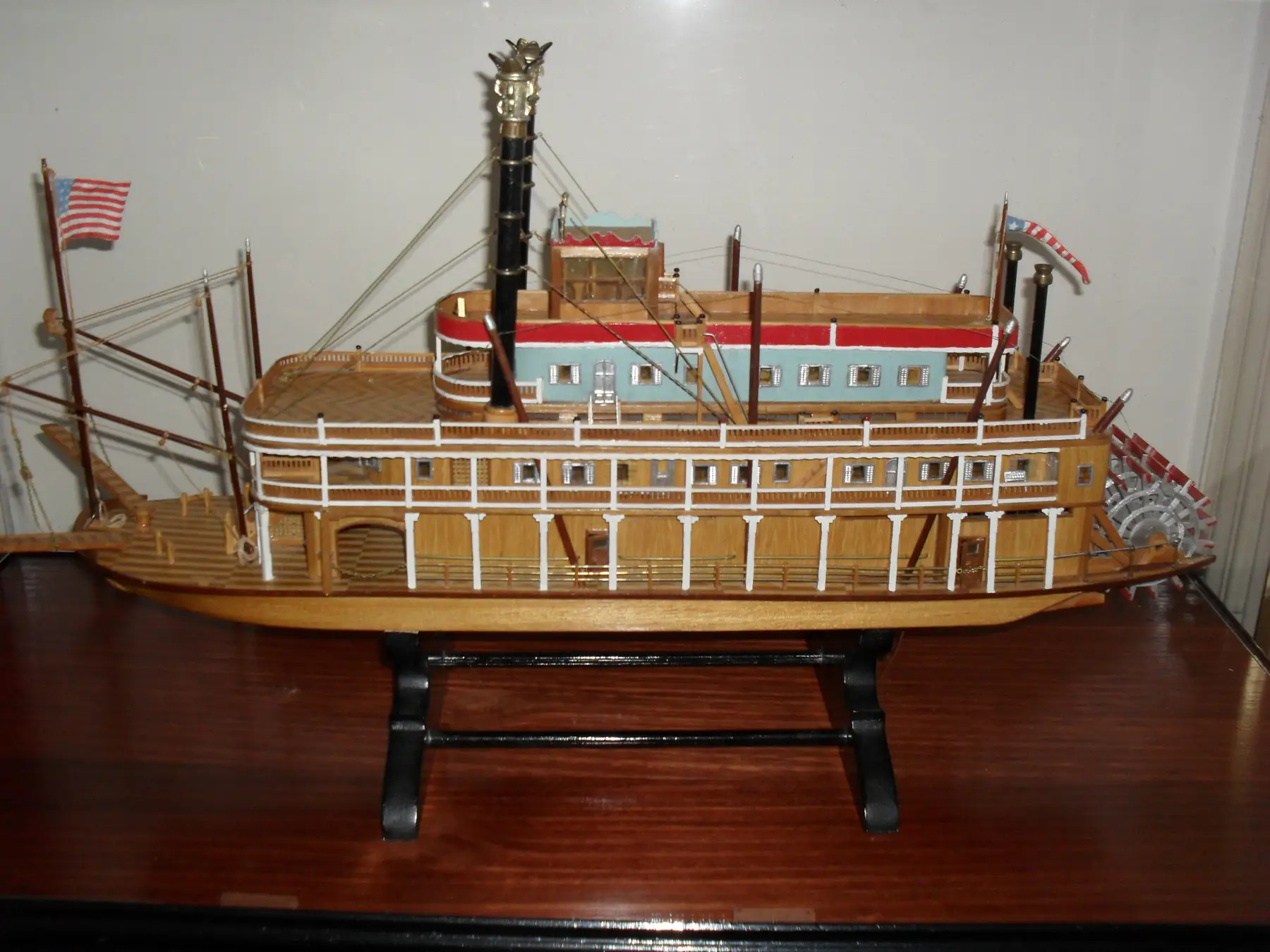
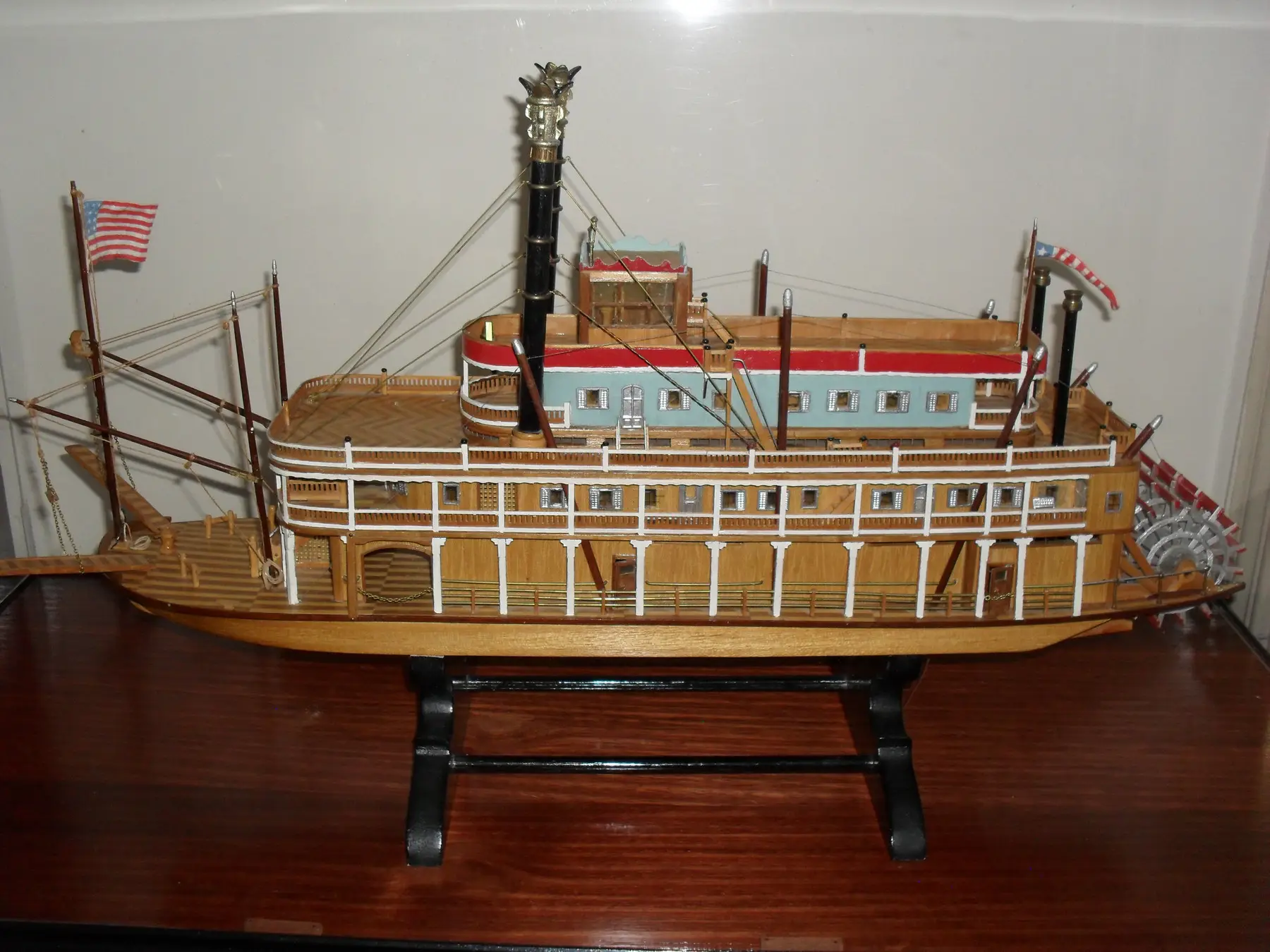
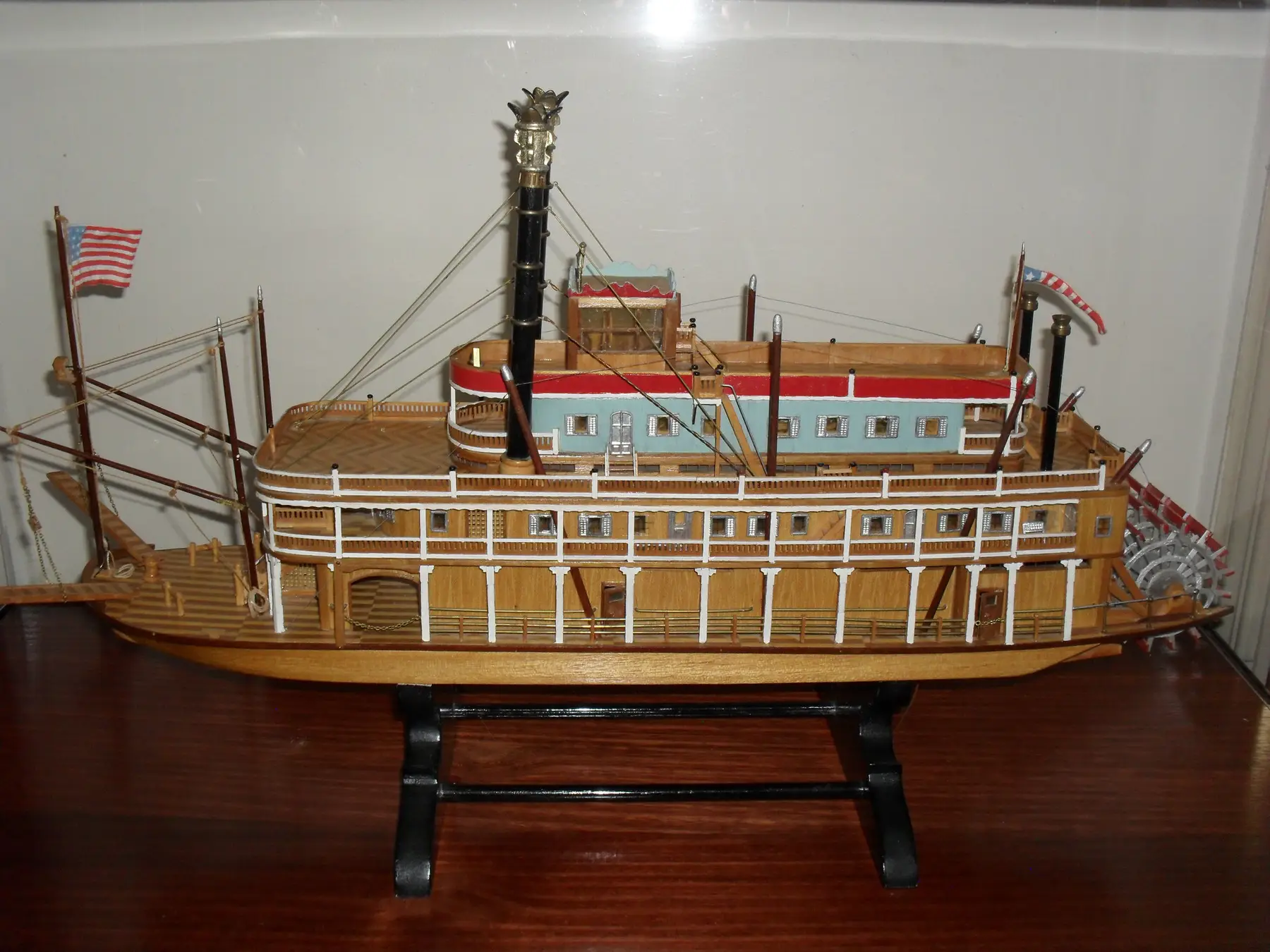
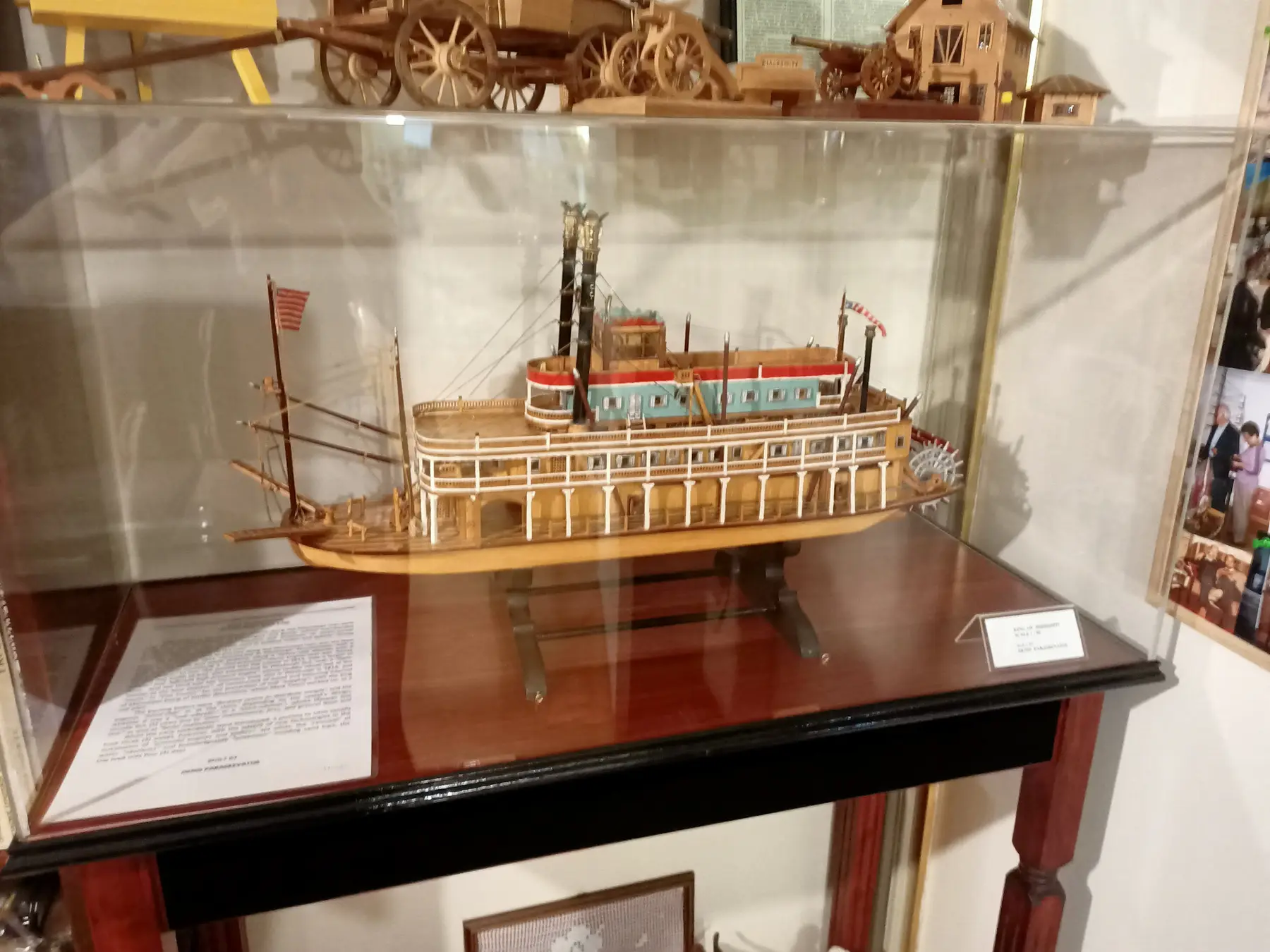
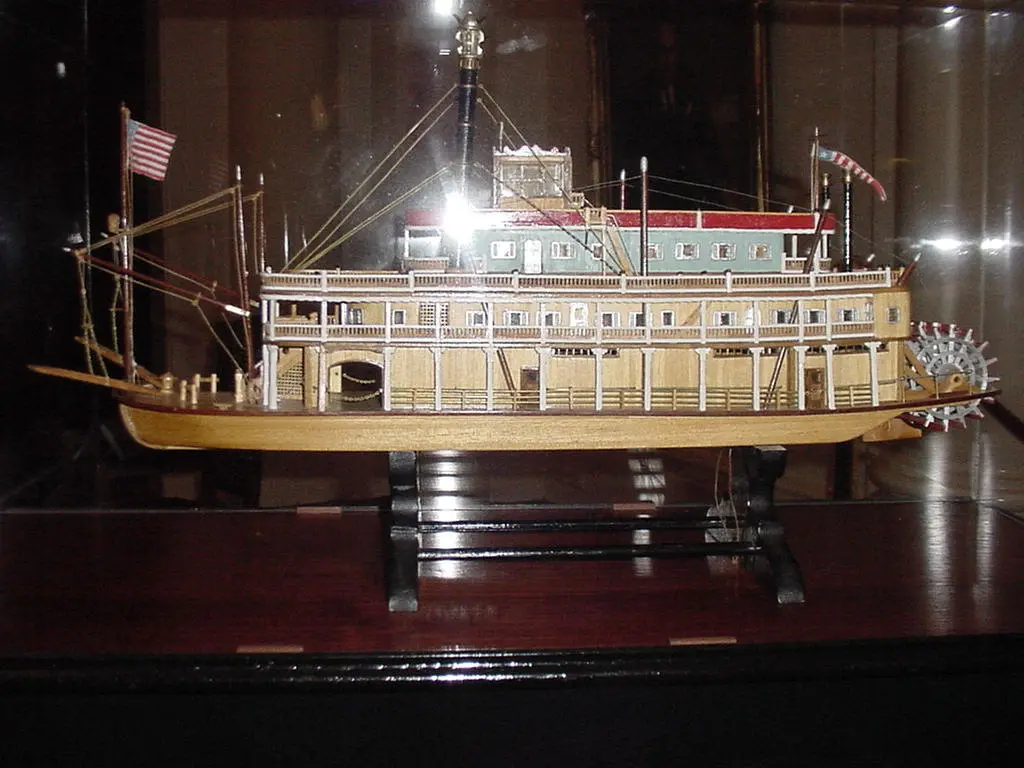
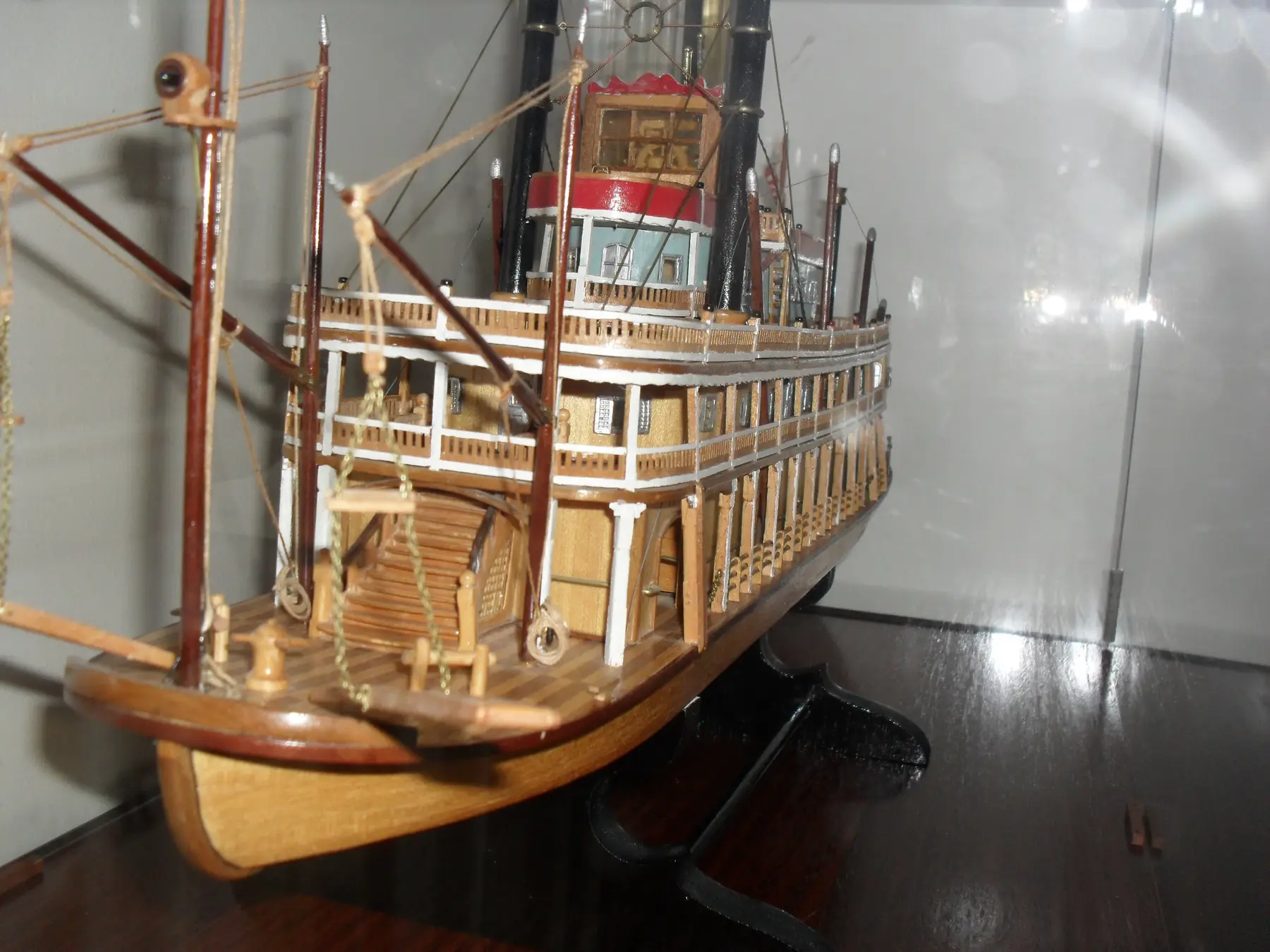
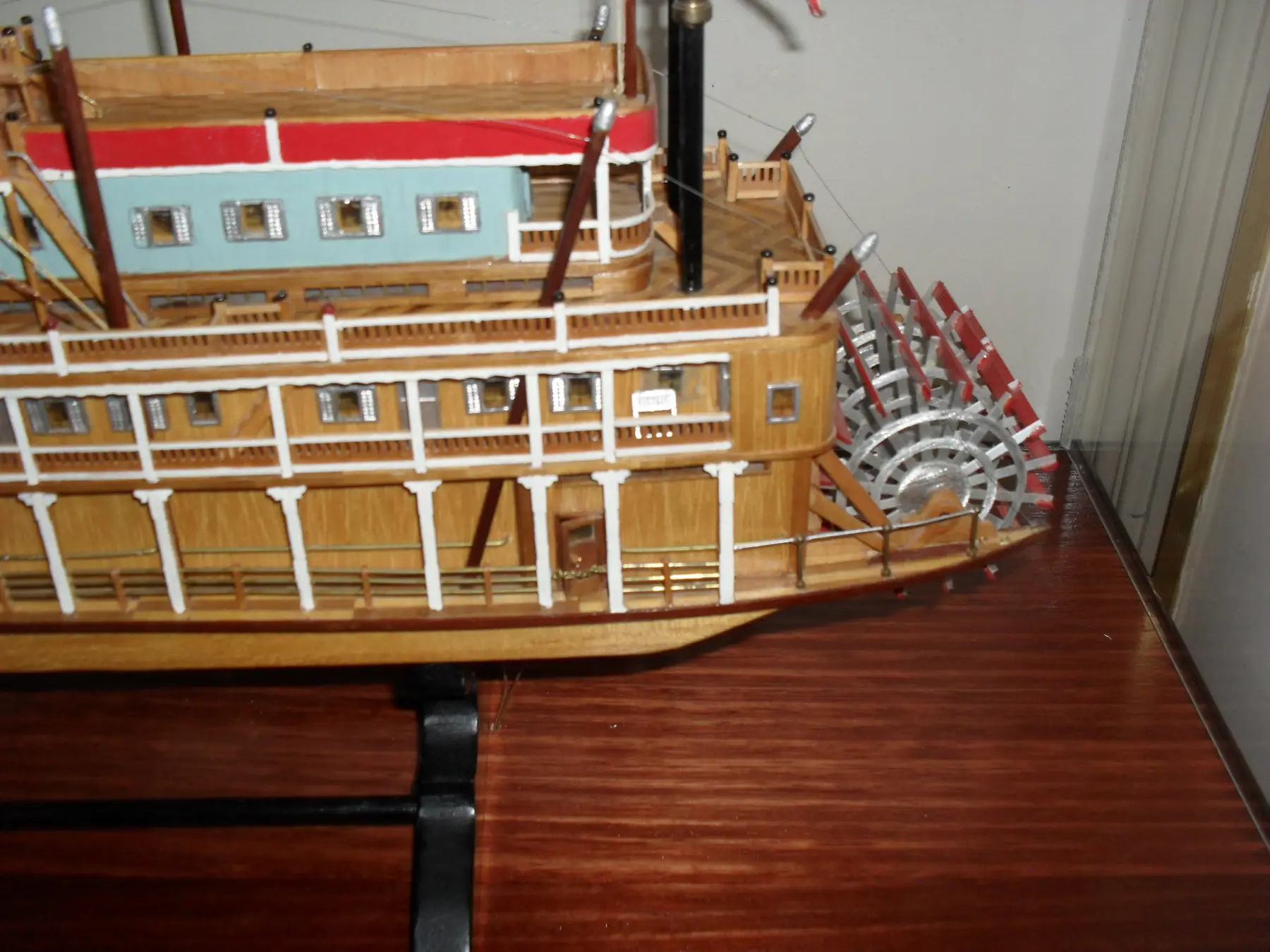
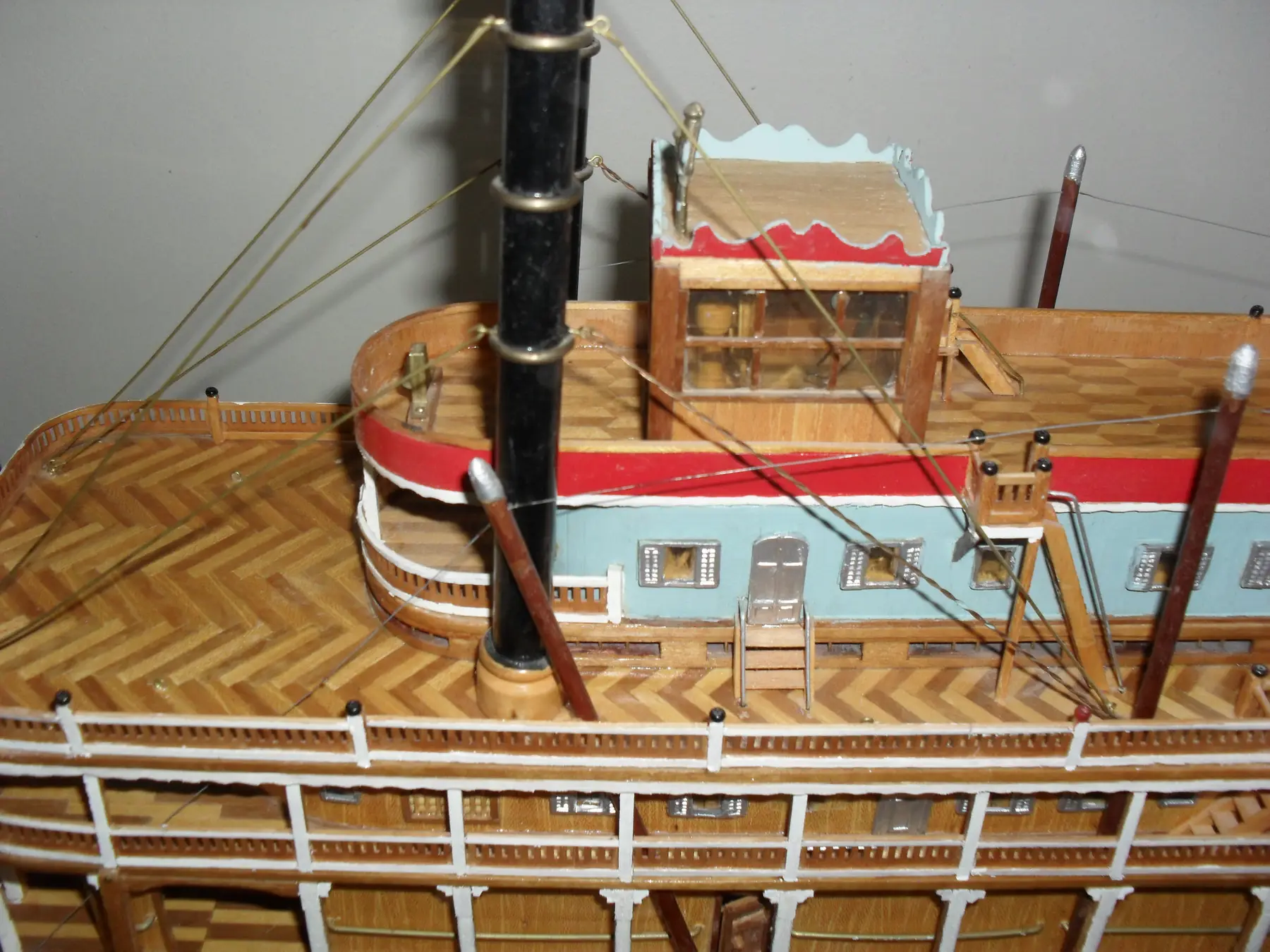
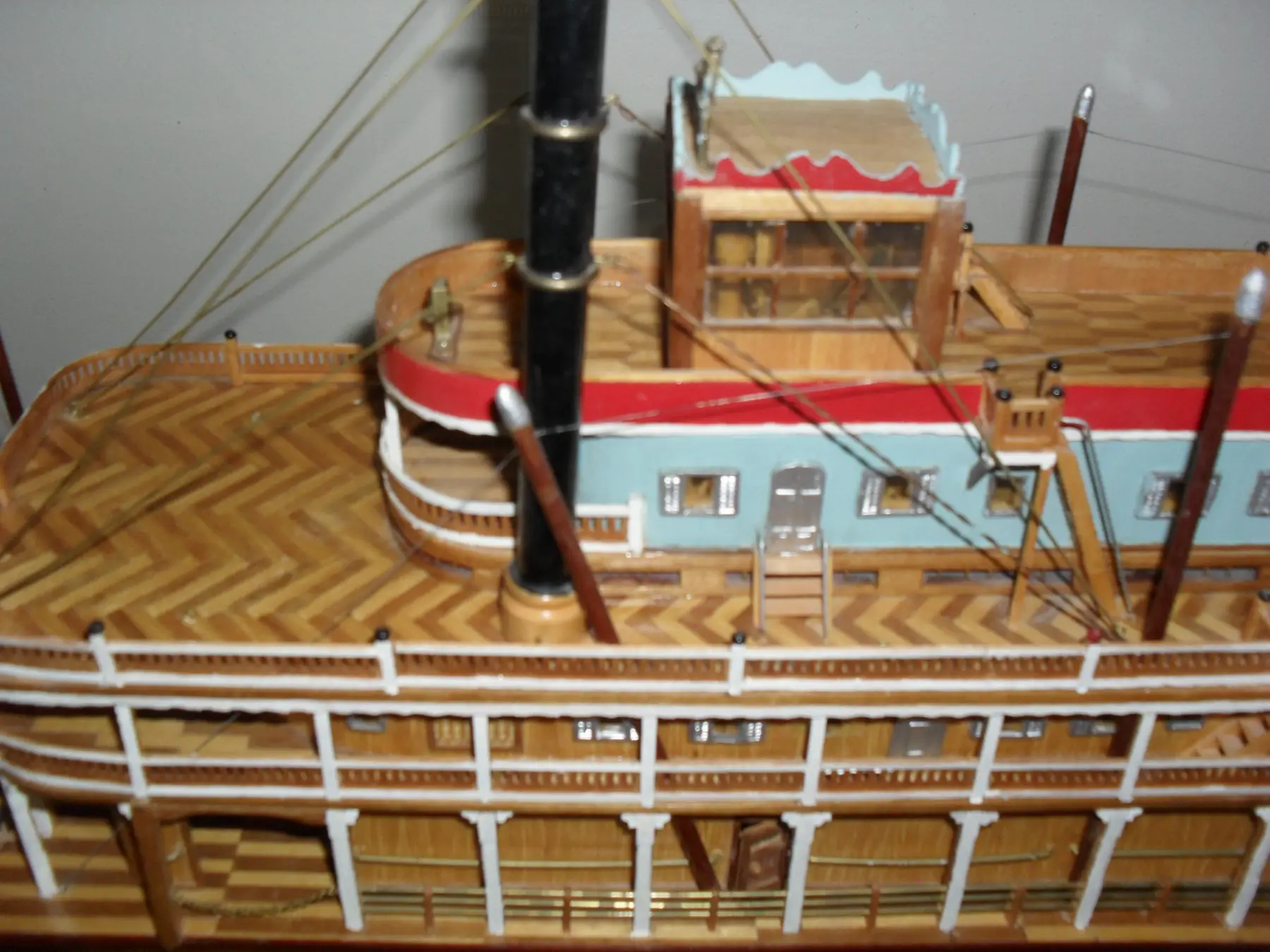
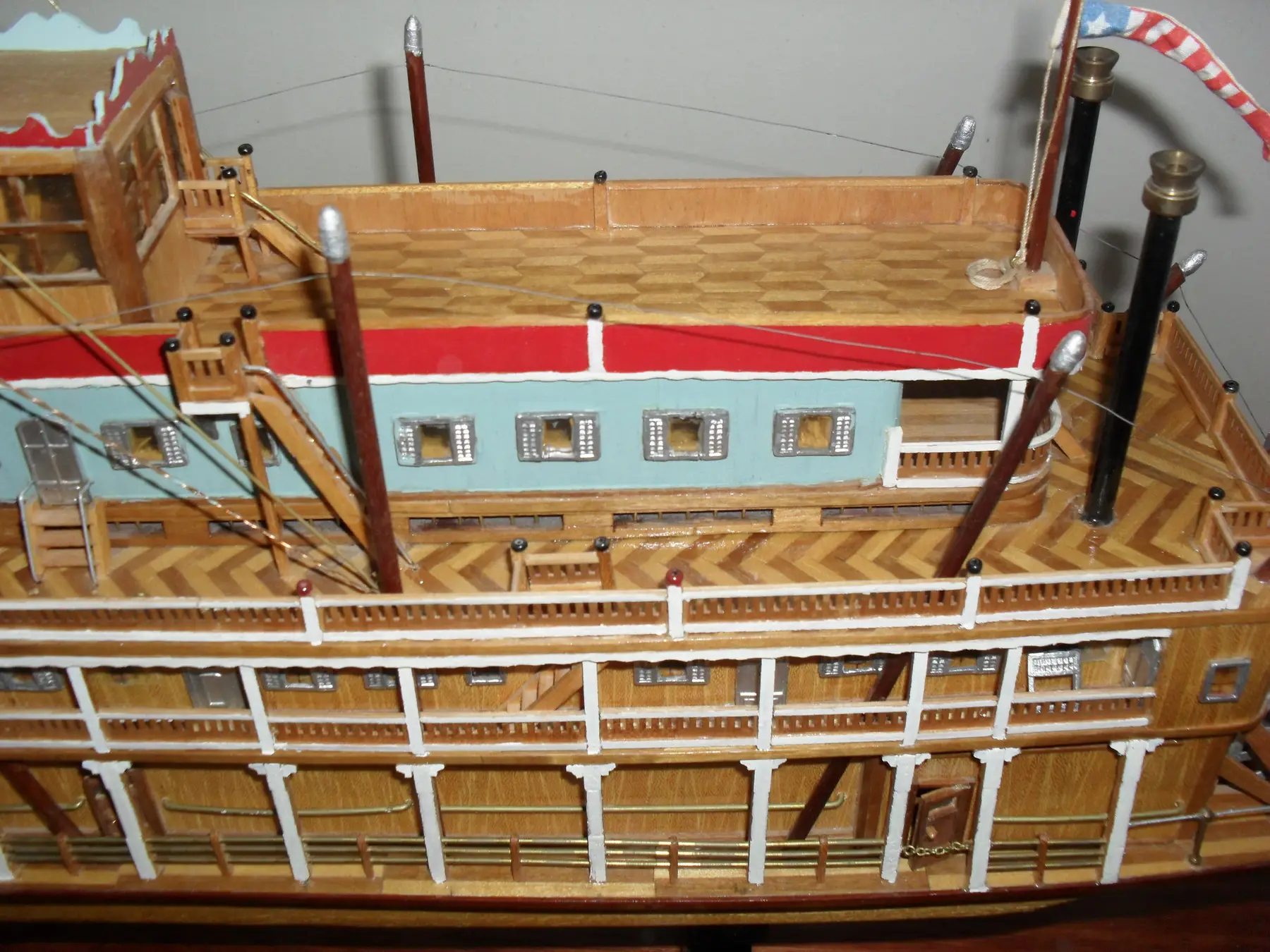
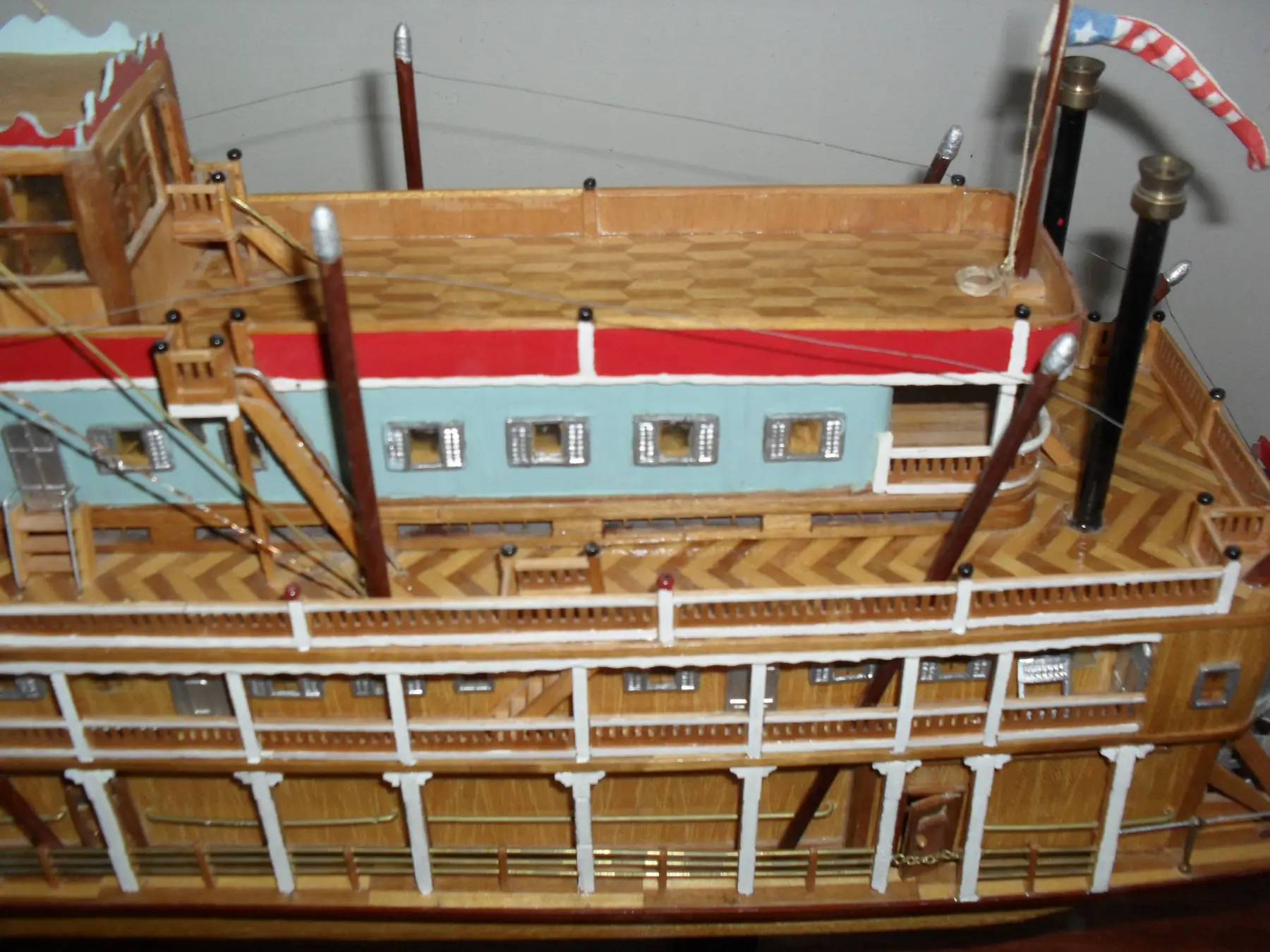
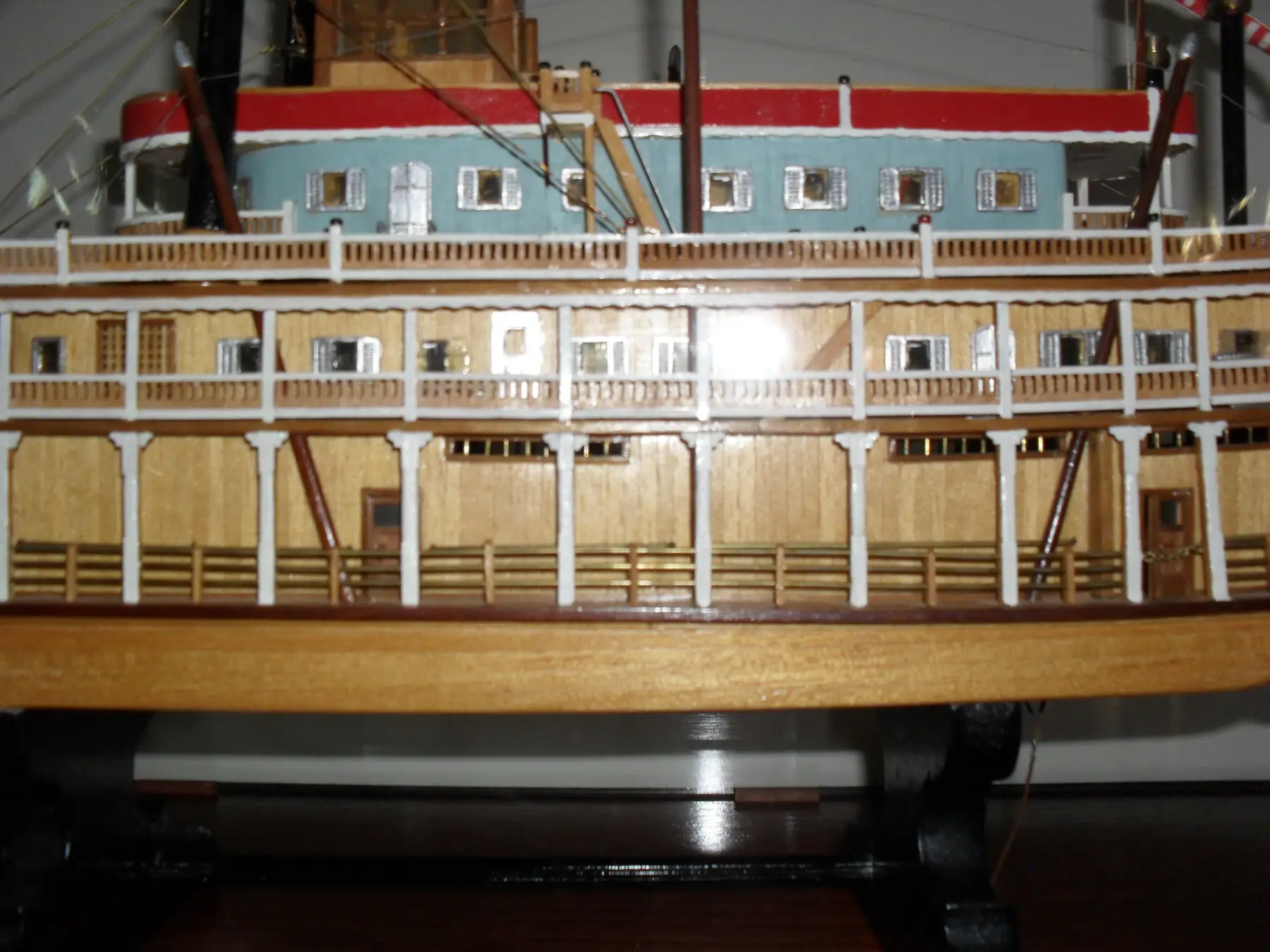
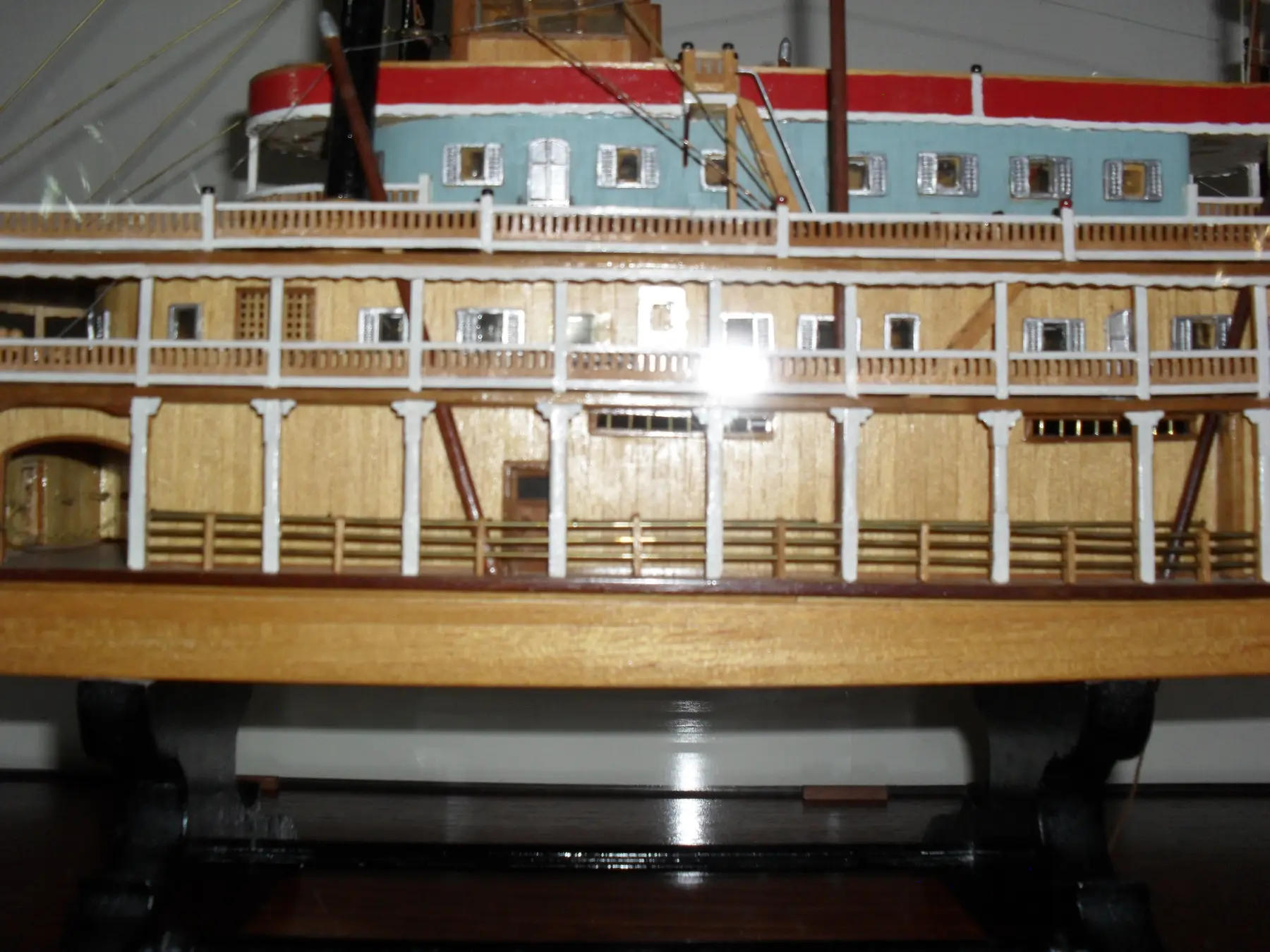
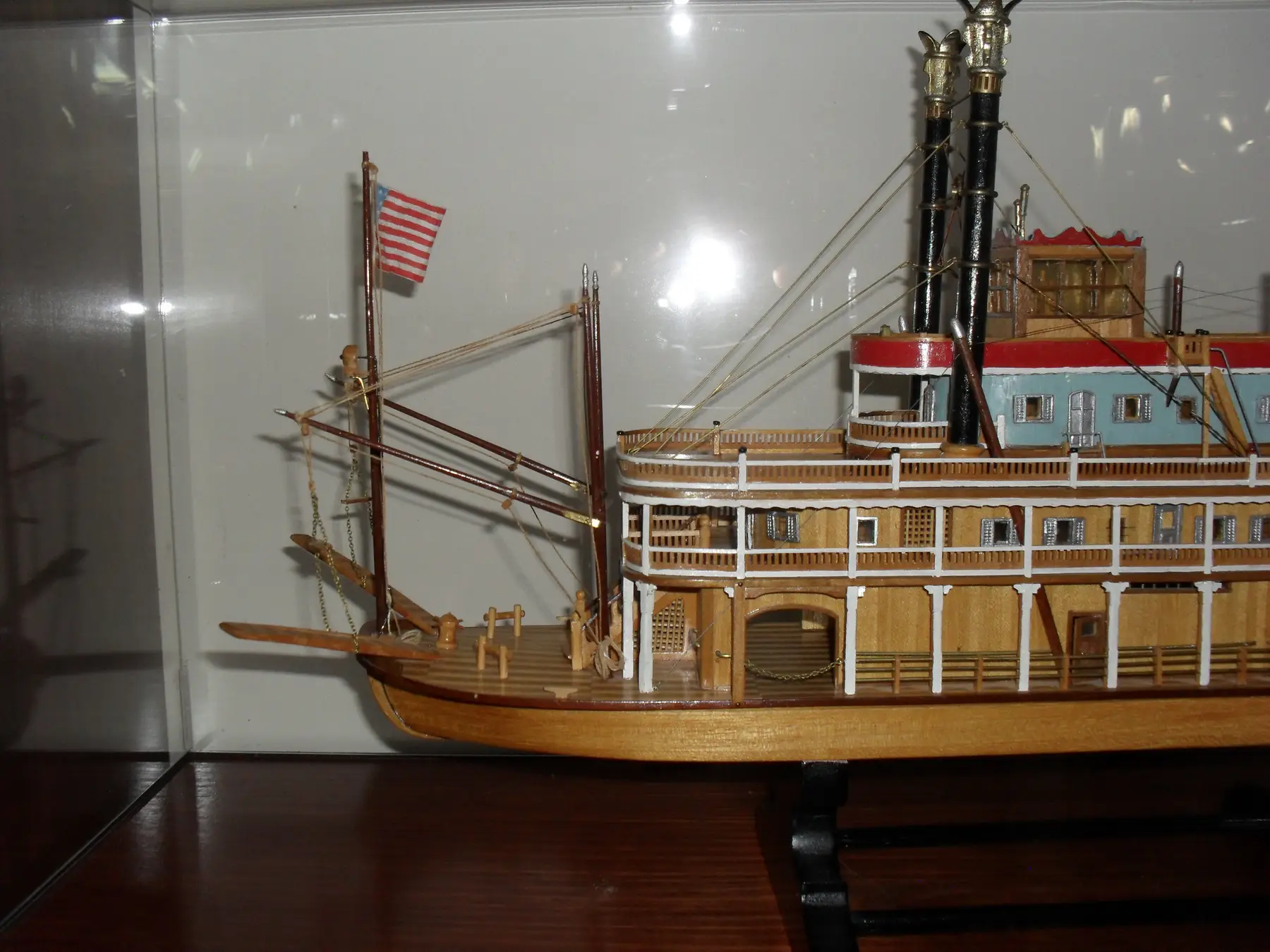
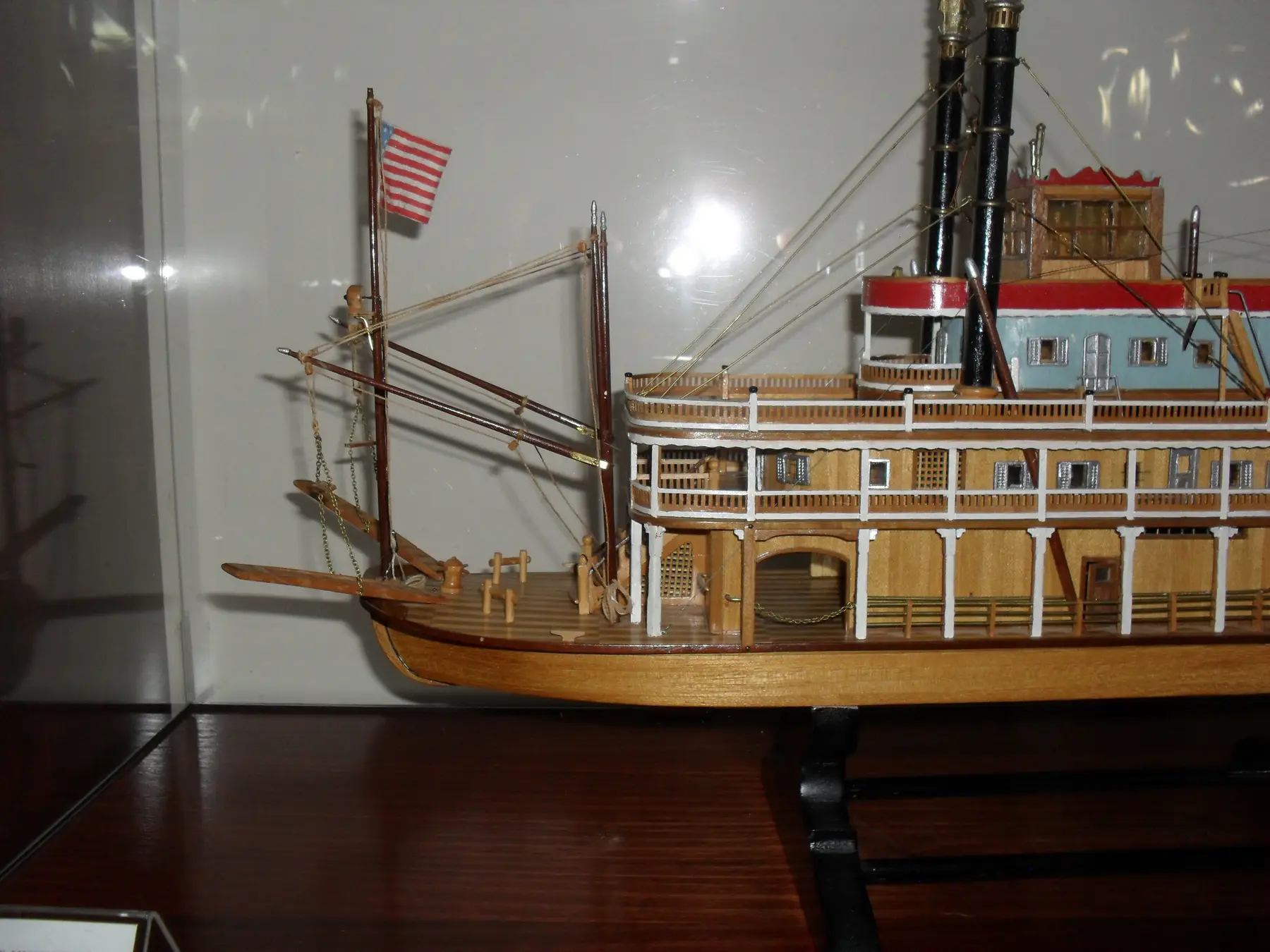
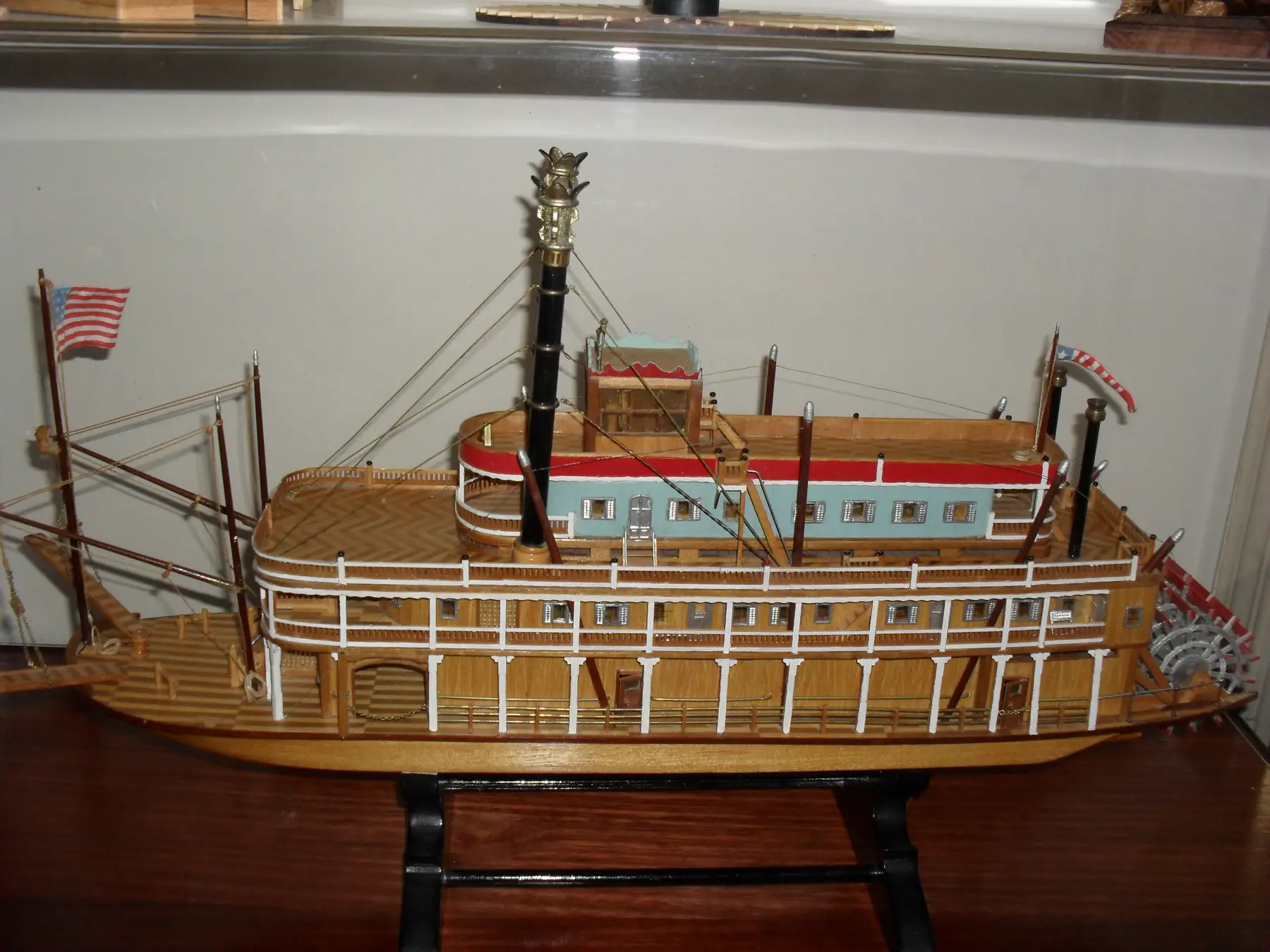
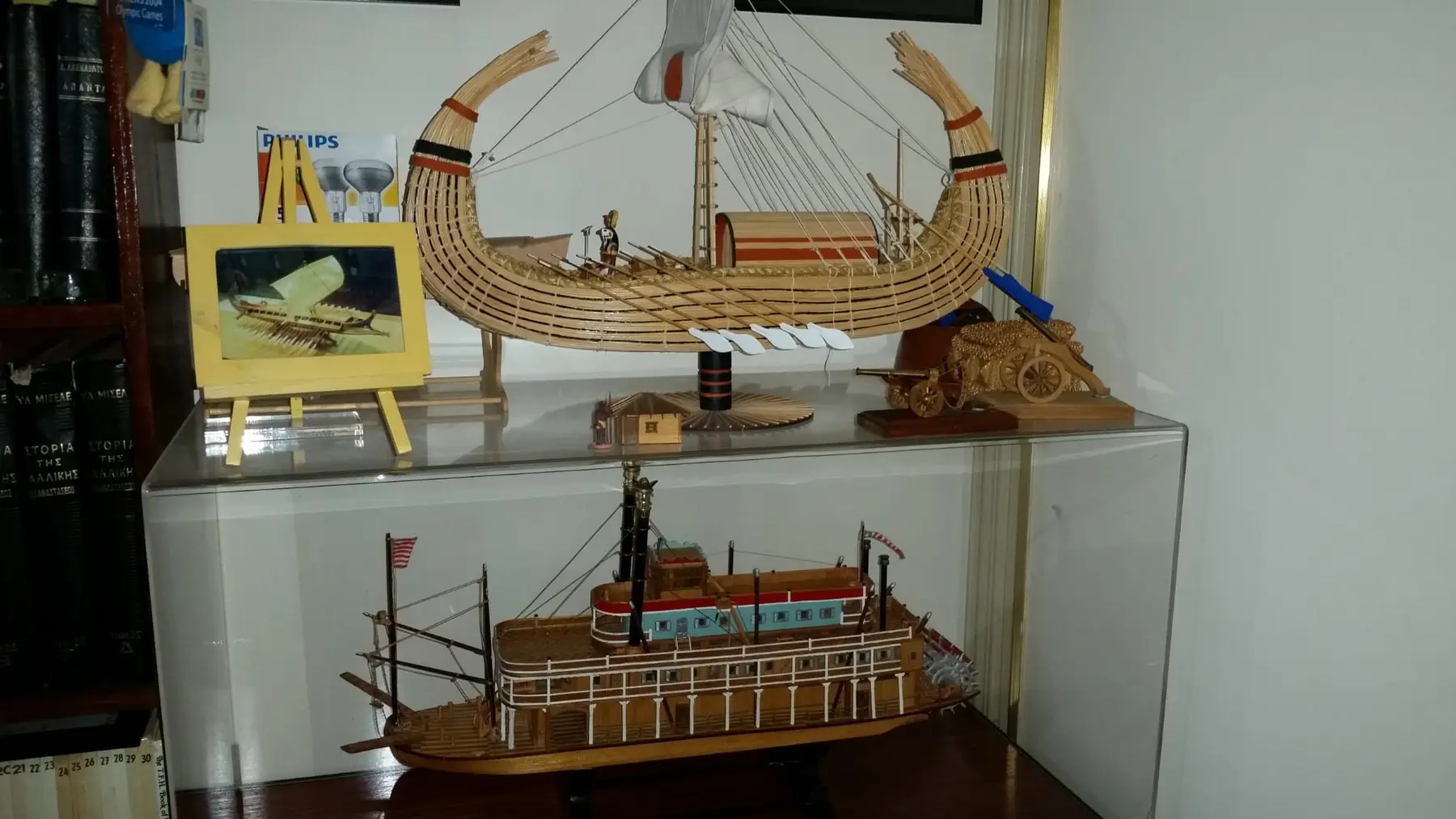
In the nineteenth century, steamboats on the Mississippi carried passengers and goods such as cotton, rice, timber, tobacco and molasses. Steam let them work in shallow water and push upriver against strong currents.
The first steamboat on the Mississippi was the New Orleans, built in Pittsburgh and launched in 1811. She was a heavy side-wheeler with a deep draught and a low-pressure engine that was heavy and inefficient. She was followed by the smaller Comet (1813), with a light, efficient high-pressure engine and a stern paddle wheel, and by the Vesuvius (1814), similar to the New Orleans. All were built of wood, with internal masts or iron trusses to stop the long hulls from sagging. The King of Mississippi was of similar size. Mark Twain later learned his trade on the river as a cub pilot.
Life on the river
The boilers sat forward of centre to spread the weight, and the engines were placed amidships or at the stern, depending on whether the boat was a side-wheeler or a stern-wheeler. A steamboat usually lasted about five years before poor maintenance, fire, wear and tear, or a boiler explosion ended its working life.
When the first steamboats arrived, the trip to Ohio took three weeks. With more powerful engines and boilers, skilled pilots, cleared channels and watermen who knew how to avoid the sandbars, it came down to four days.
About the model
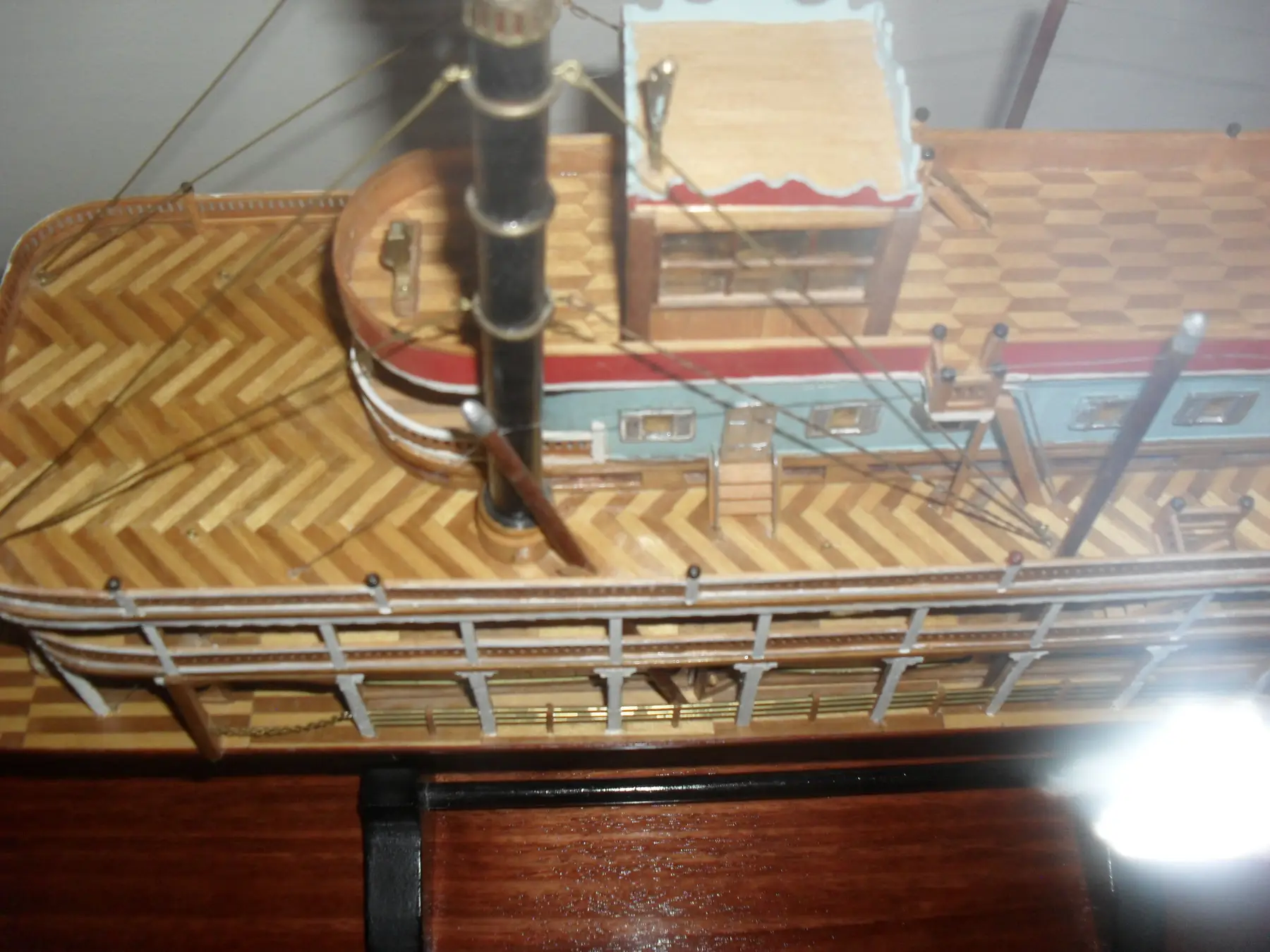
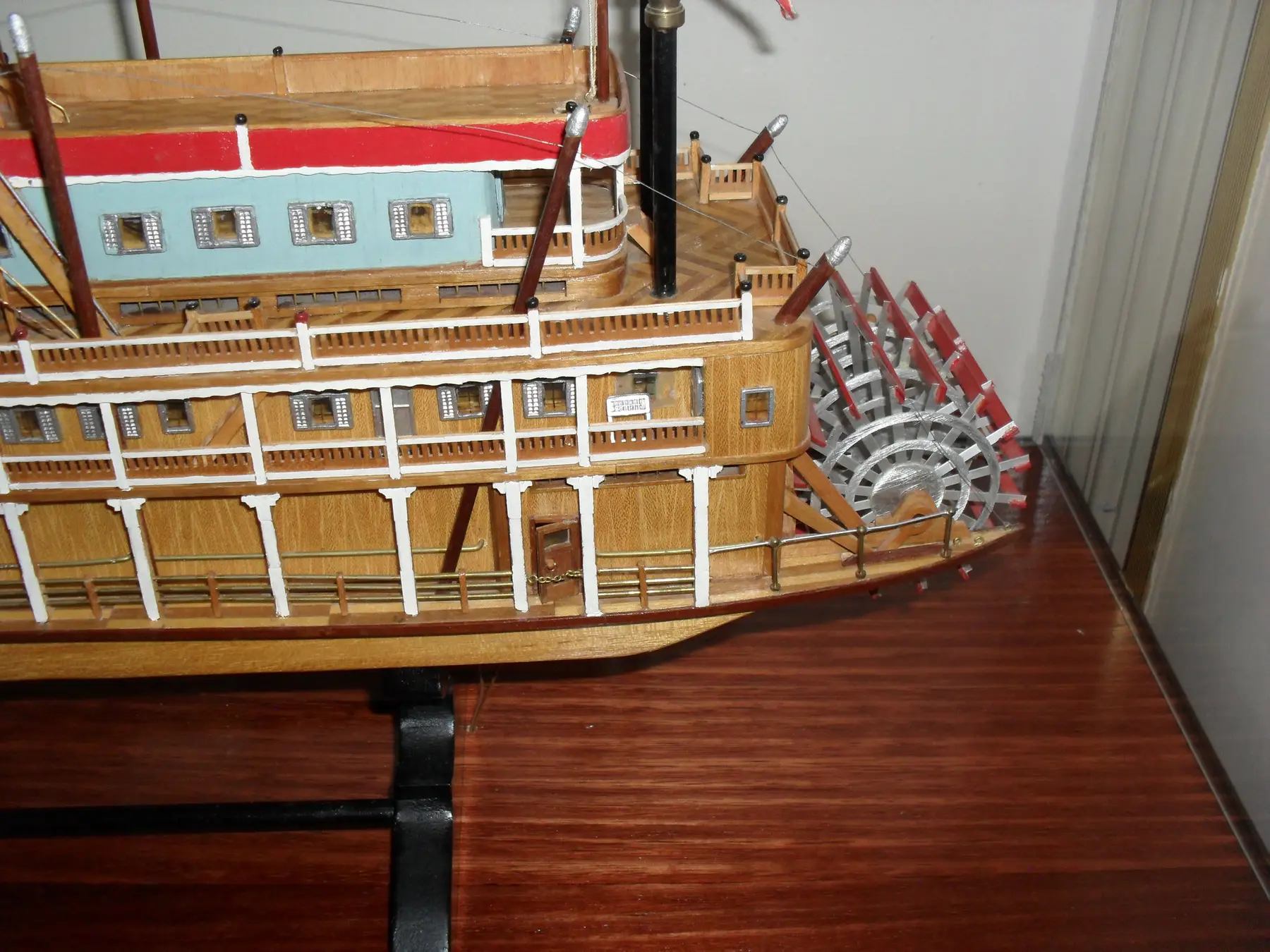
The model is a stern-wheeler with two decks of white railings, twin black funnels, a pilot house and a parquetry upper deck.