No. XVI
The Athenian Trireme
1:36 · Athenian warship, 5th century BC
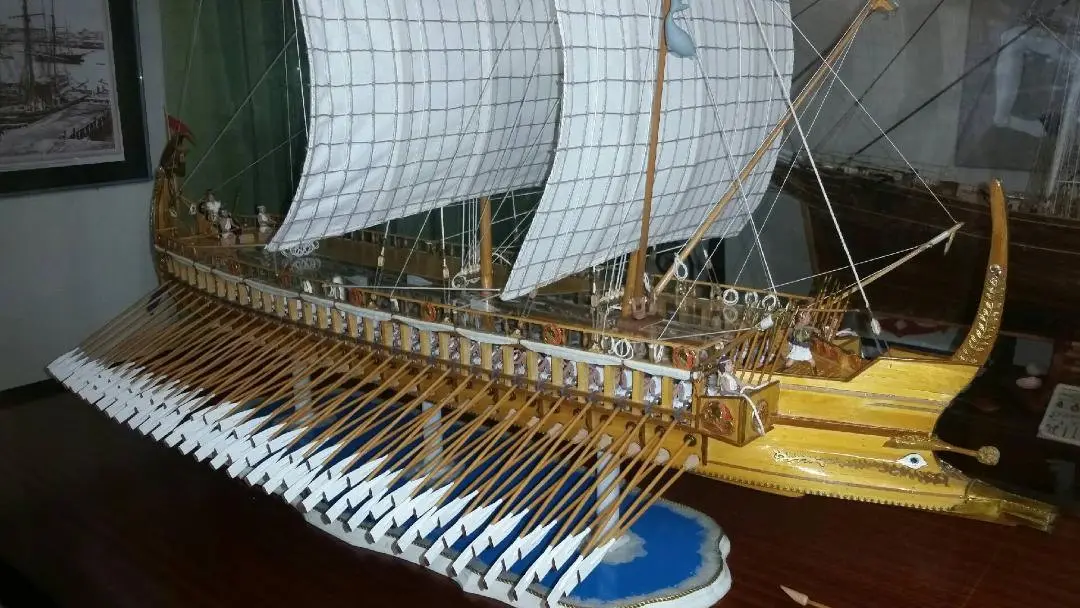
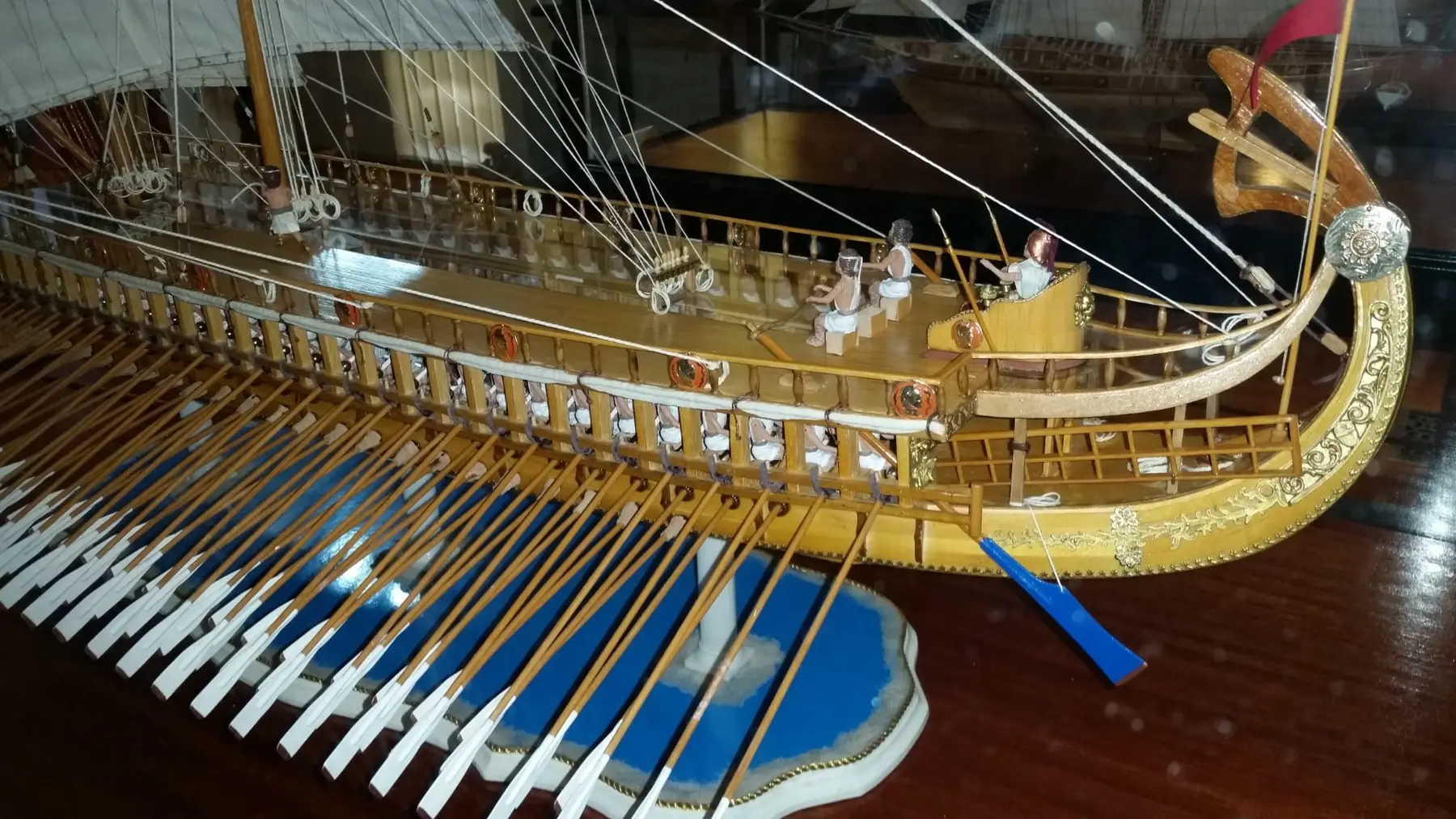
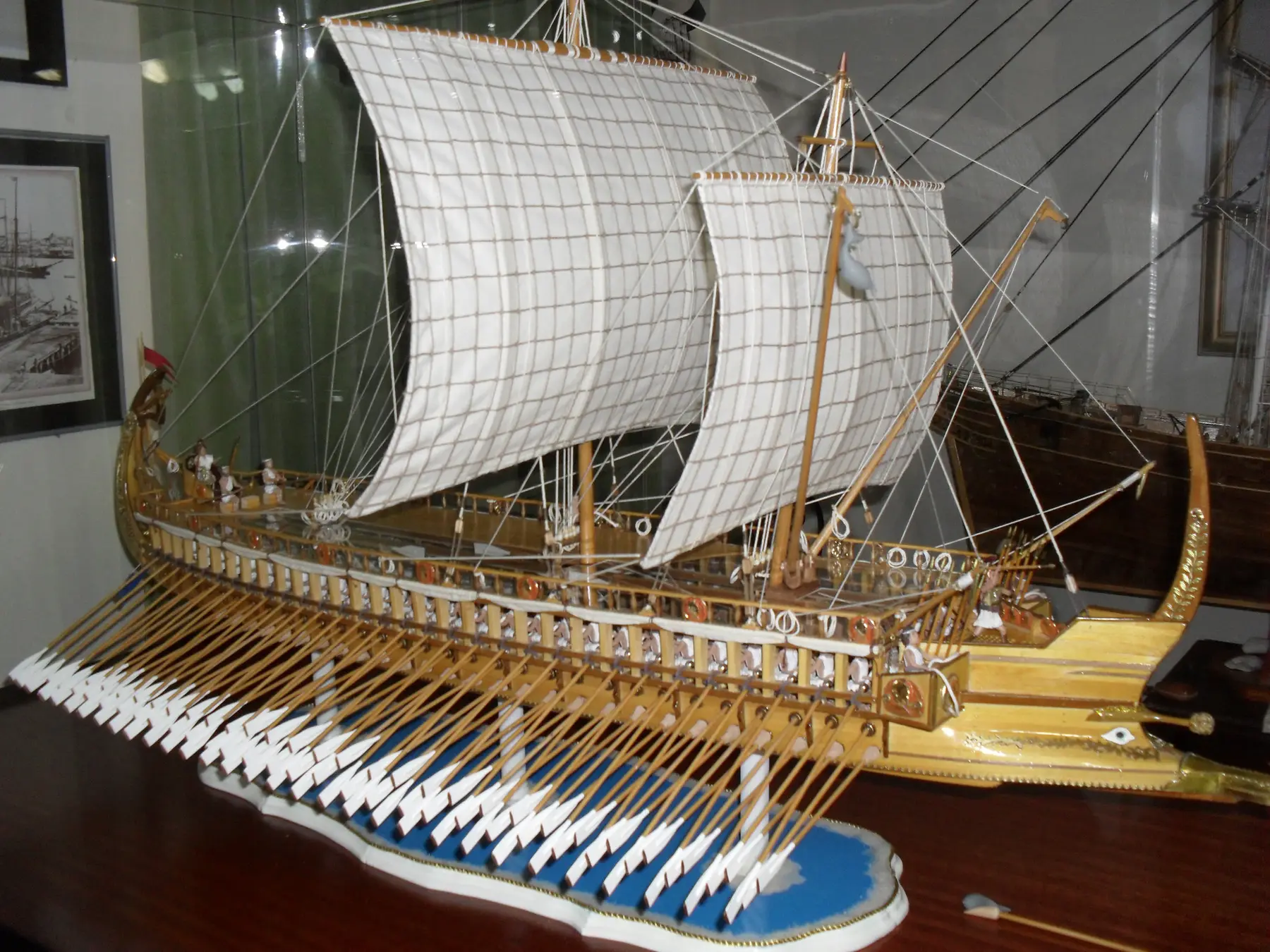
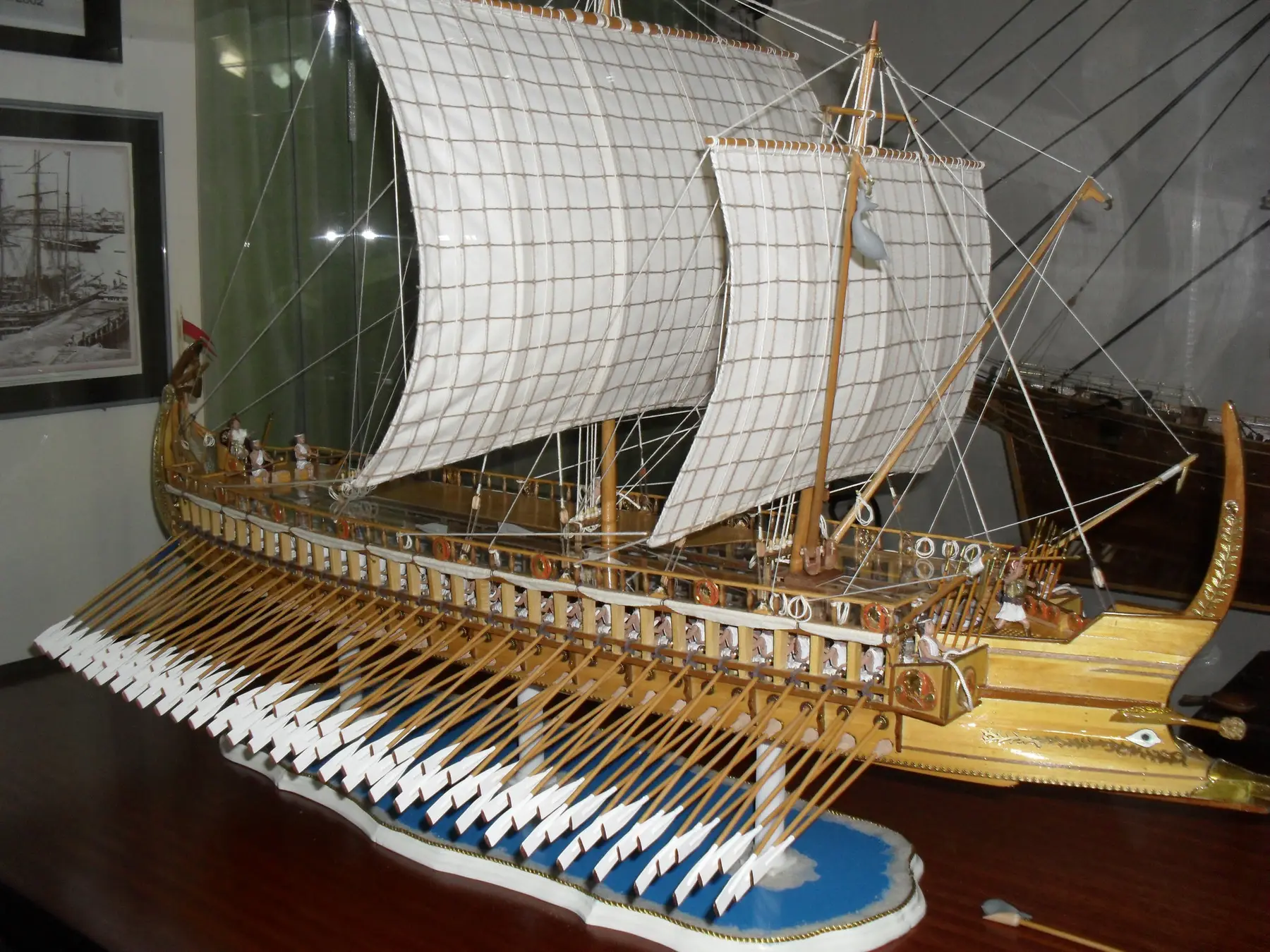
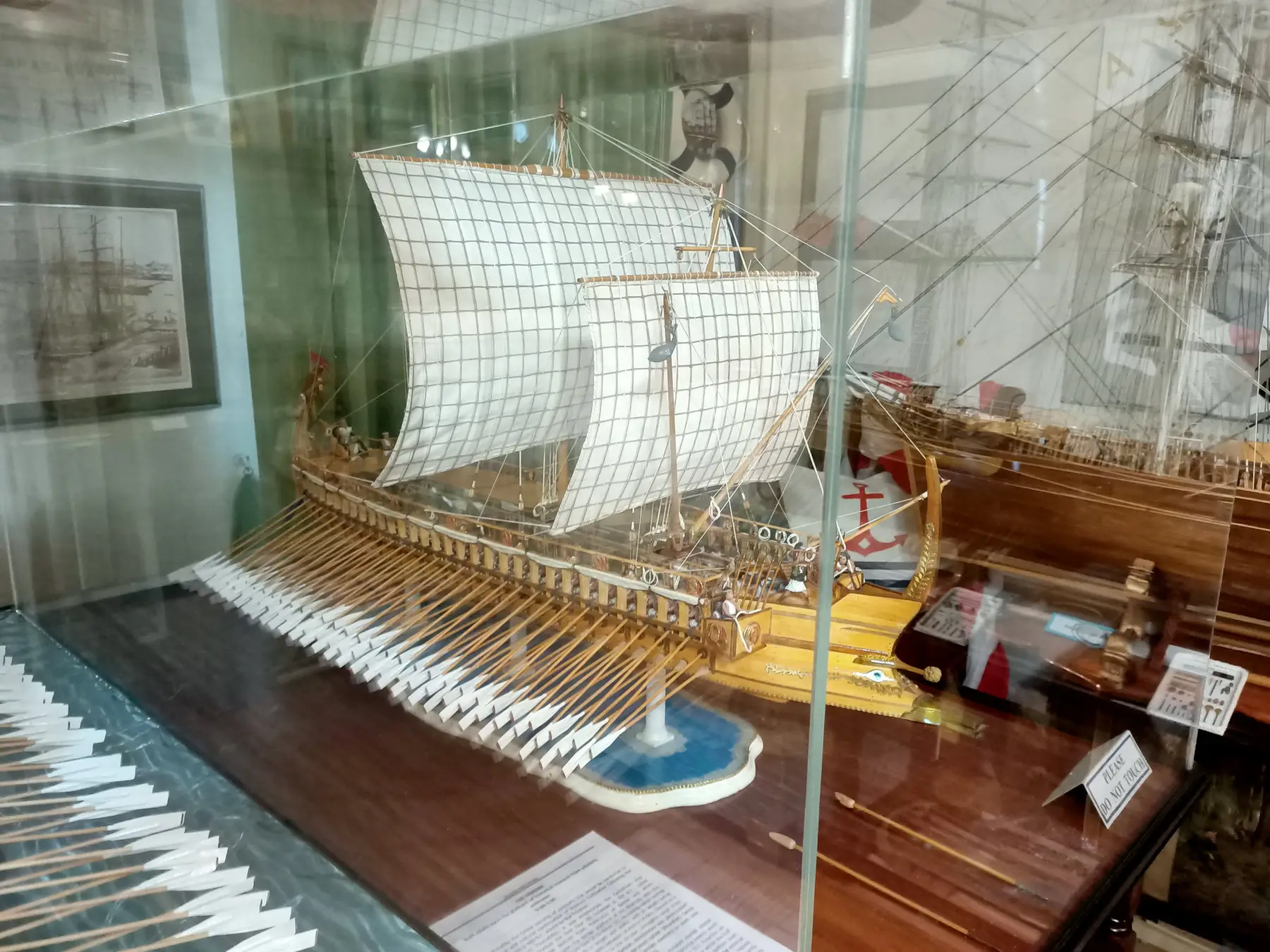
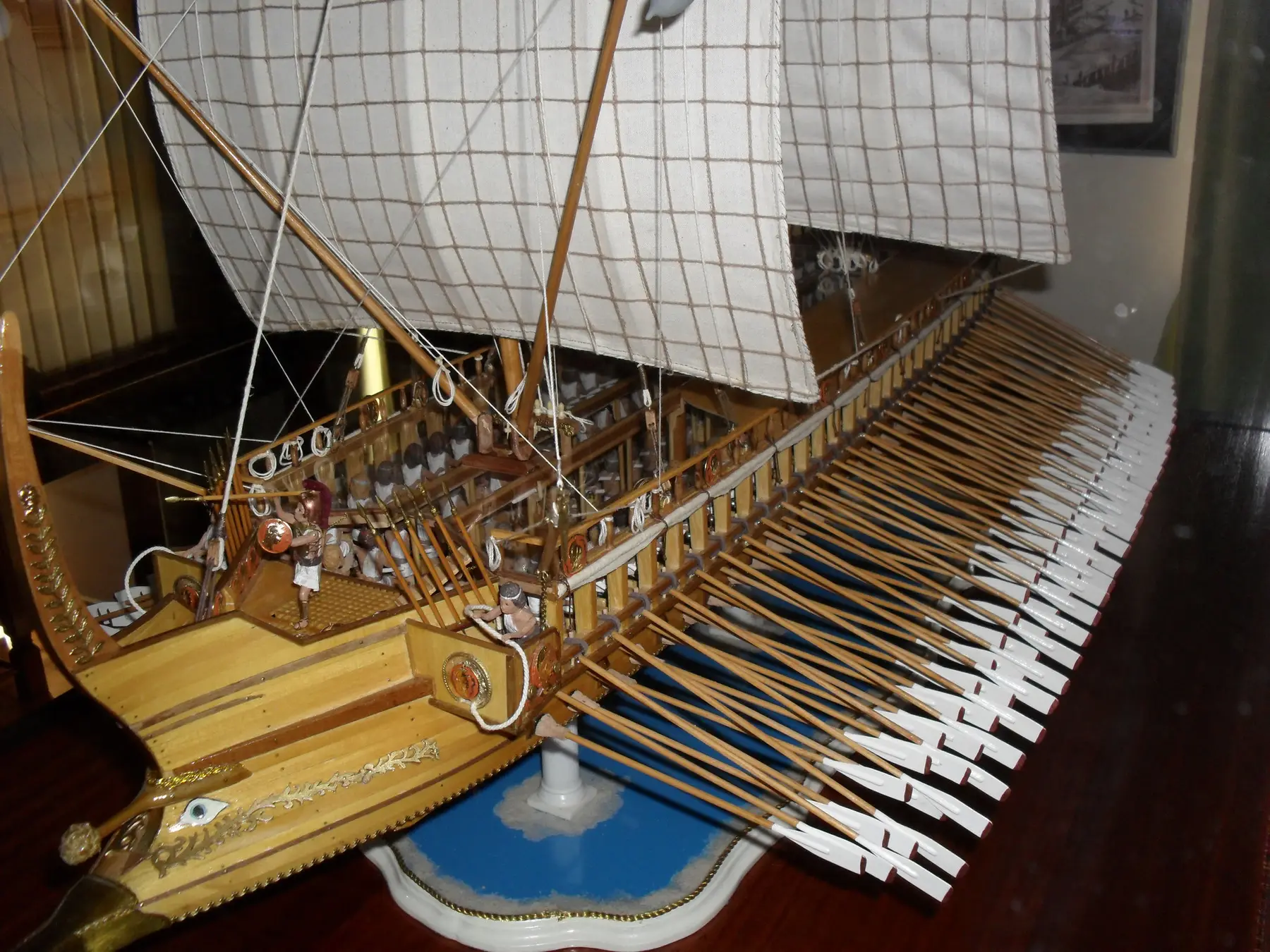
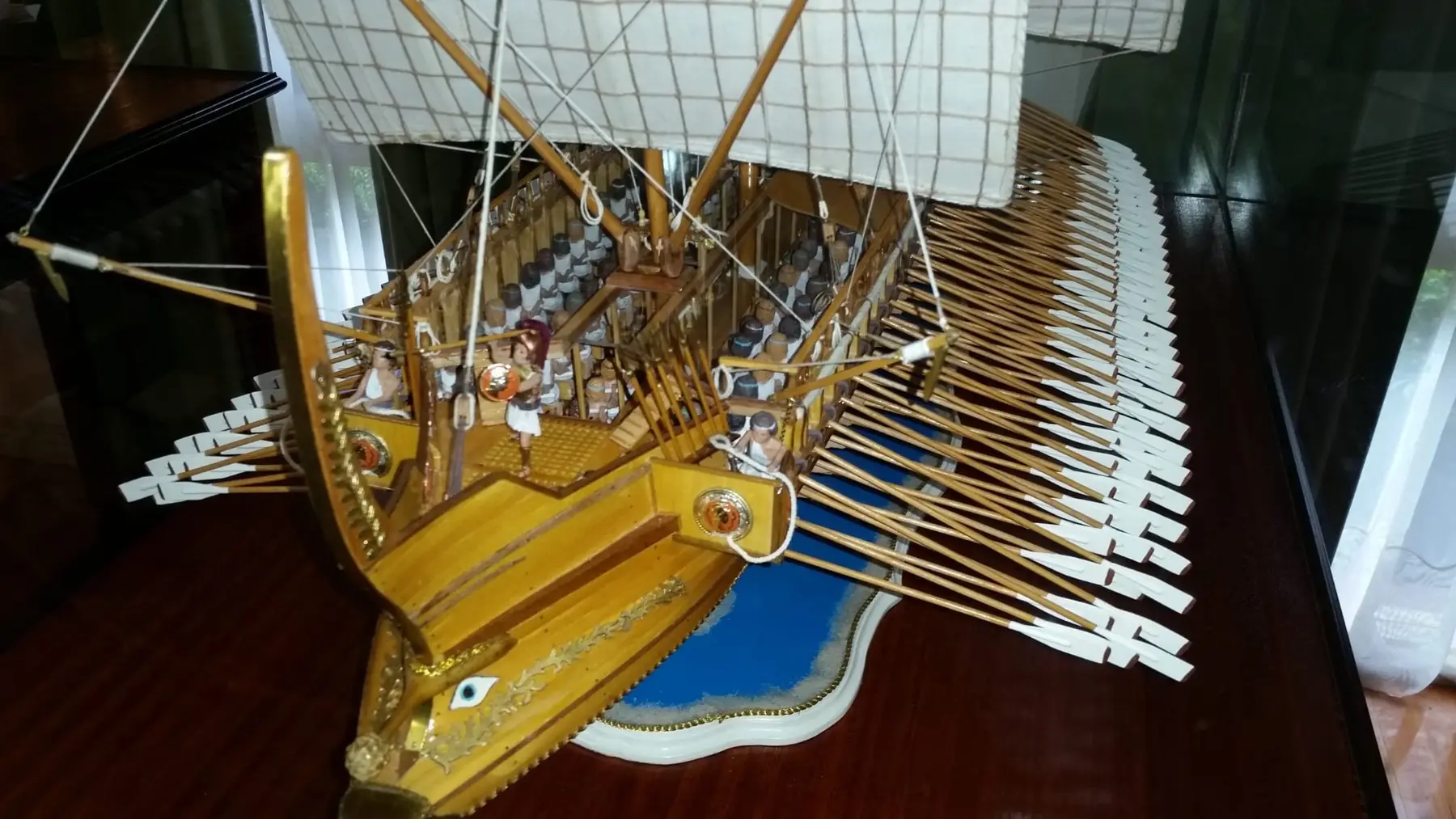
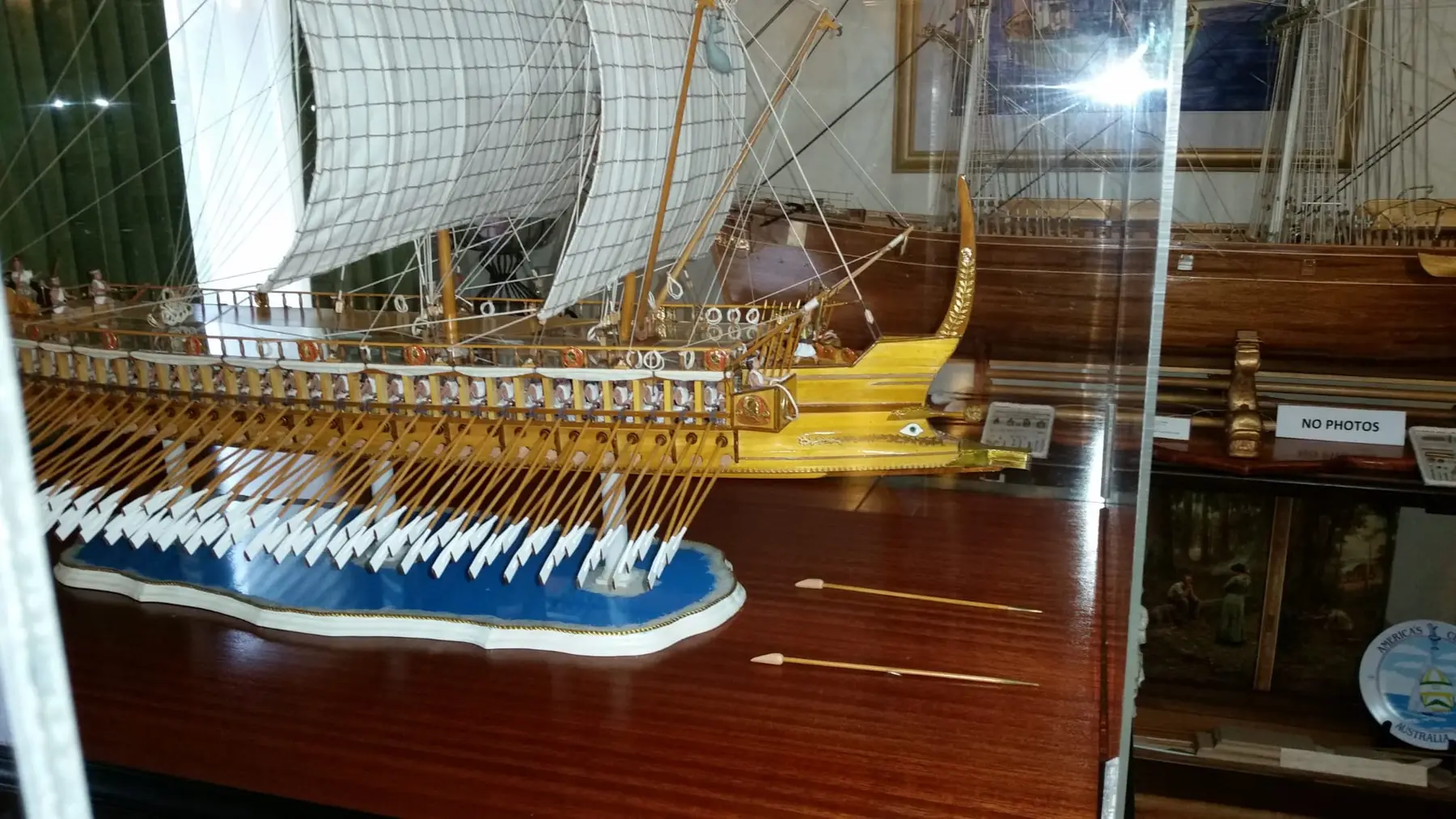
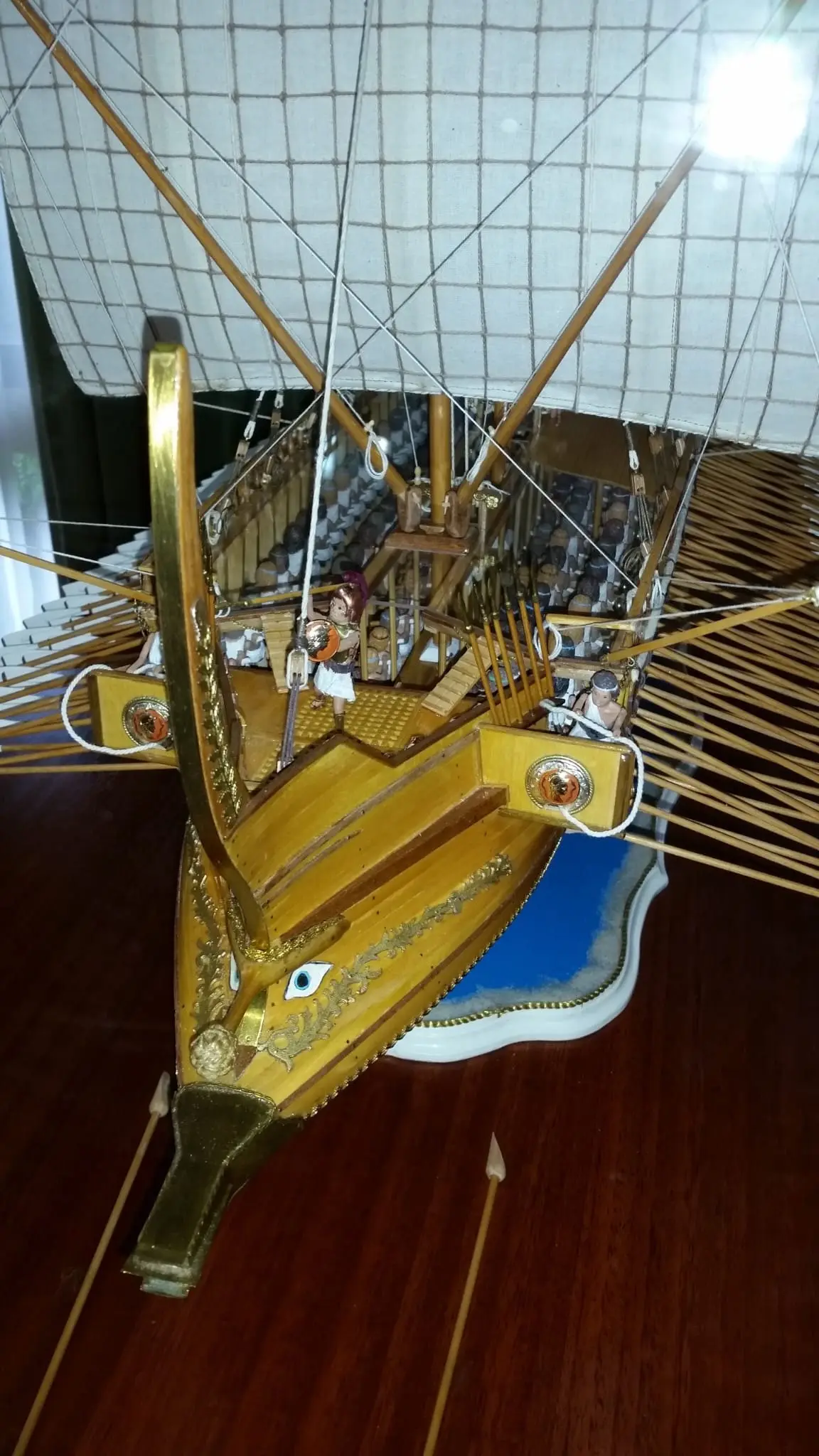
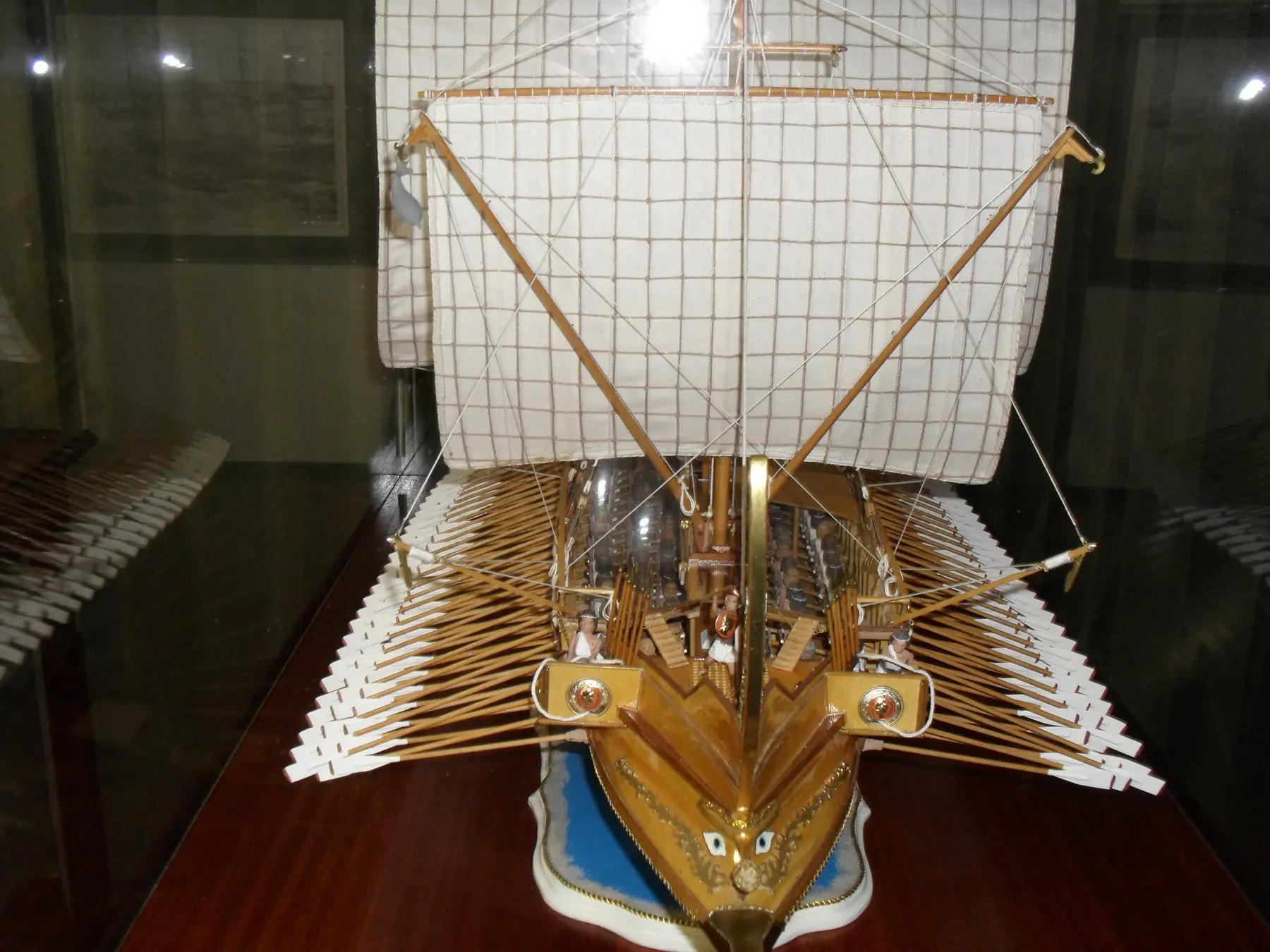
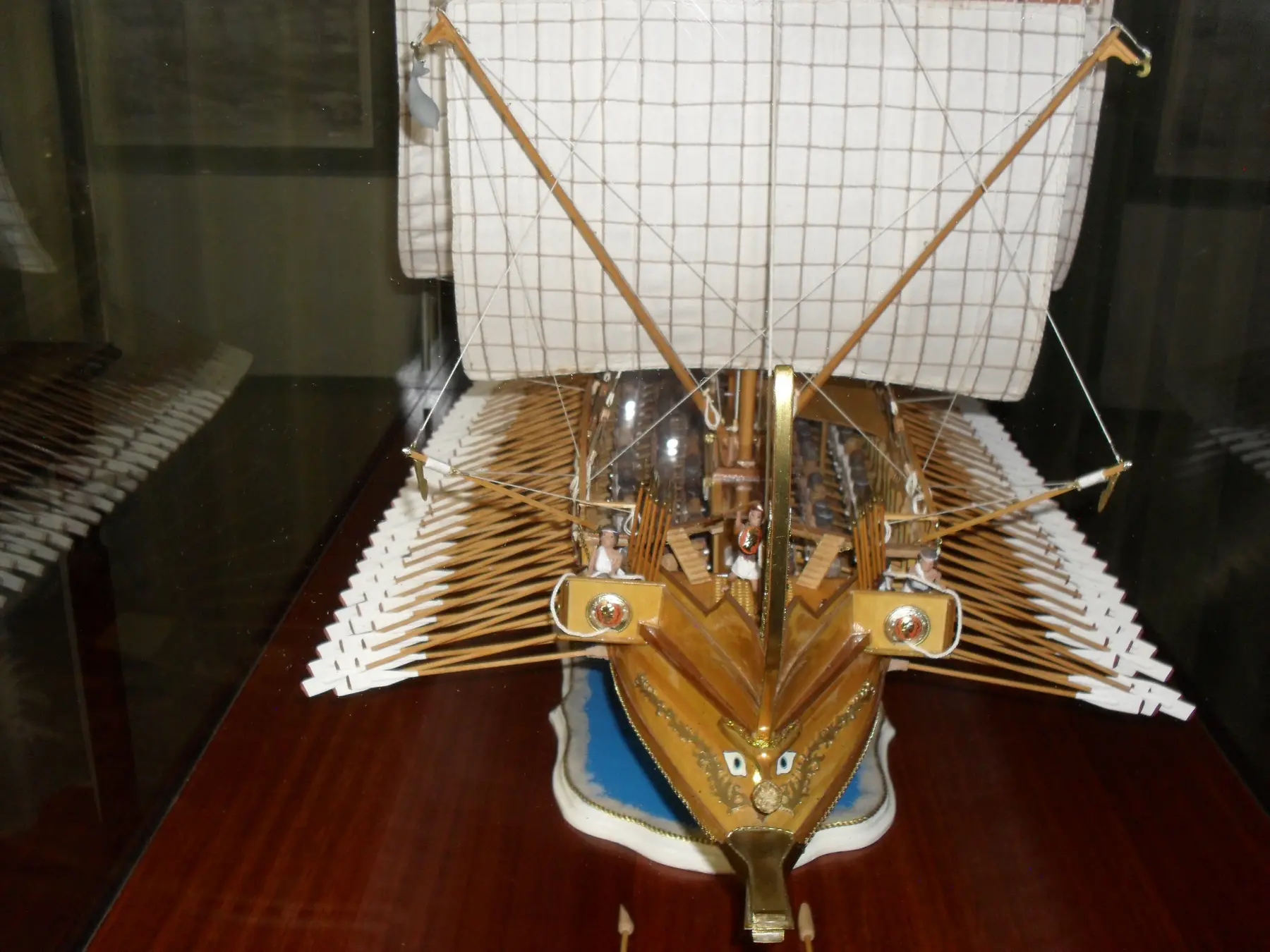
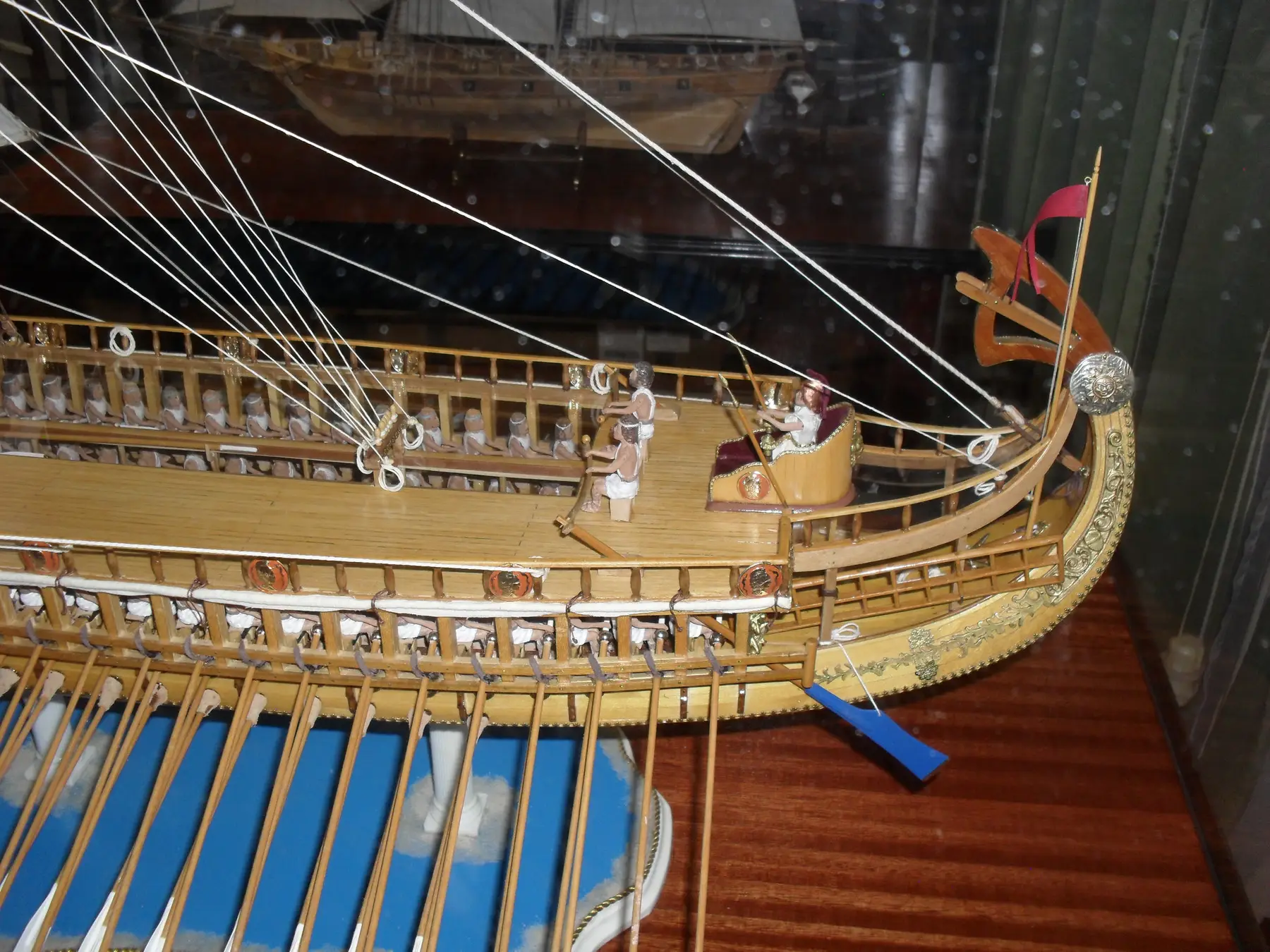
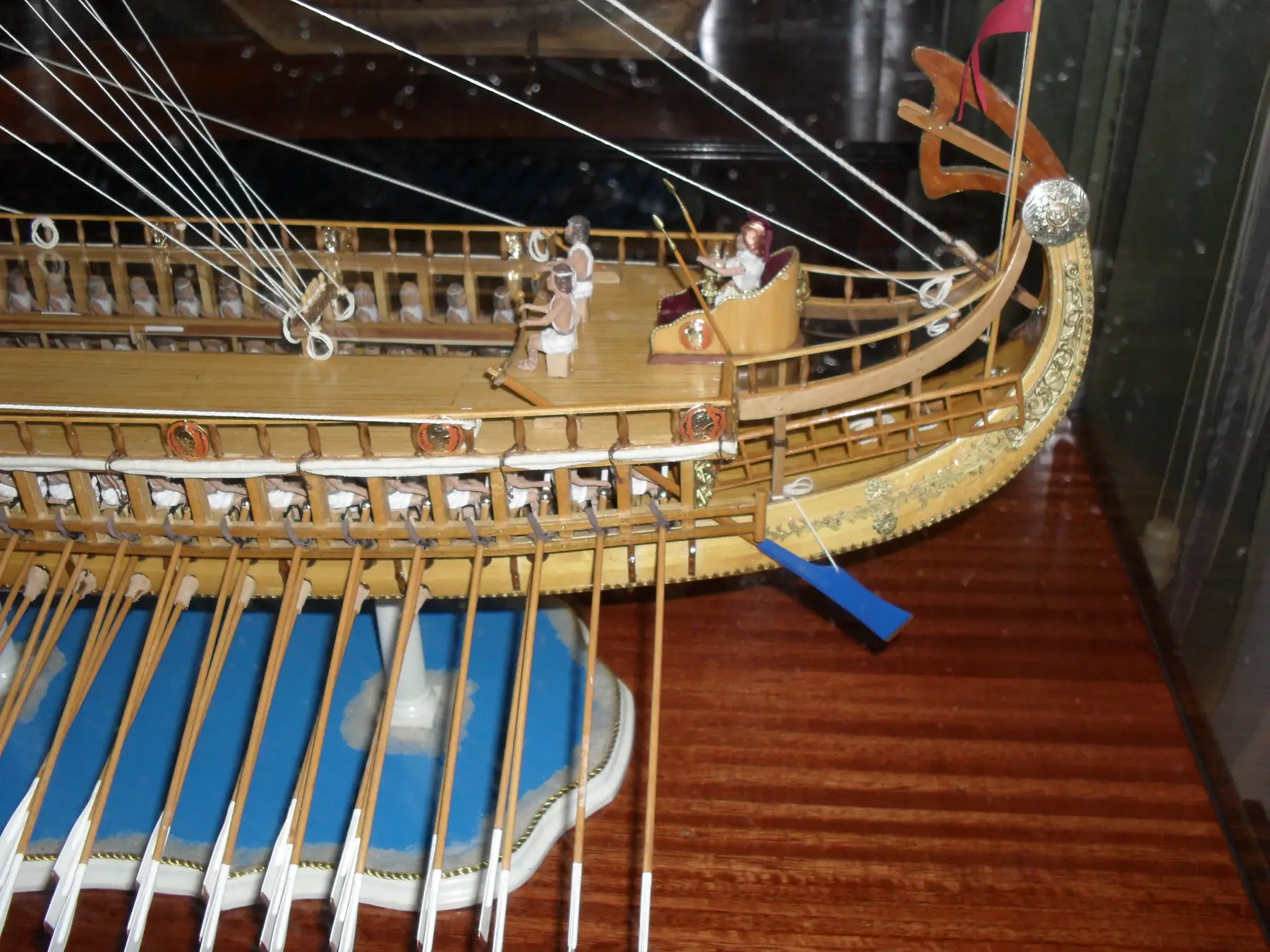
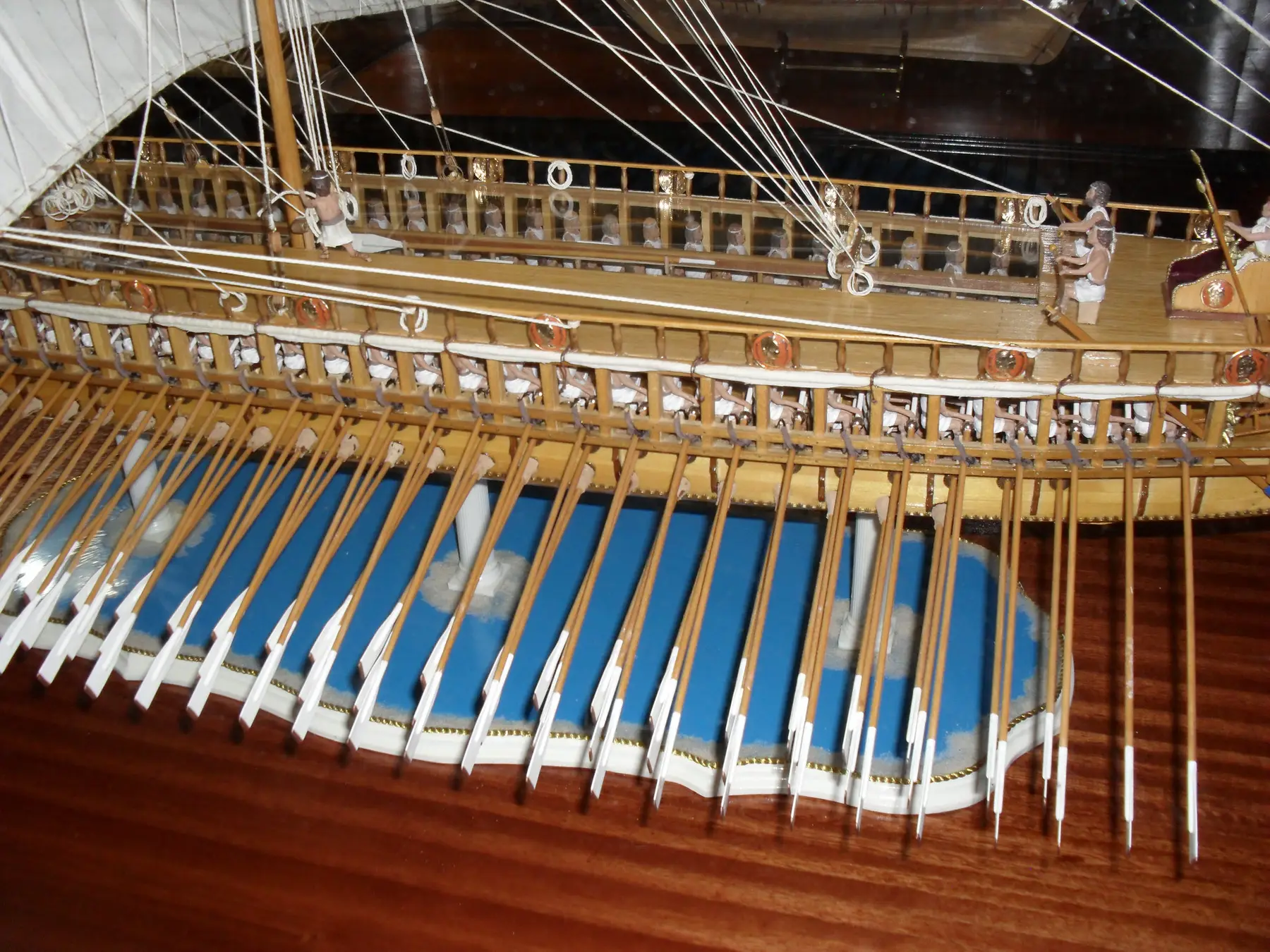
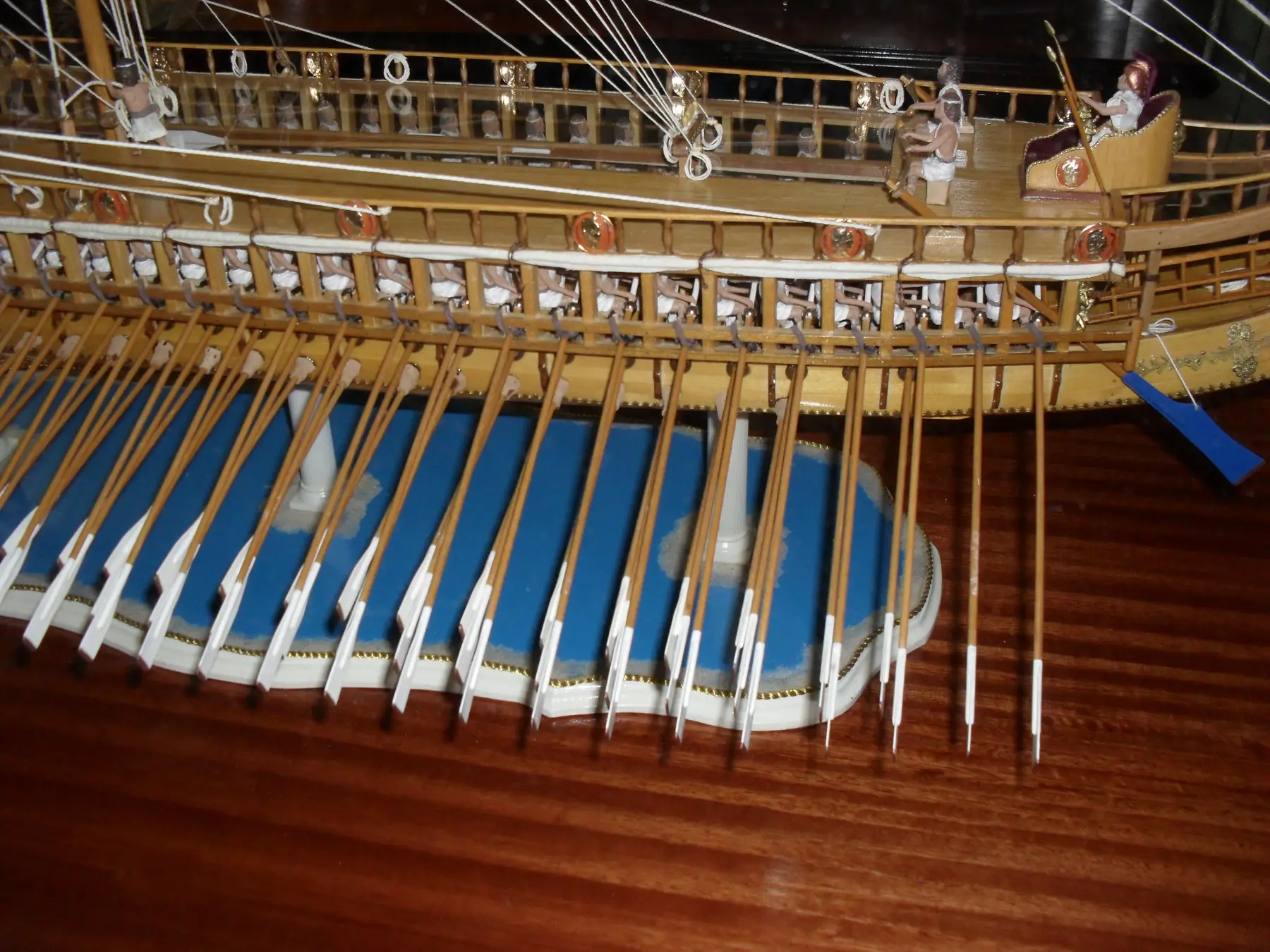
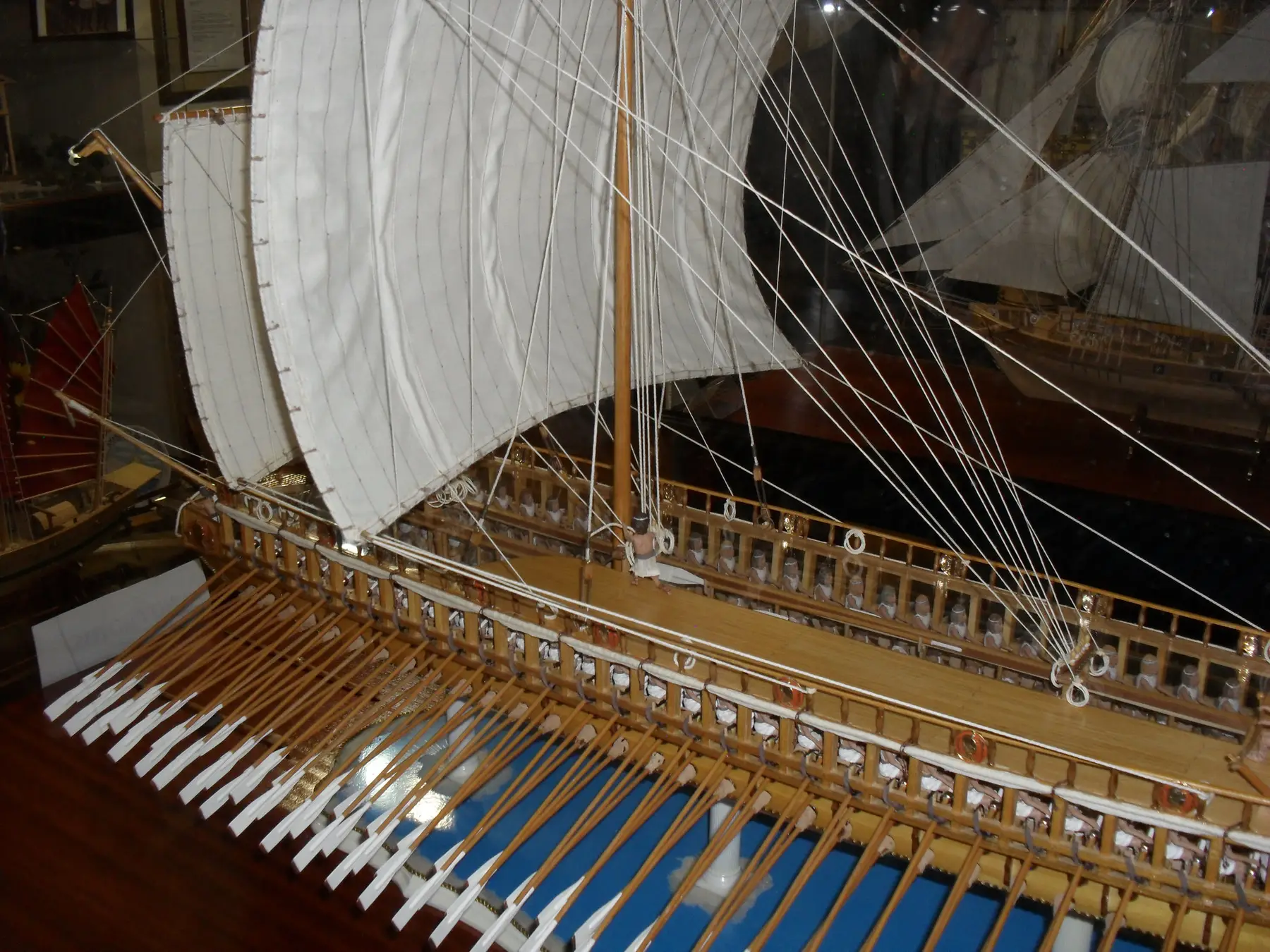
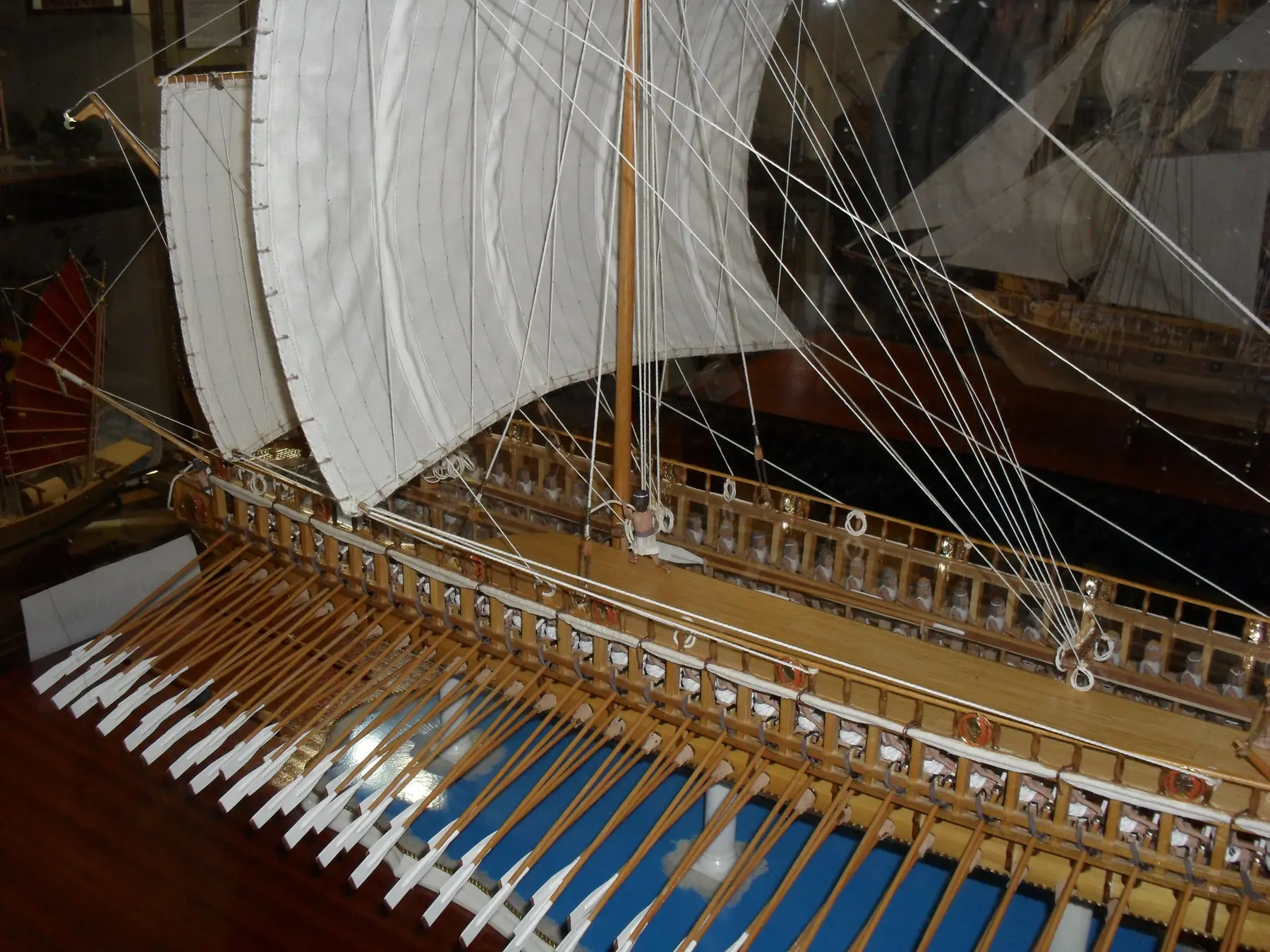
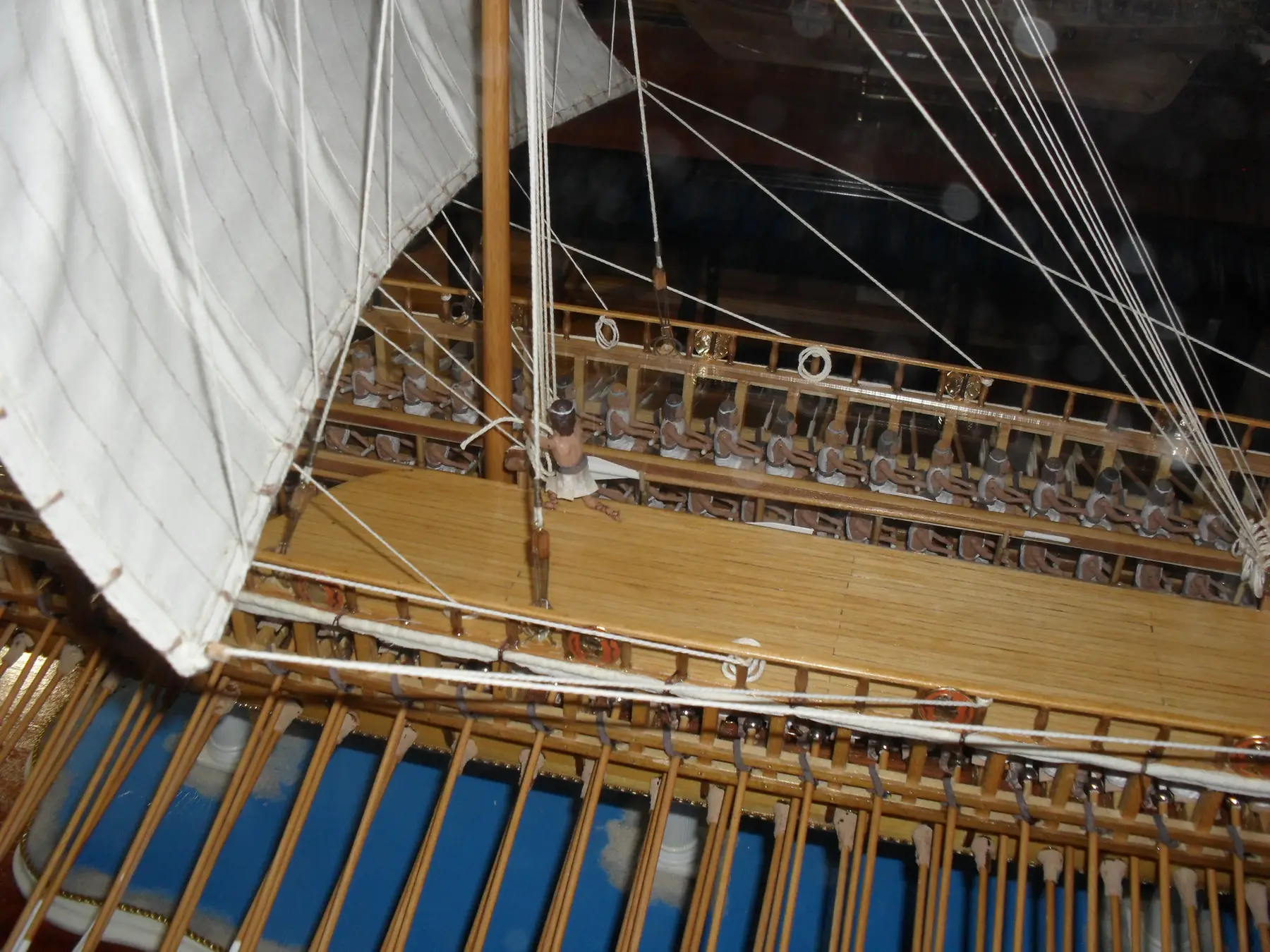
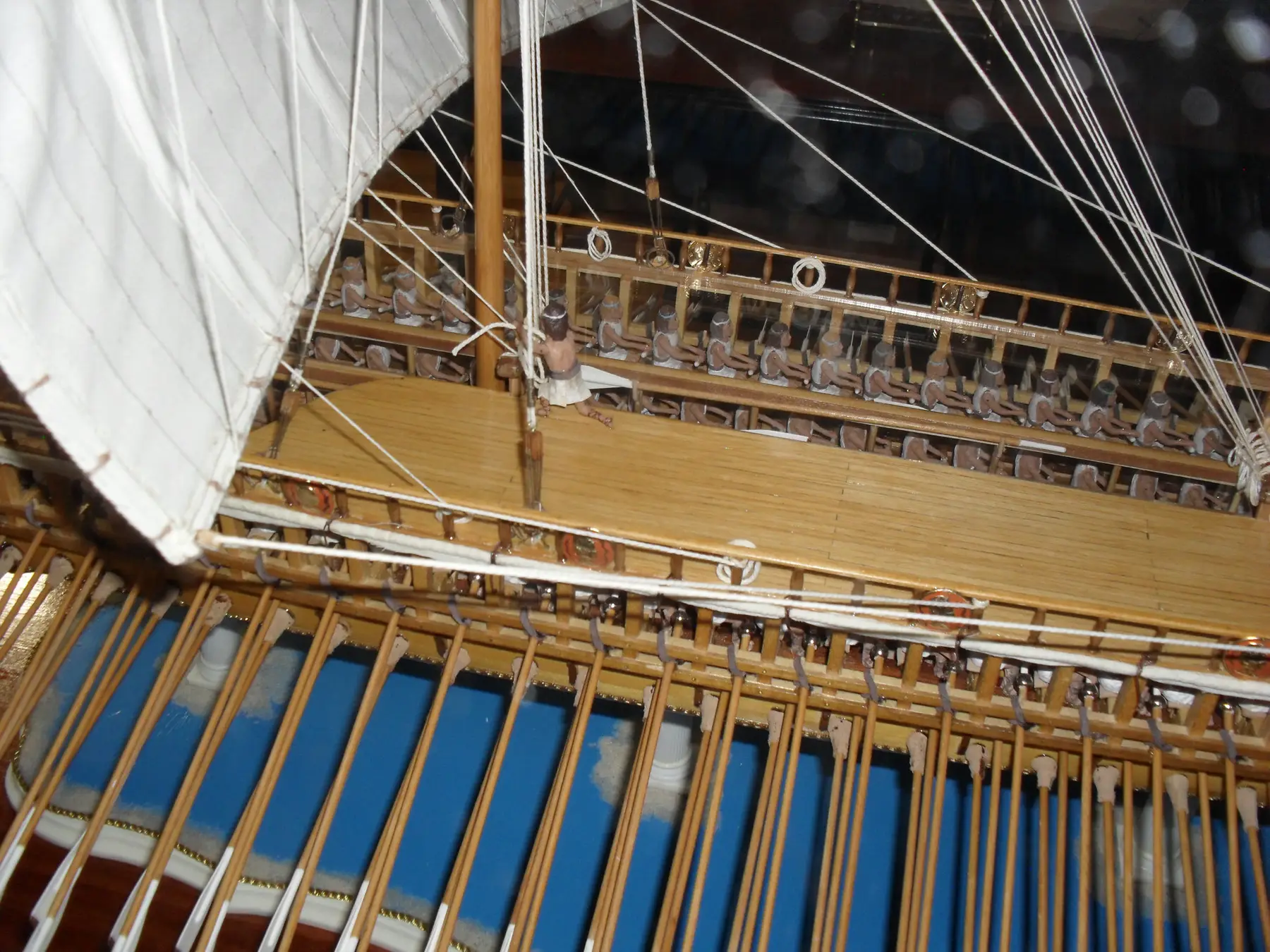
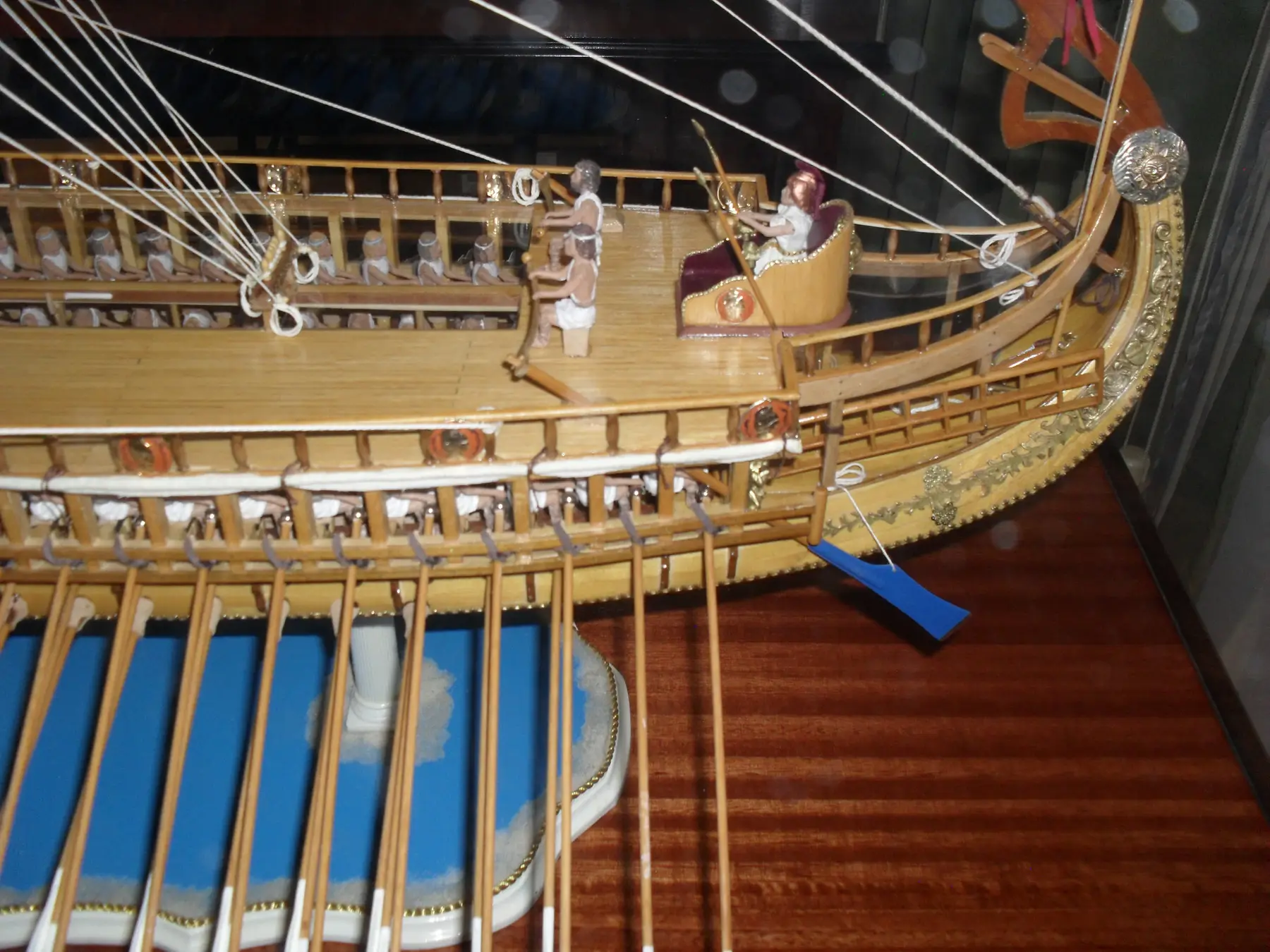
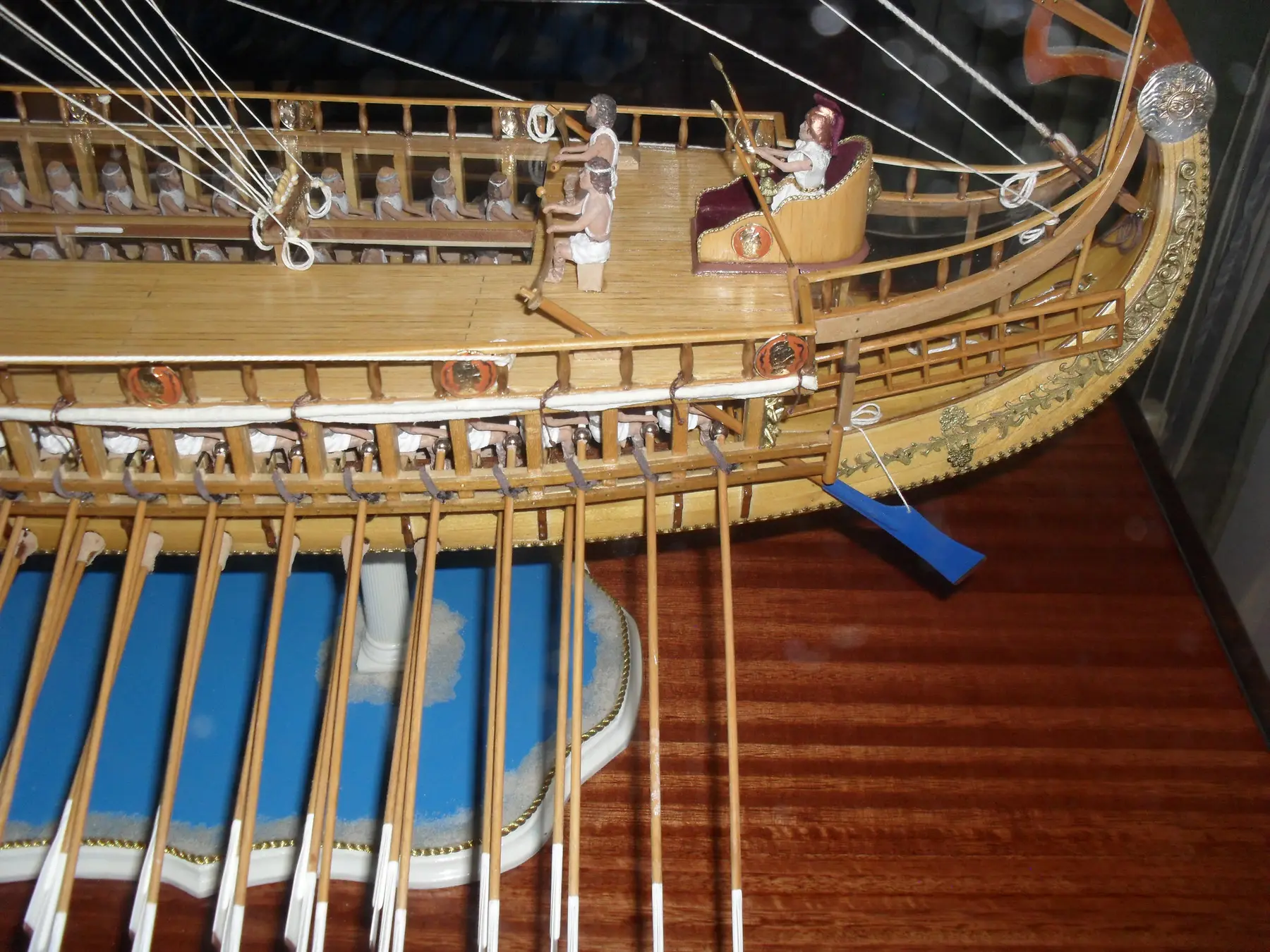
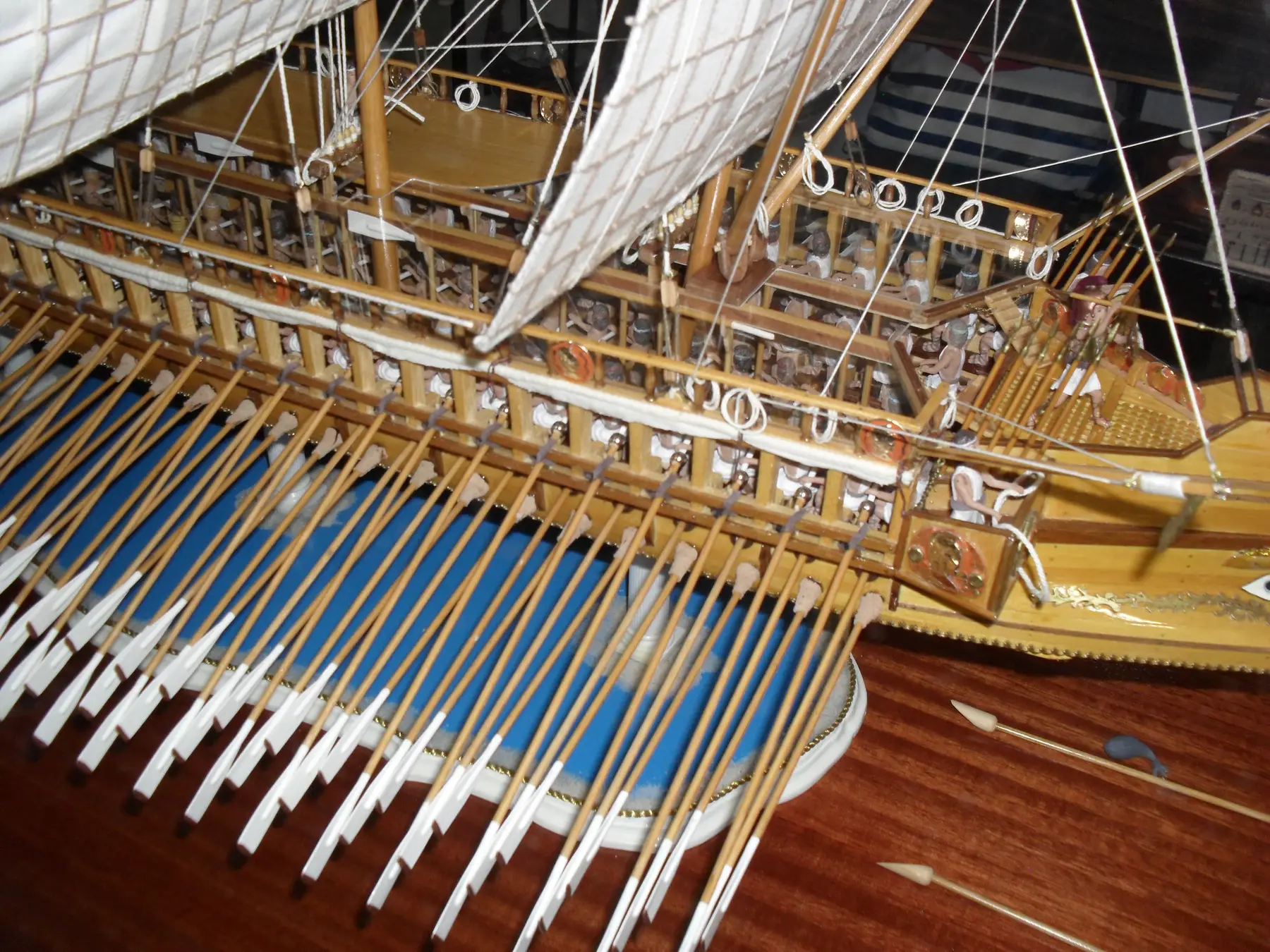
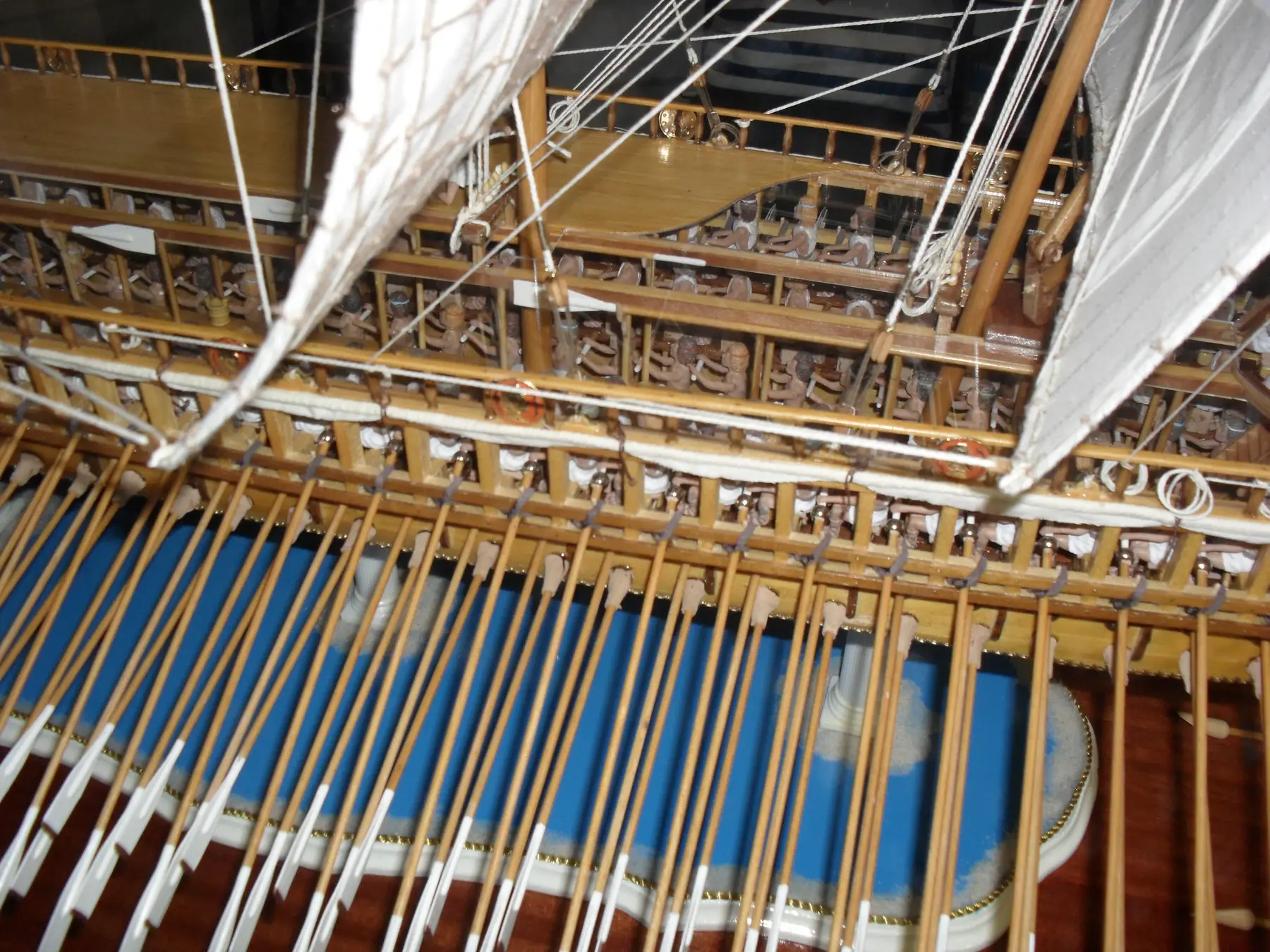
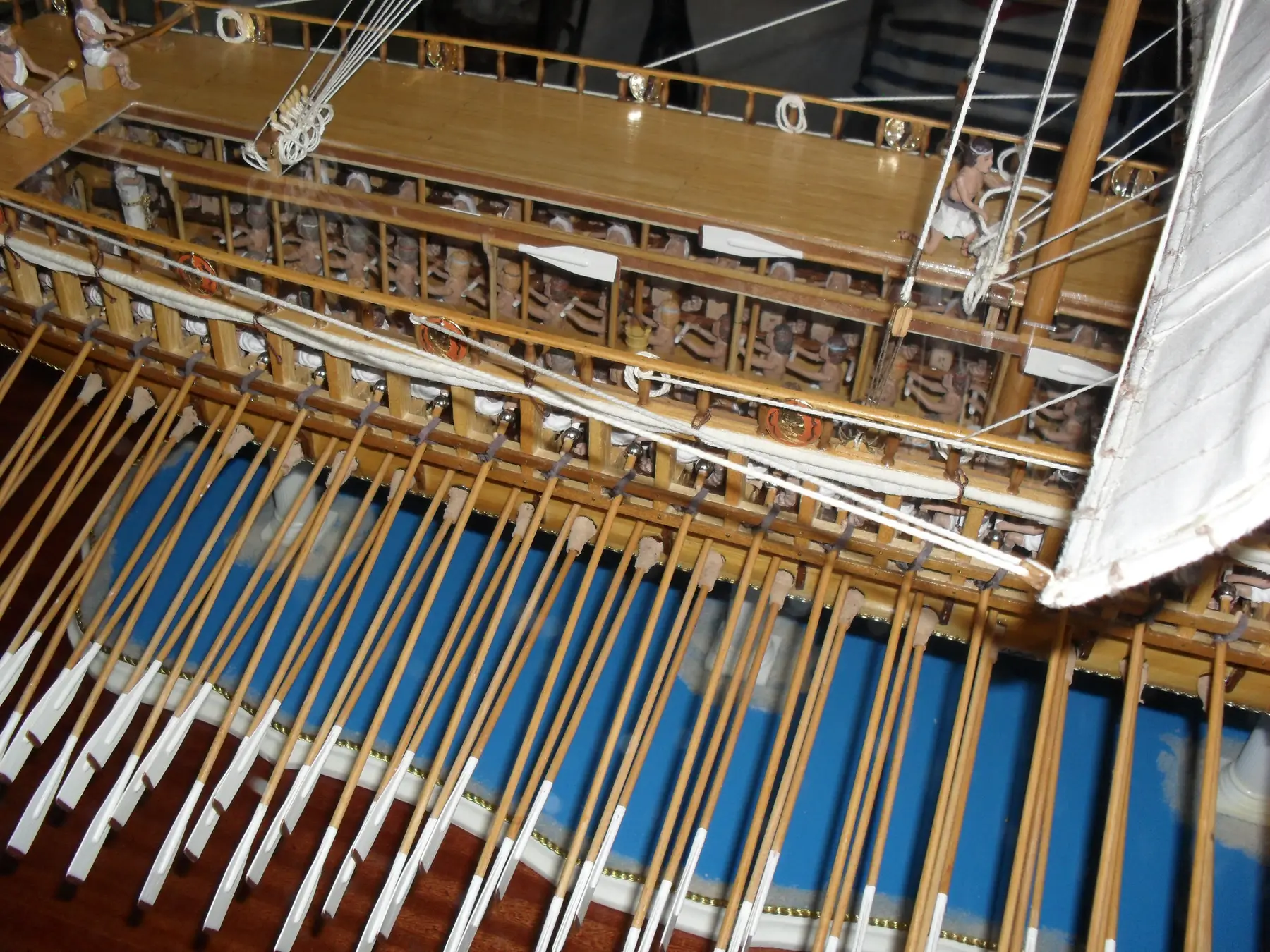
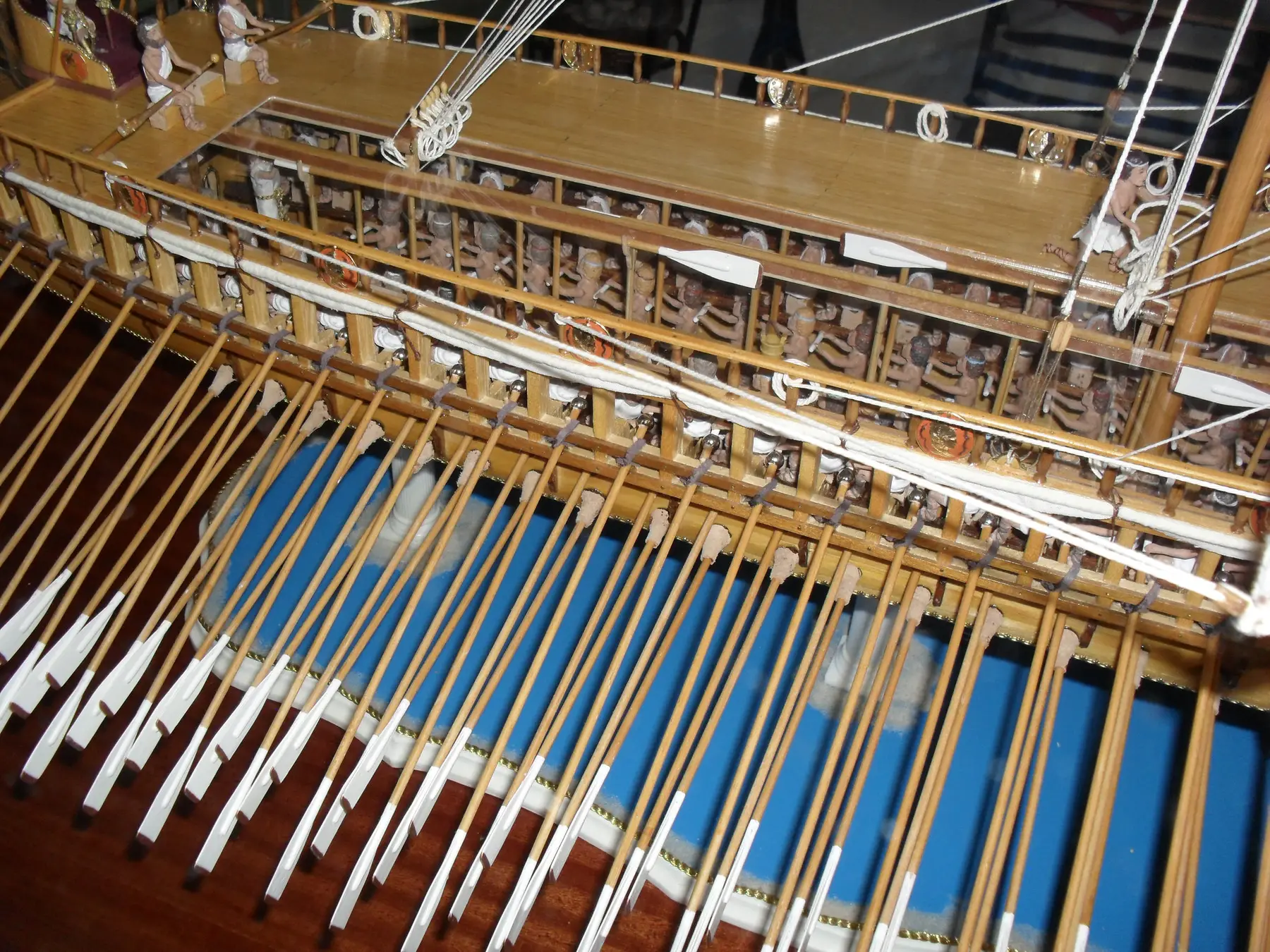
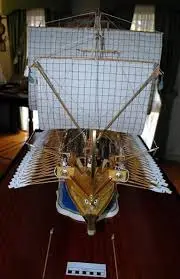
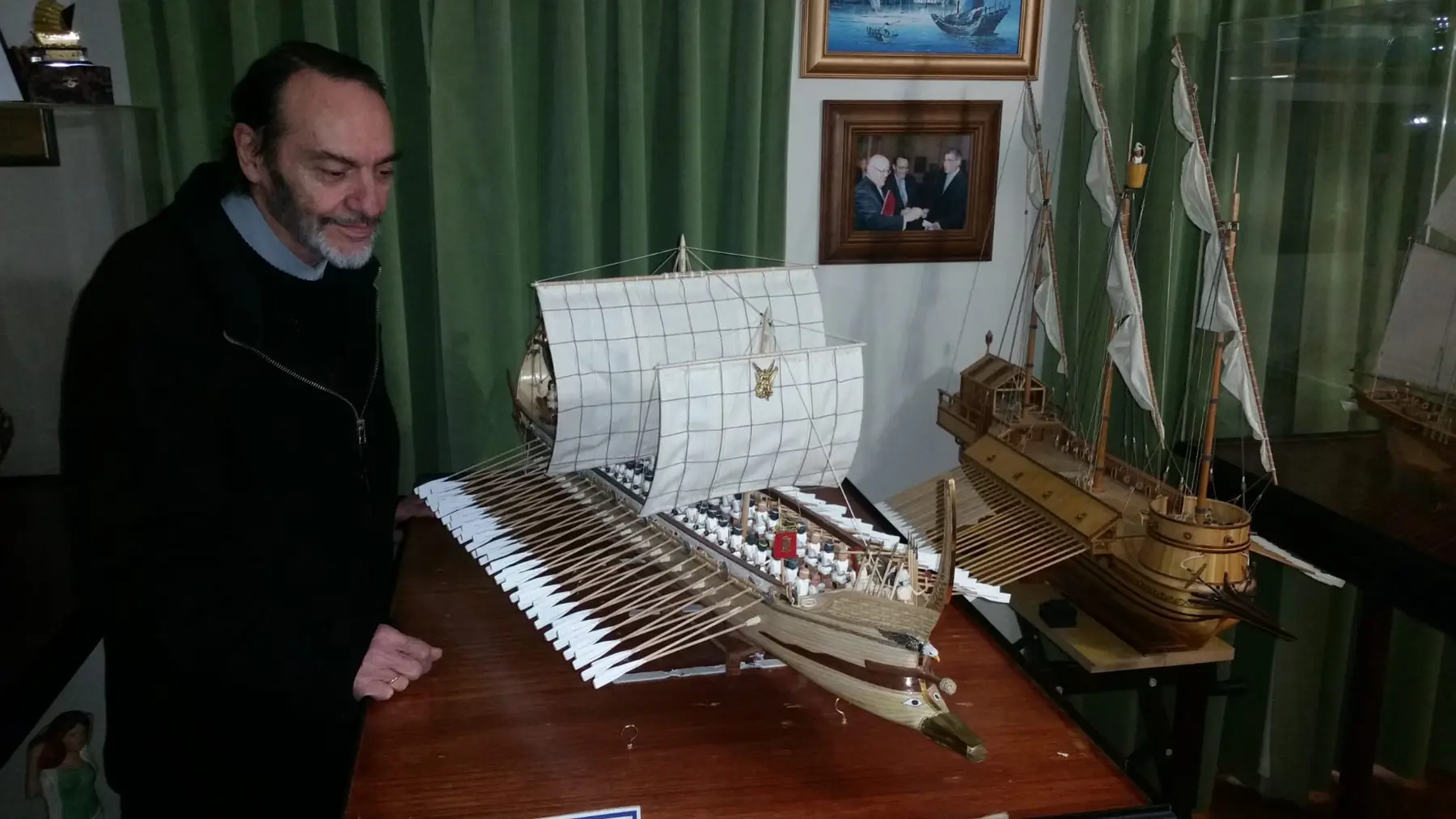
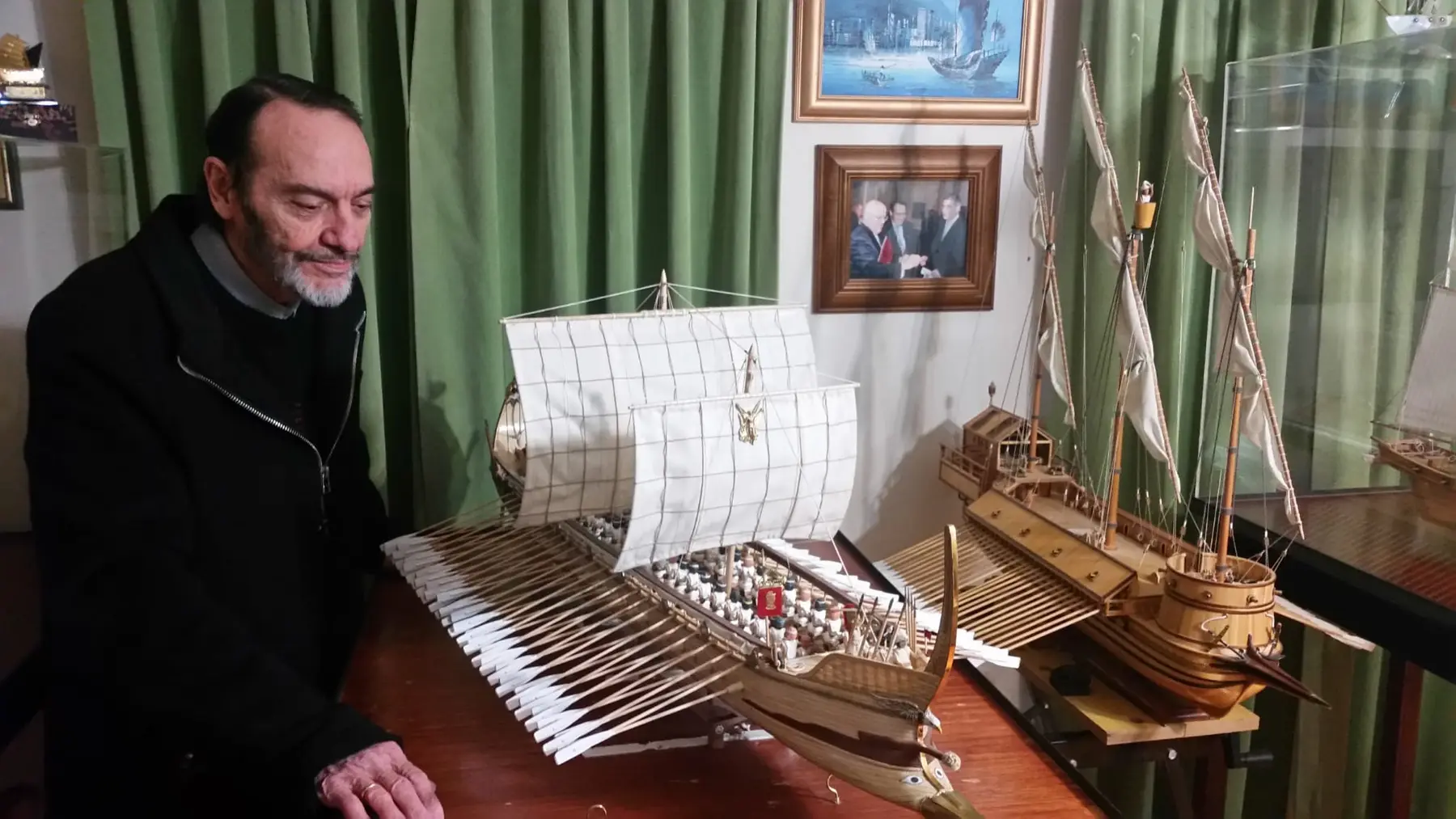
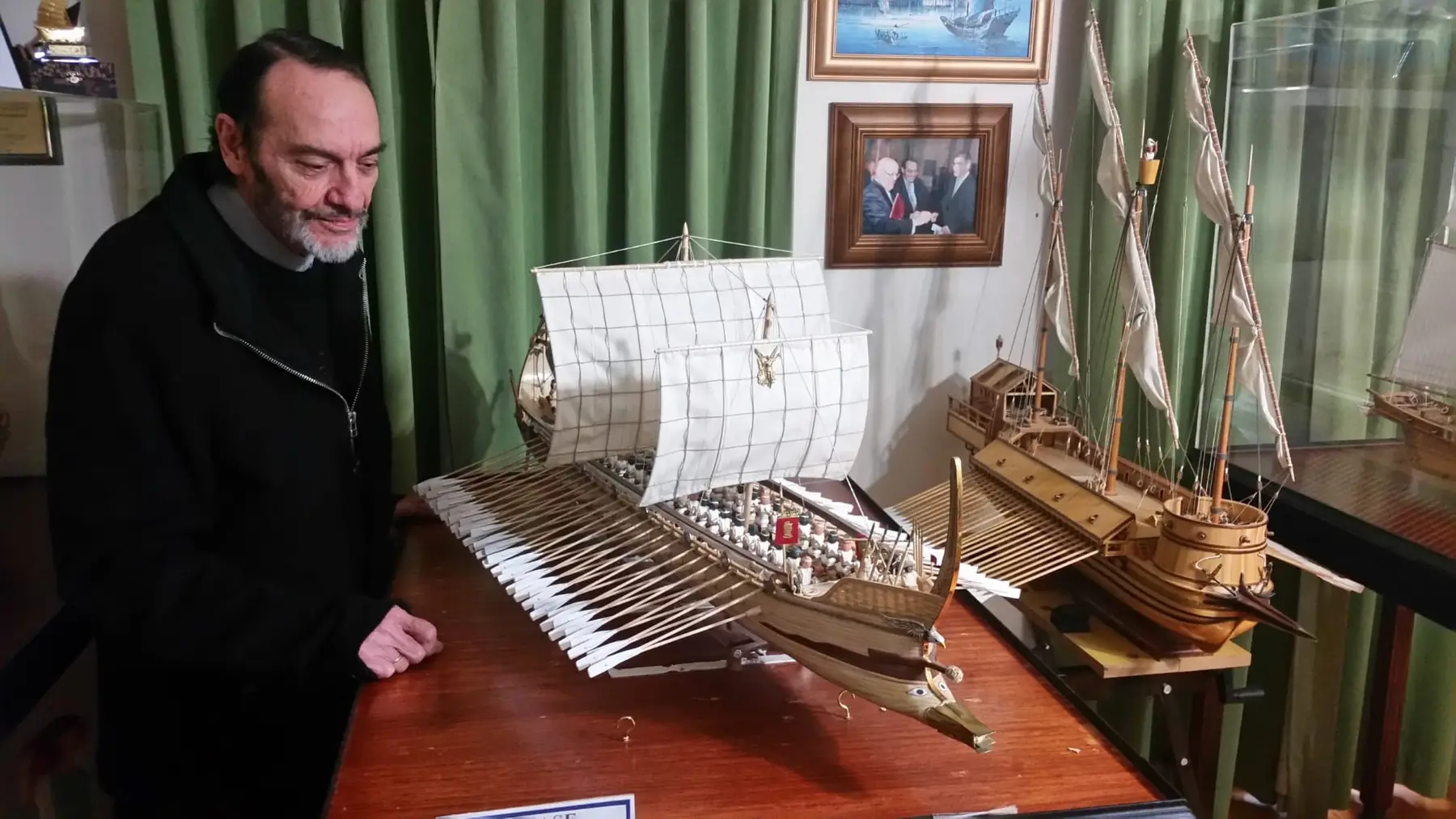
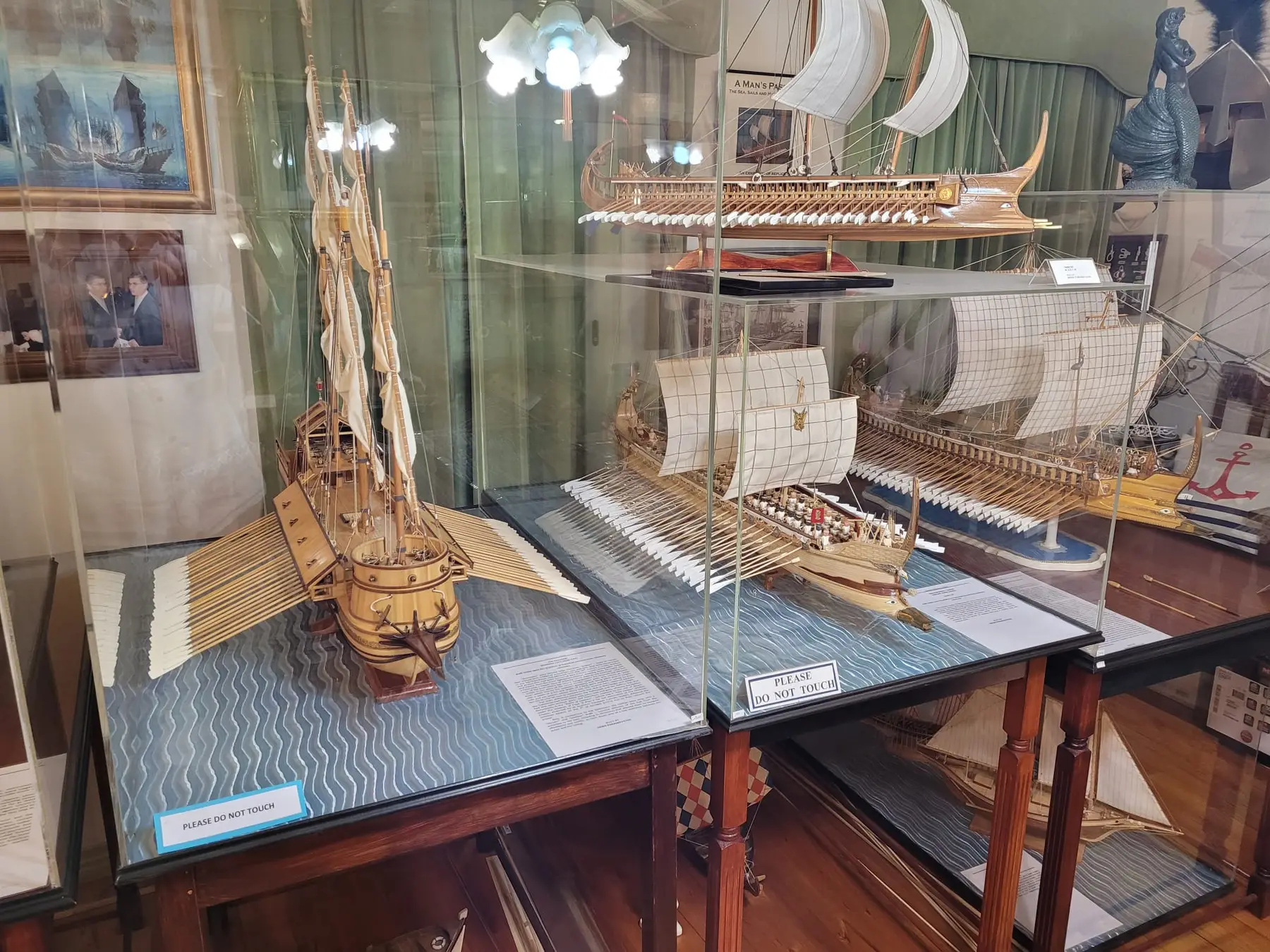
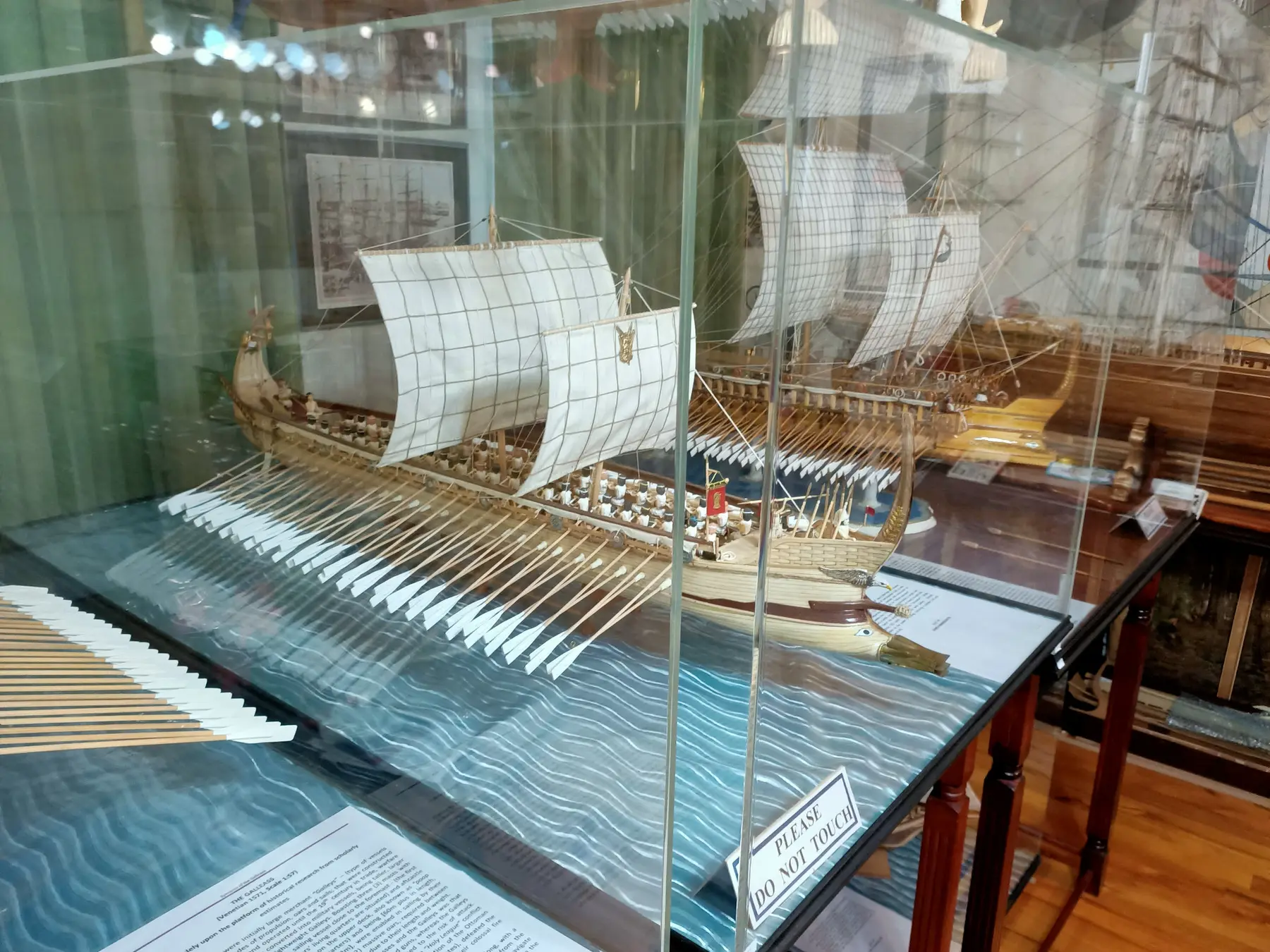
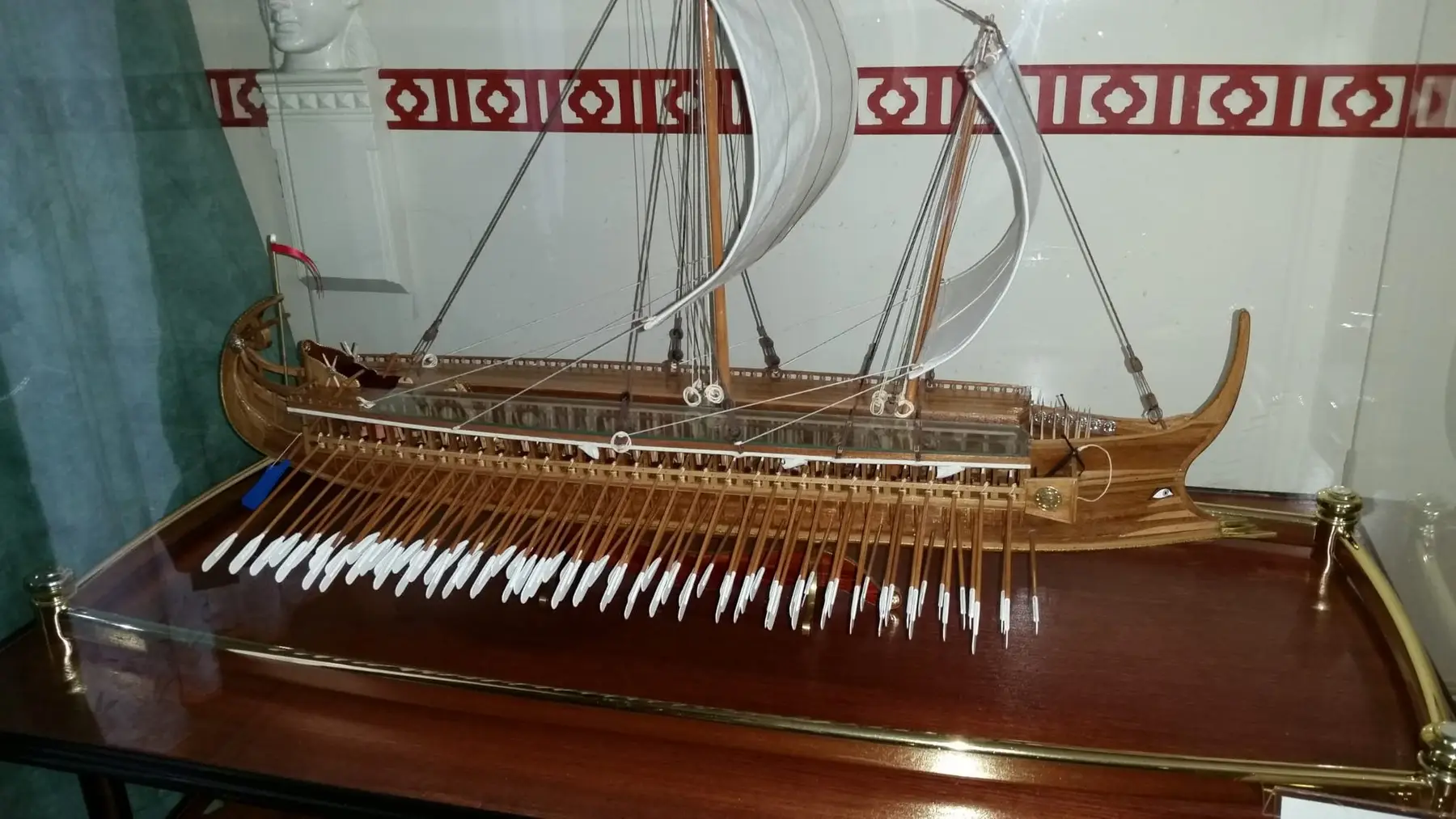
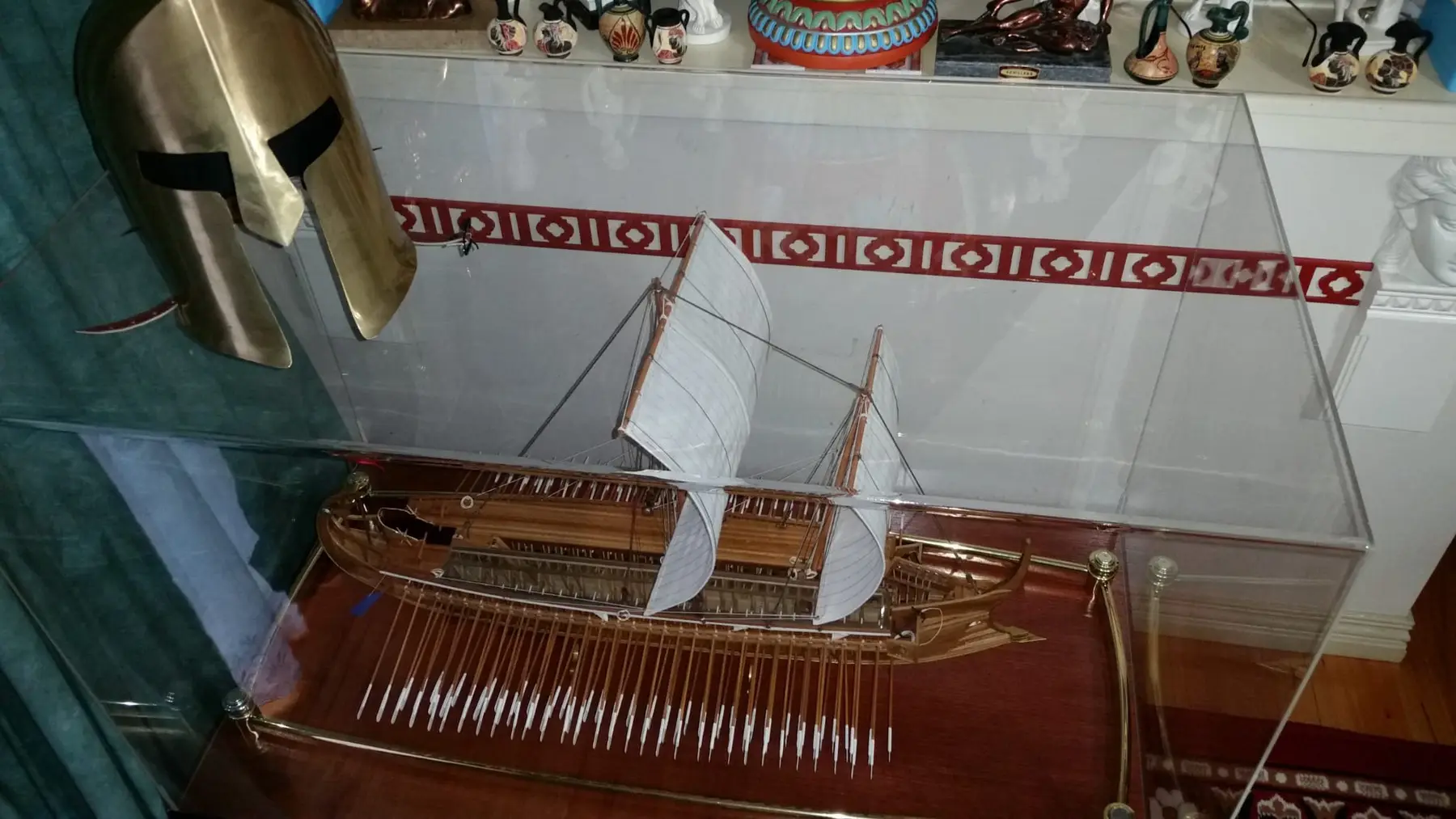
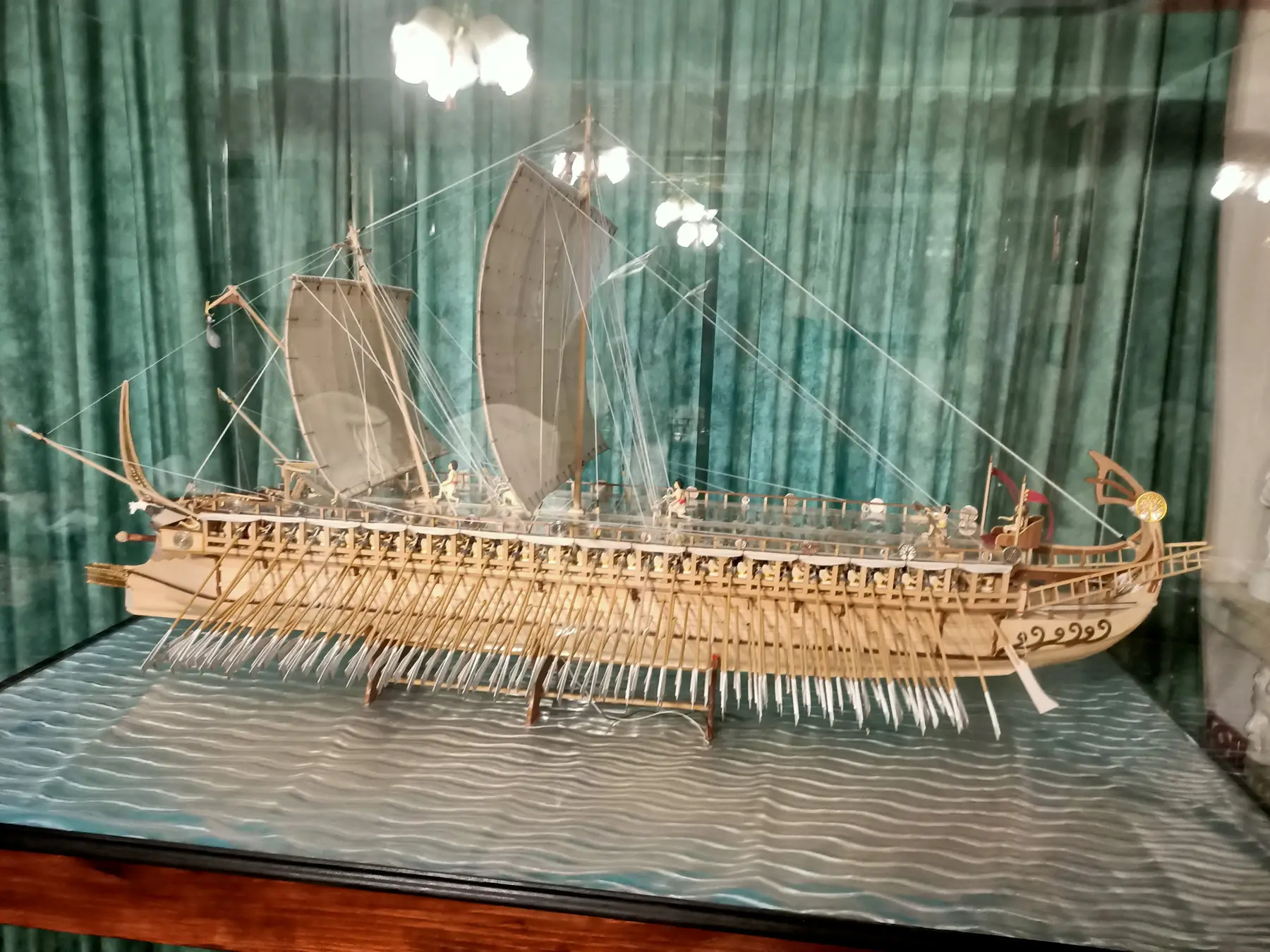
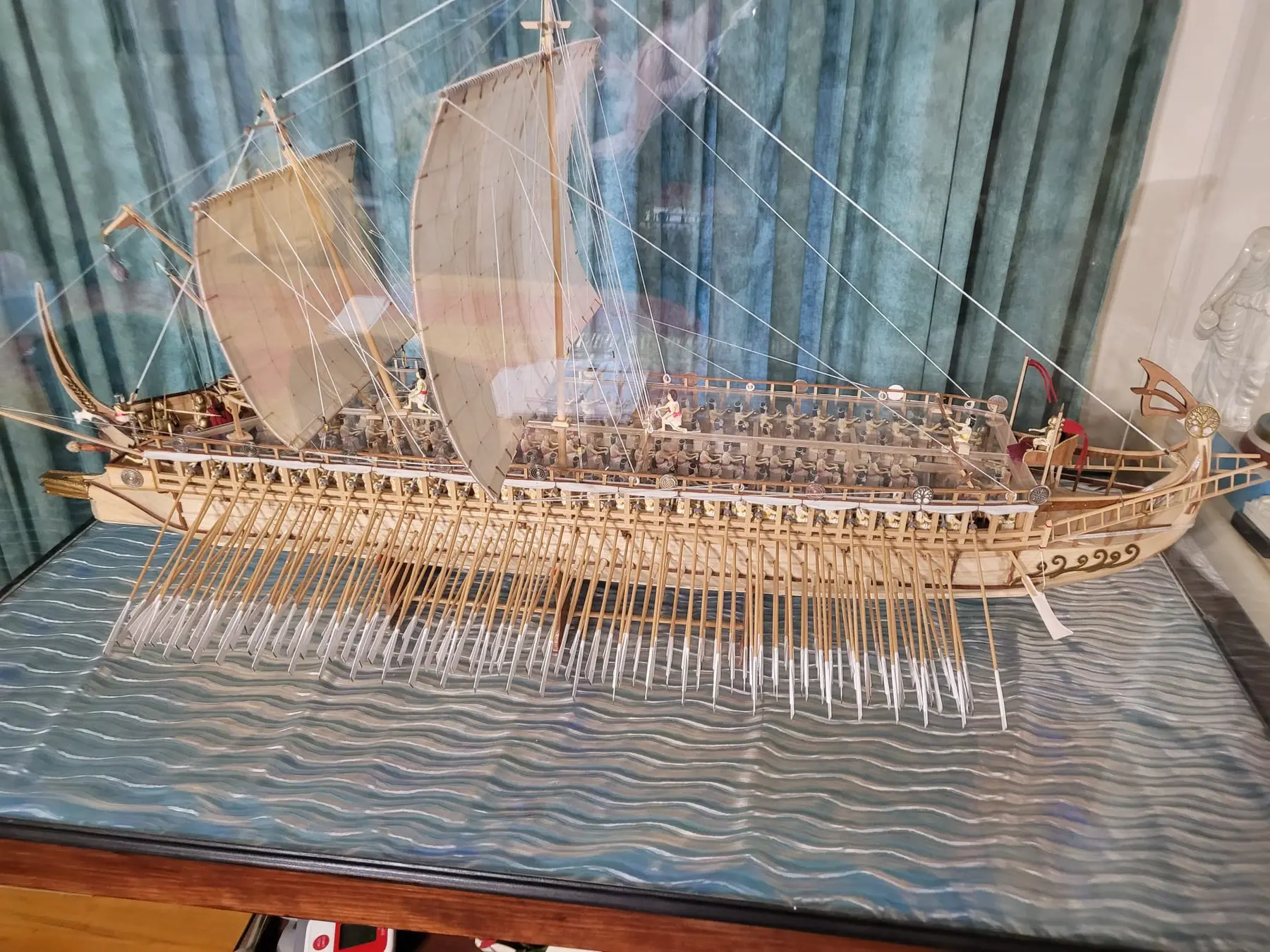
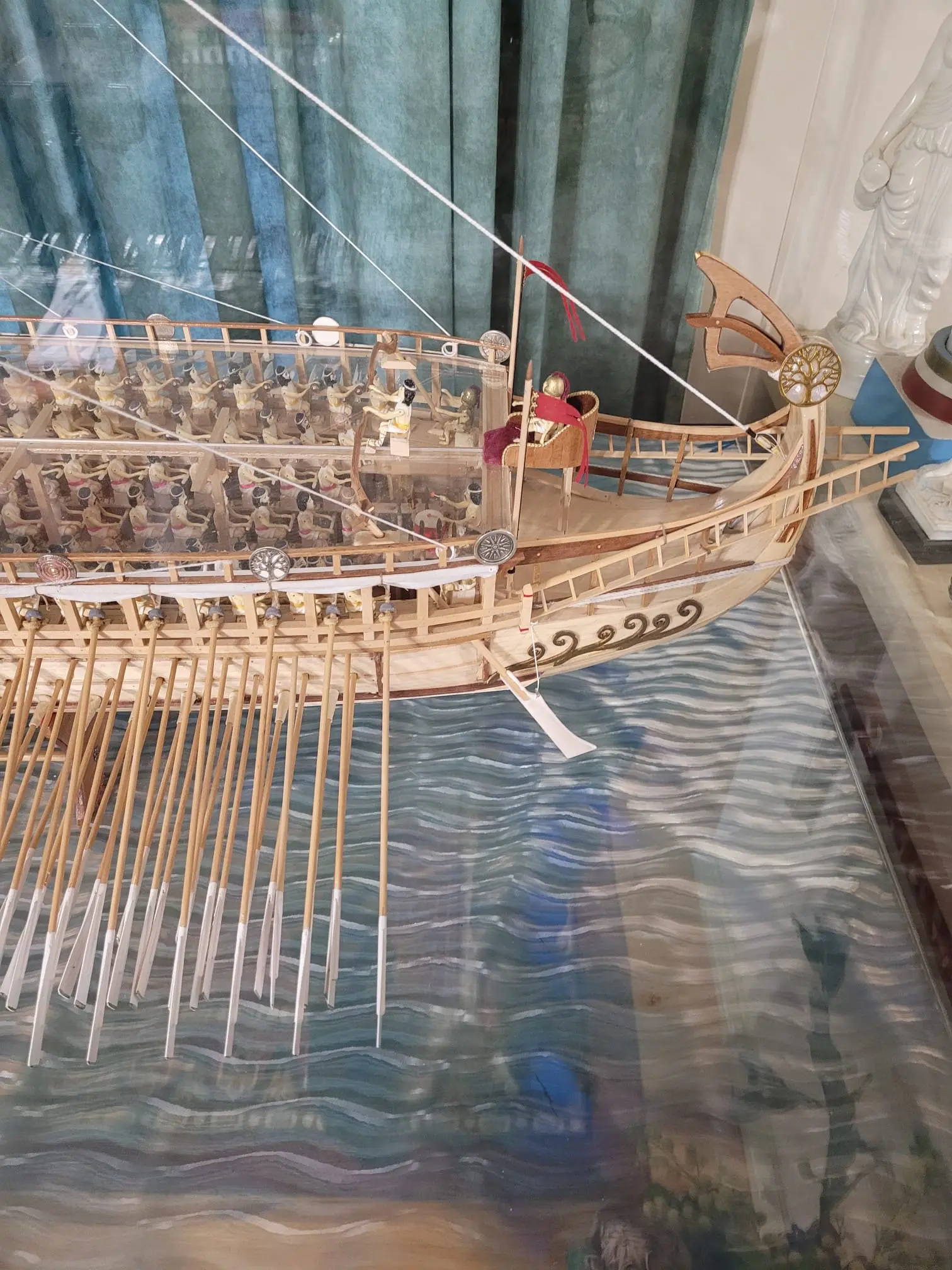
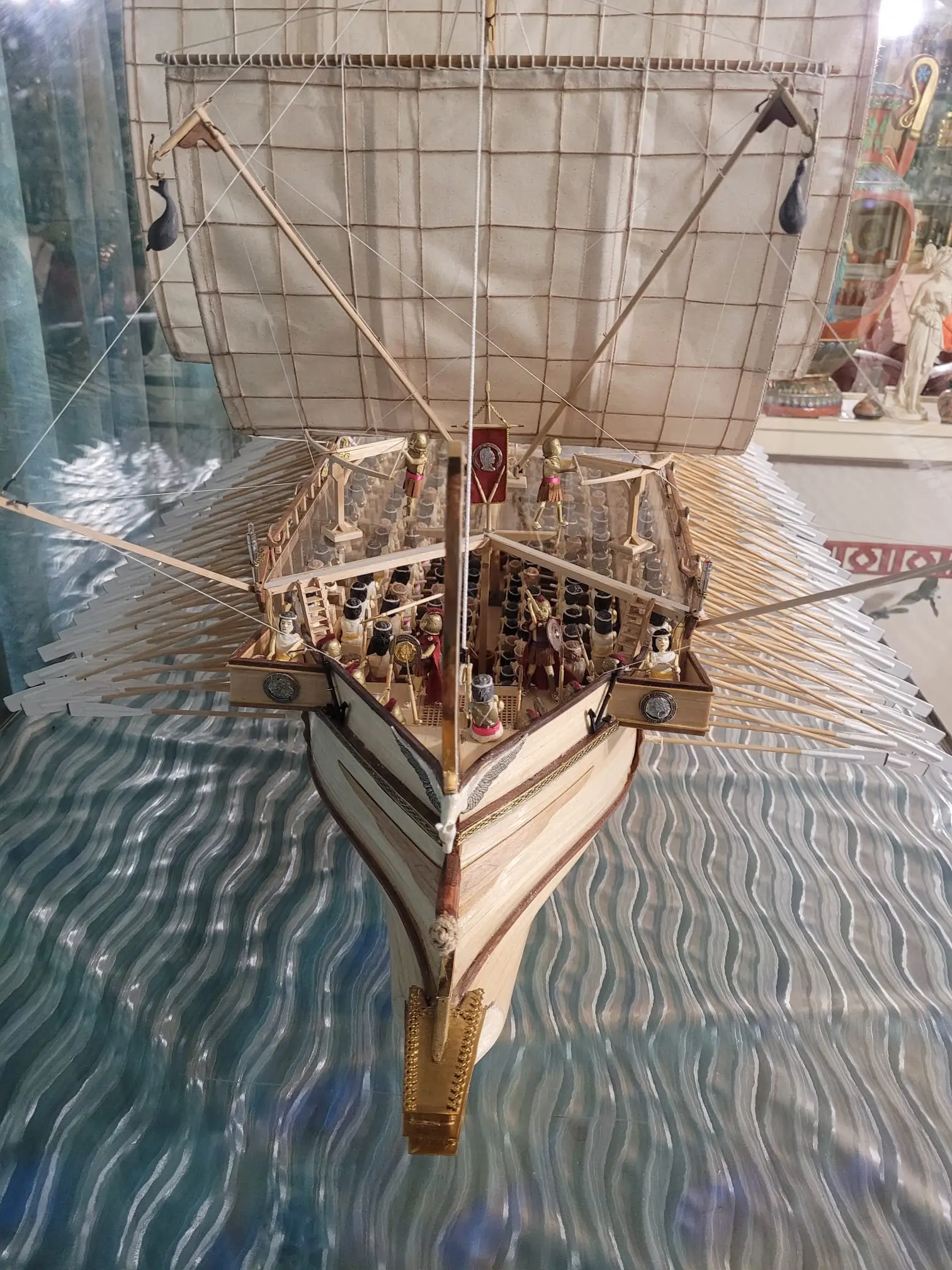
The trireme was the ancient Greek warship that won the Battle of Salamis in 480 BC, a victory that shaped the course of Western civilisation.
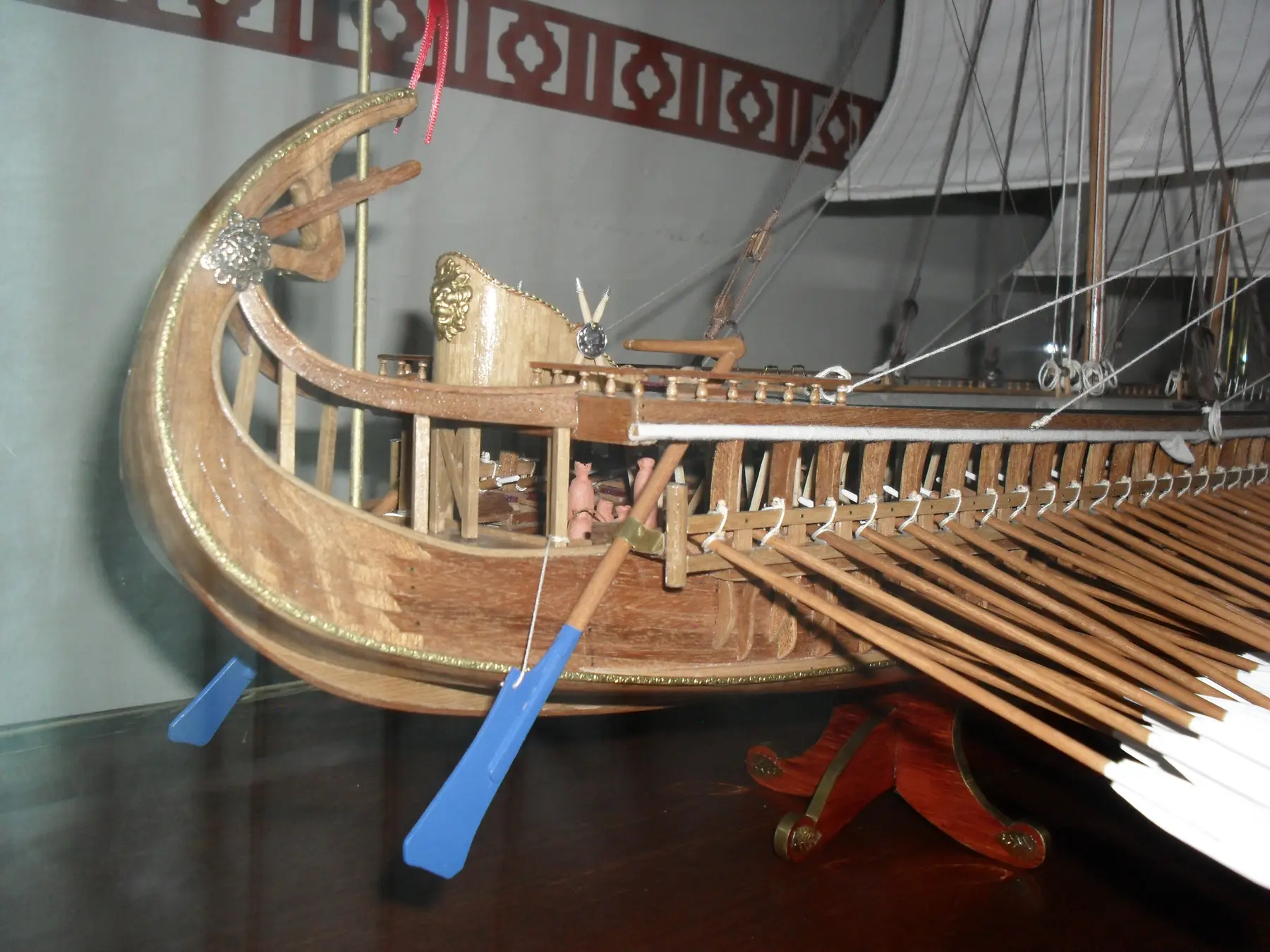
According to Thucydides, the Corinthian shipbuilder Ameinocles built the first four triremes for the Samians in about 704 BC. The design grew out of the bireme by adding a third level of oarsmen, which made the ship longer and wider. A trireme was 36–44 m long and 4.4–4.6 m wide, classed as a long ship (makra) as opposed to the round (strongyla) cargo ships. The third level, the thranites, rowed from outriggers that projected from each side and widened the ship by about three feet.
The oarsmen
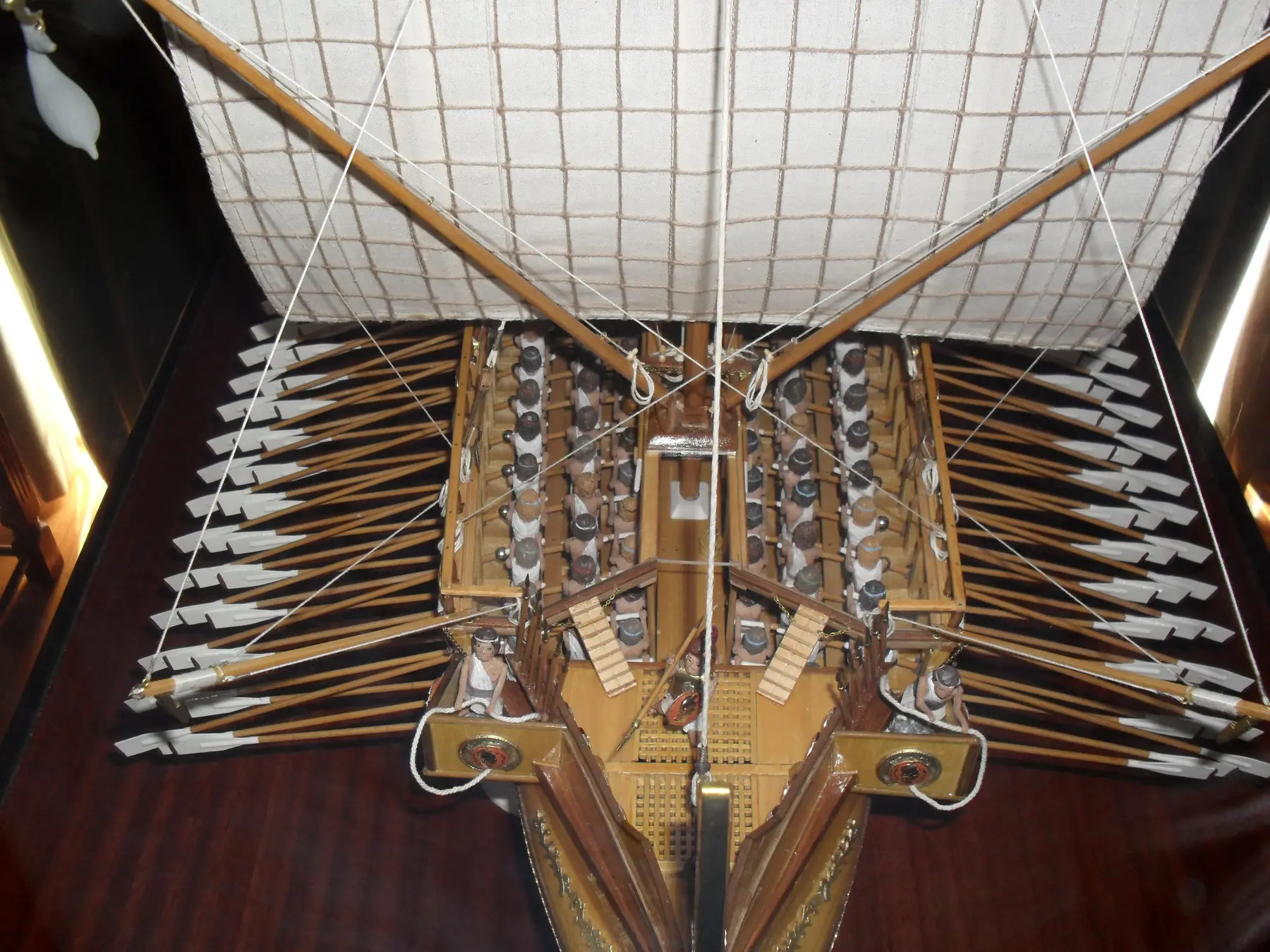
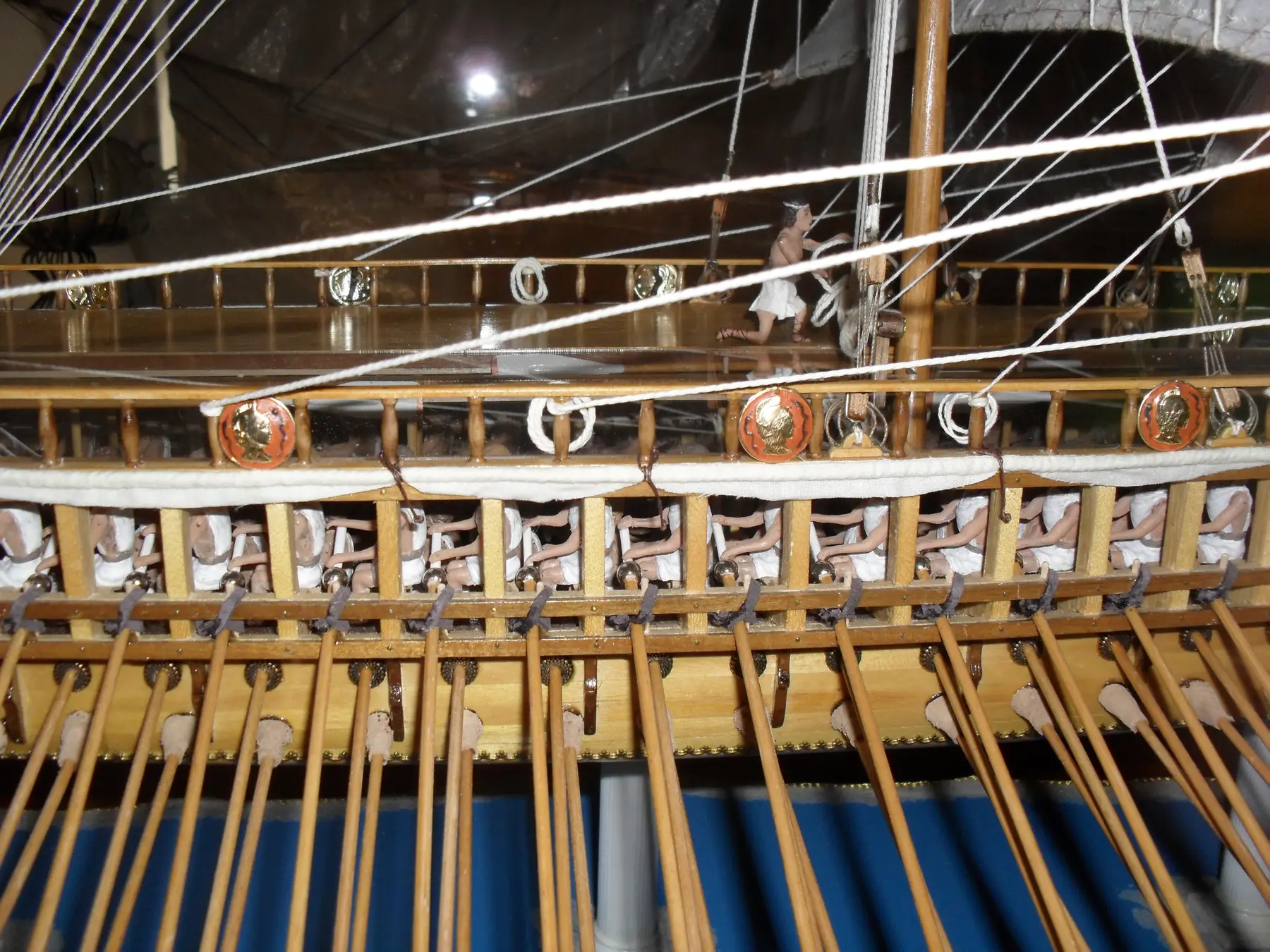
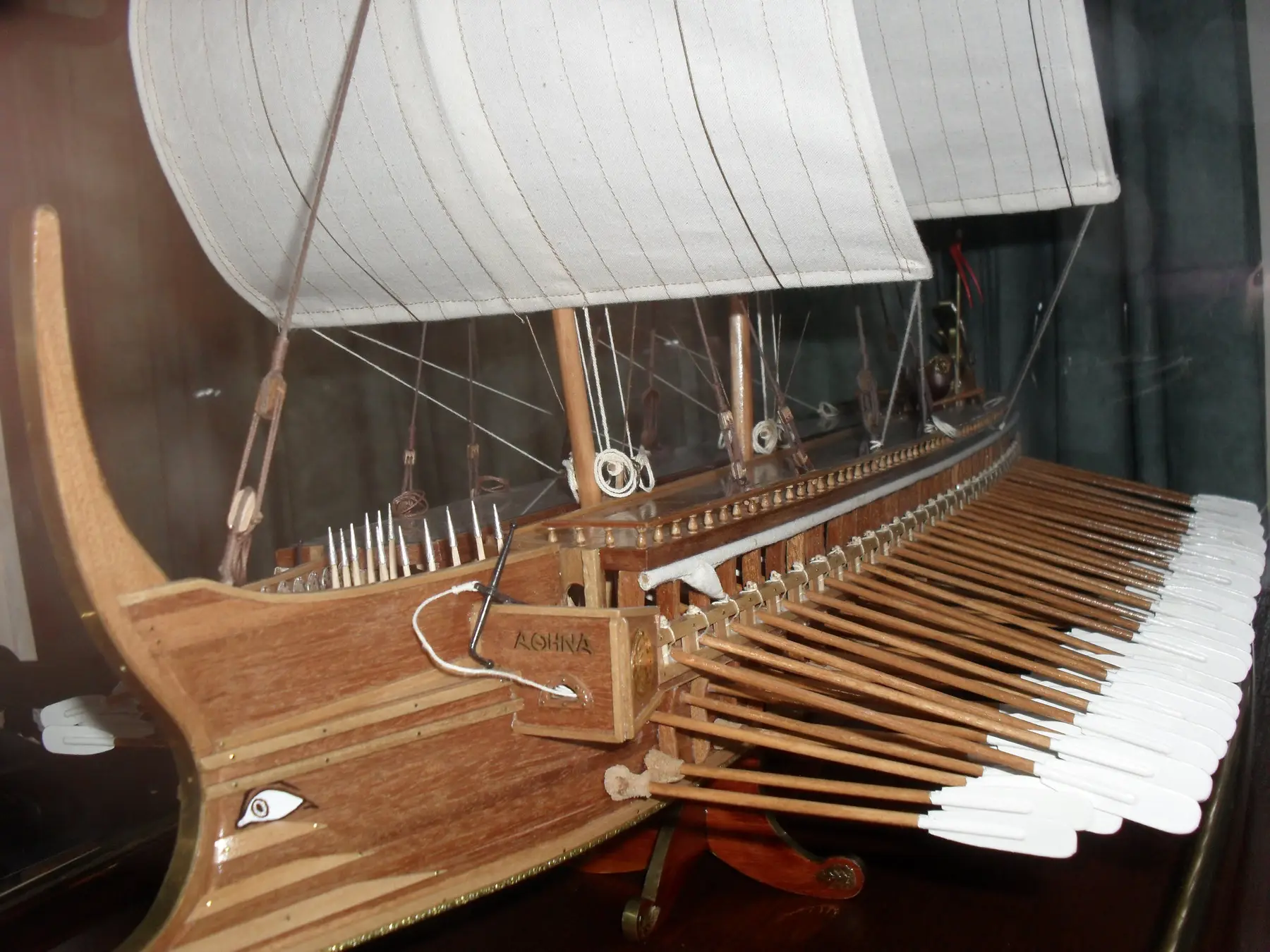
A marble relief found in ancient times shows three levels of oarsmen on each side: 27 thalamites at the bottom, toward the centreline; 29 zygites a little higher, against the side of the hull; and 31 thranites on top, working from the outriggers. That makes 174 oarsmen in all.
The Athenian oarsmen were not slaves. They were free citizens and were paid: the thalamites and zygites received one drachma a day, and the thranites one and a half, because rowing from the top level was hardest.
In battle
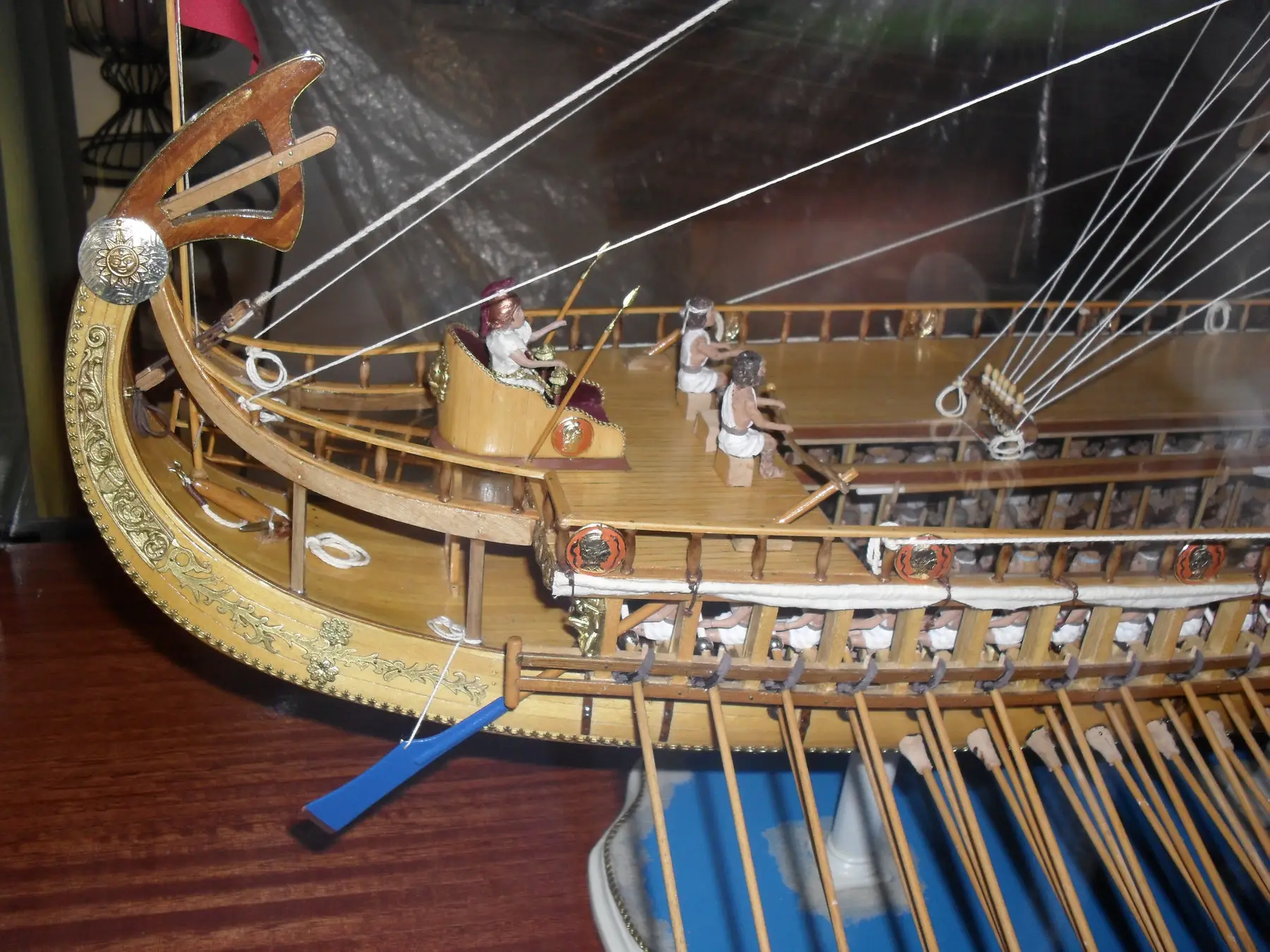
Naval rules required two masts, a large one and a small one, each with one sail, used only in fair weather. In battle the trireme relied on its oars and on the embolon, a bronze ram at the bow for holing enemy ships. A ram driven in too hard could stick in the sinking enemy. To pull free, all 174 oarsmen had to back water together within seconds. A stopper above the ram, the parembole, kept the ram from going in too far.
About the models
The trireme is the ship closest to Denis’s heart. As a twelve-year-old in Athens he learned about Salamis and could not believe the Greeks had won with only half as many ships. He has built several triremes, all from his own historical research and scholarly estimates rather than from plans:
- His first trireme was built in 1998.
- Paralos, recorded around 2005 in the Plutarch Project collection on Victorian Collections, is built to the exact specifications of the Athenian ship and carries 174 oarsmen. It took eighteen months to build. The Paralos and the Salaminia were the two sacred triremes of Athens, used to carry envoys and officials.
- The trireme described by The Age in January 2008 took nine months of full-time work. It shows details that Denis believes had never been modelled before: the lead “dolphins” dropped onto enemy decks, the epotithes (long spears at the prow added by the Corinthians after Salamis) and the flute player who kept time for the rowers. His wife Irene was his technical assistant and painted the 174 tiny resin rowers, each in its own costume.
- A trireme of mahogany with 174 rowers, built between October 2014 and March 2015 with the help of his wife Rena, son Kostas and daughter Maria, was donated to the Embassy of Greece in Canberra. No transport company would insure it for the 680 km journey from Melbourne, so Denis delivered it himself, at his own expense, with Kostas and Iakovos Garivaldis of the Plutarch Project.
The photographs here show the triremes in Denis’s collection. The last group shows a galley with two sails and a cream hull whose identity is not recorded in the source material.