No. I
The Chinese Junk
1:70 · Chinese sea-going junk, described by Marco Polo in 1298
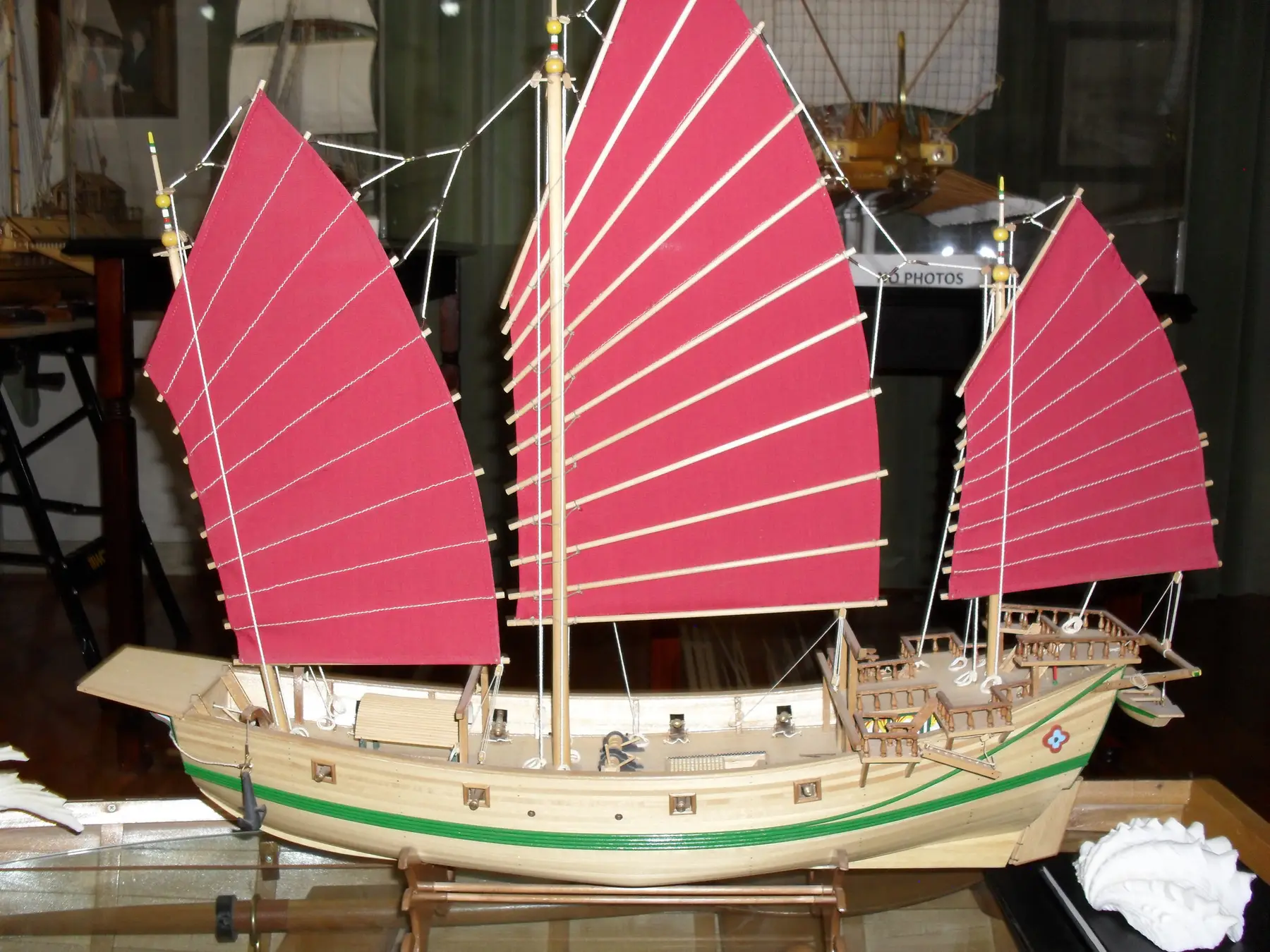
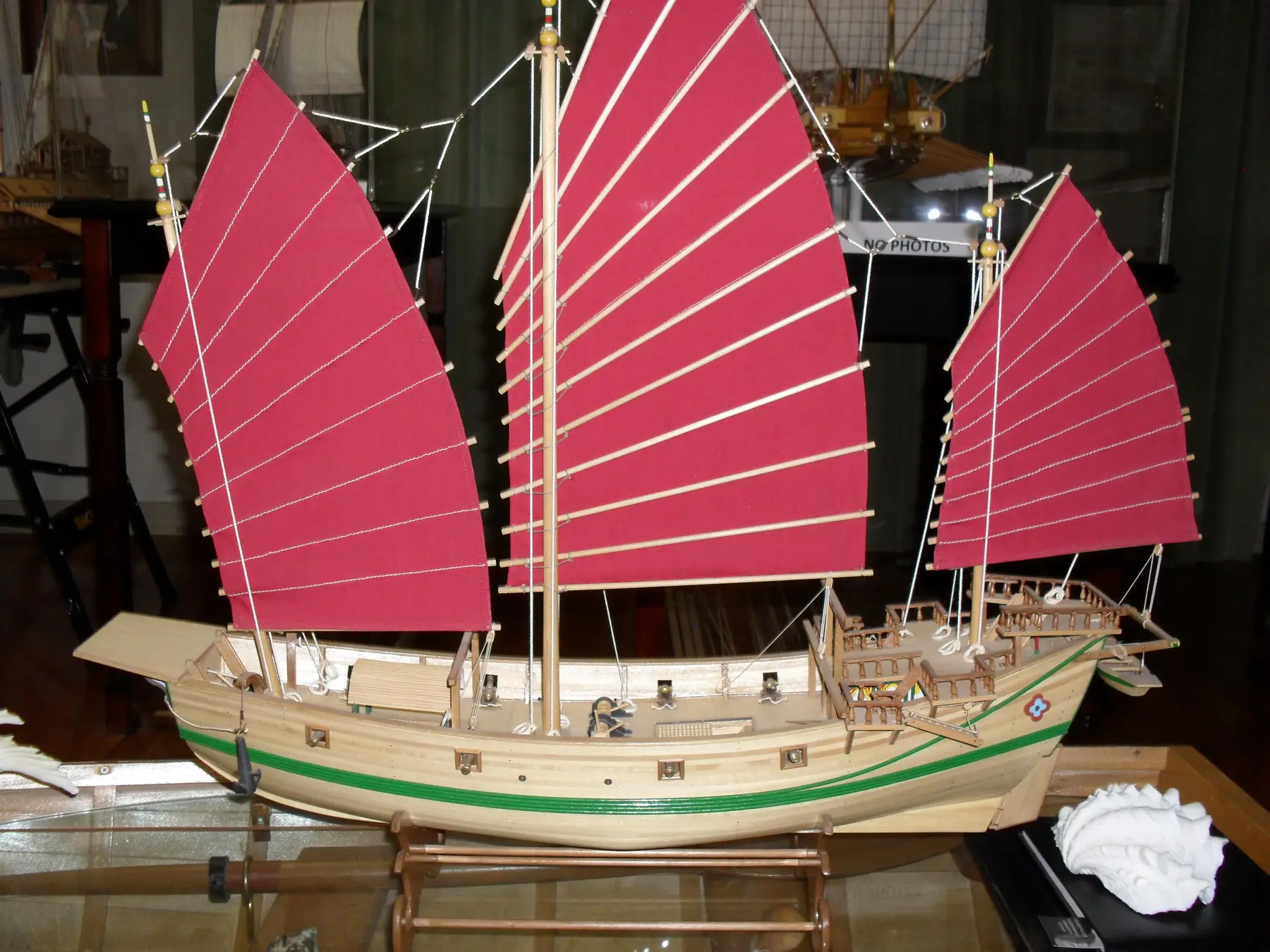
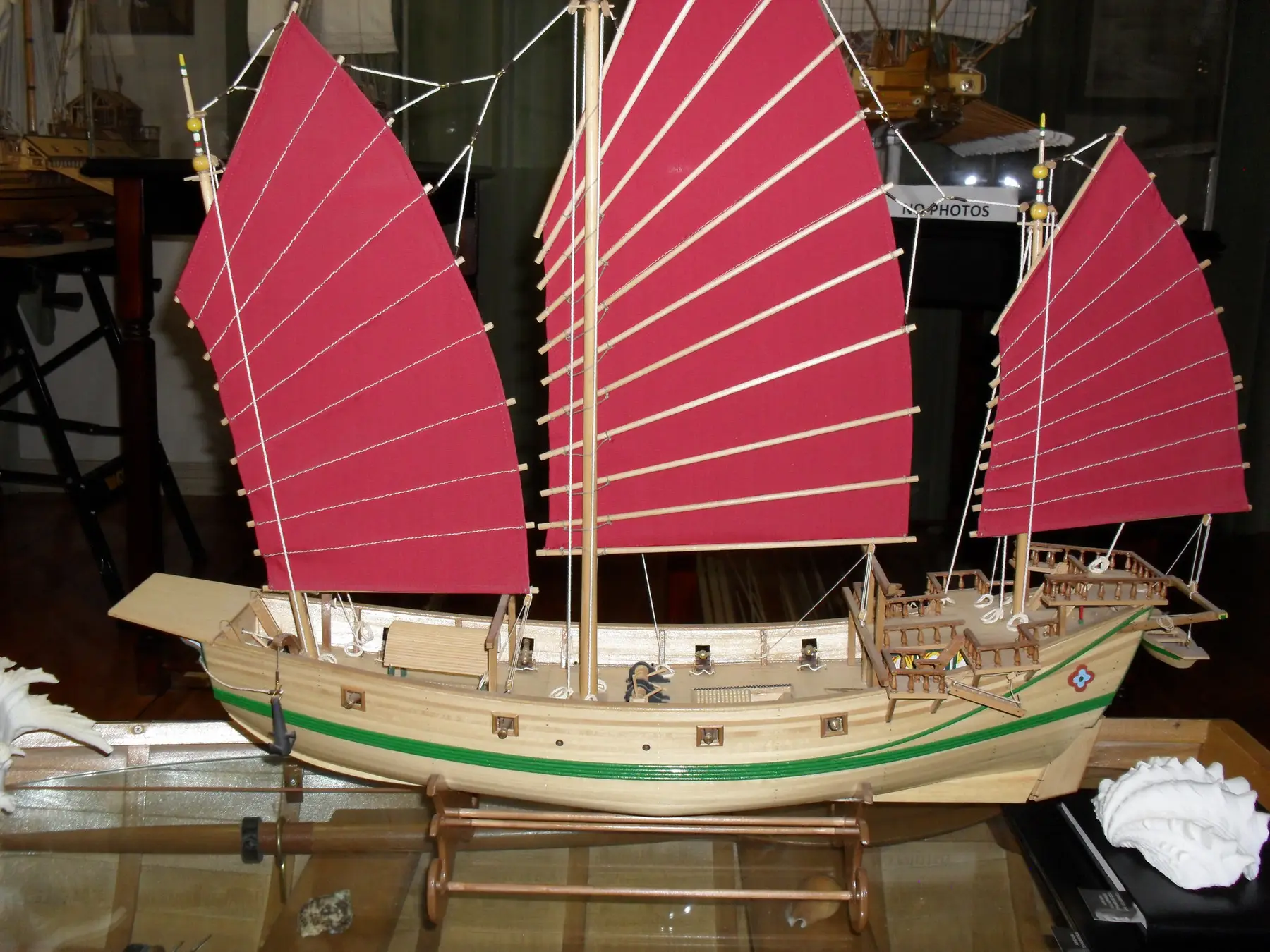
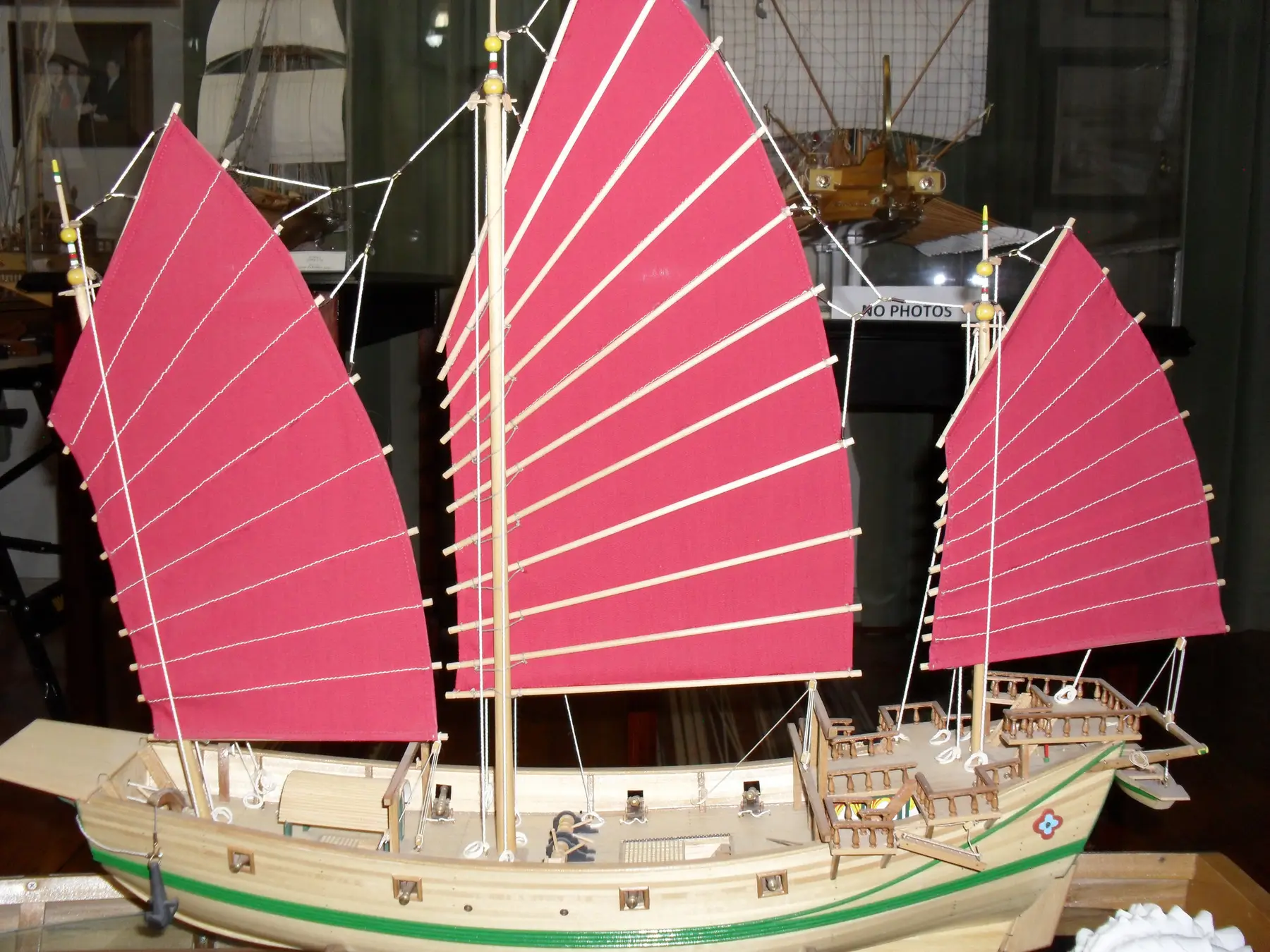
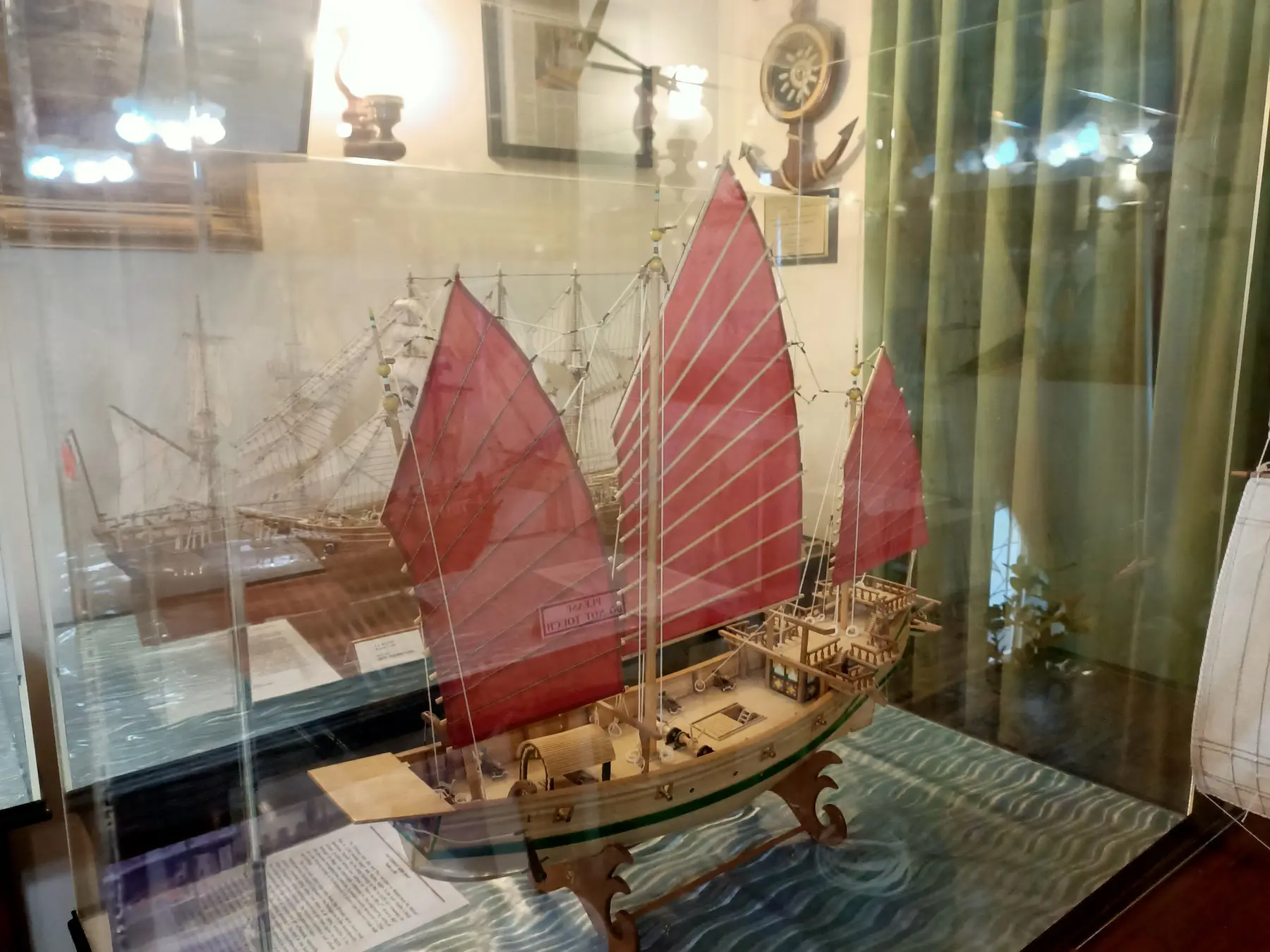
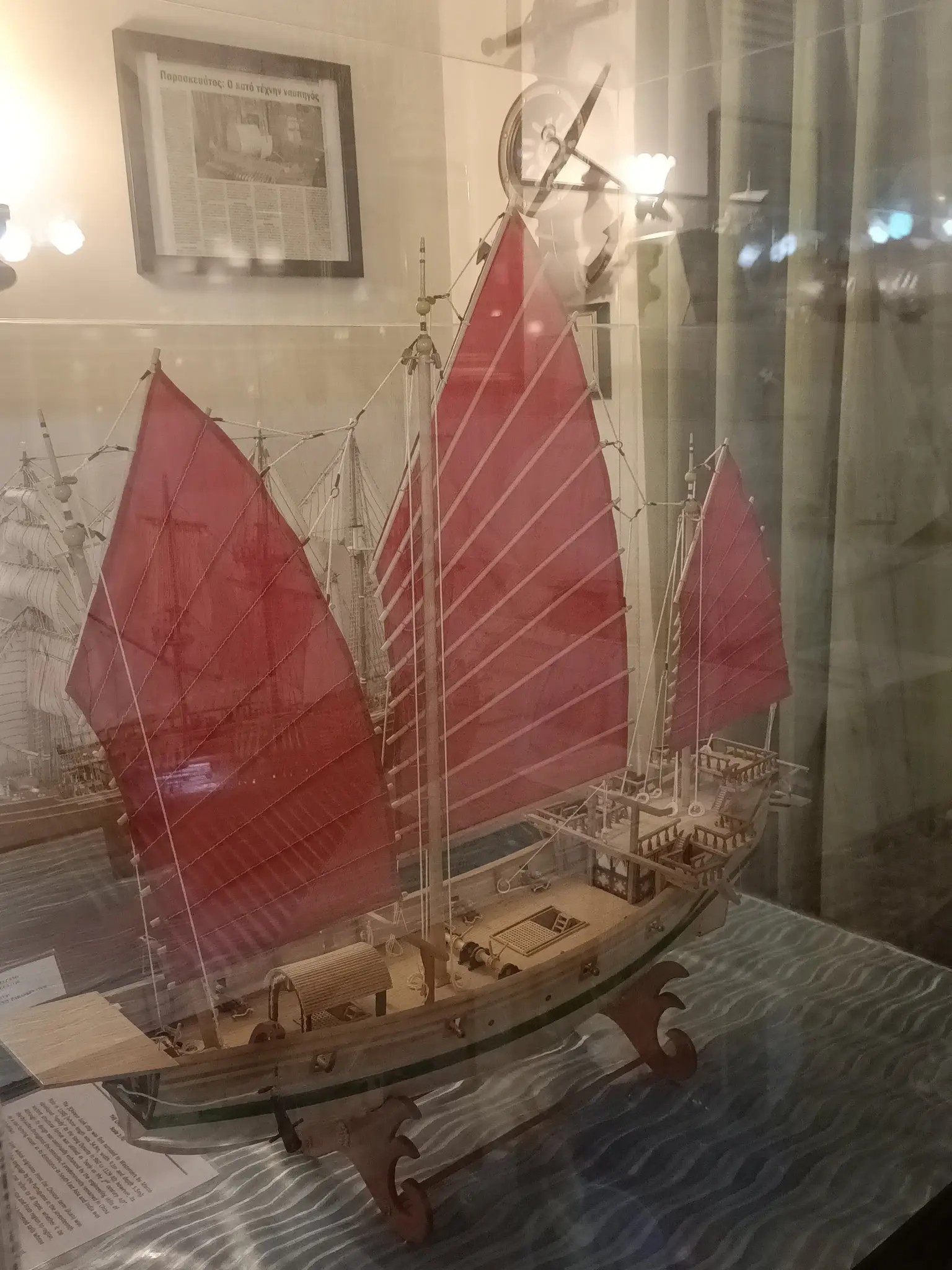
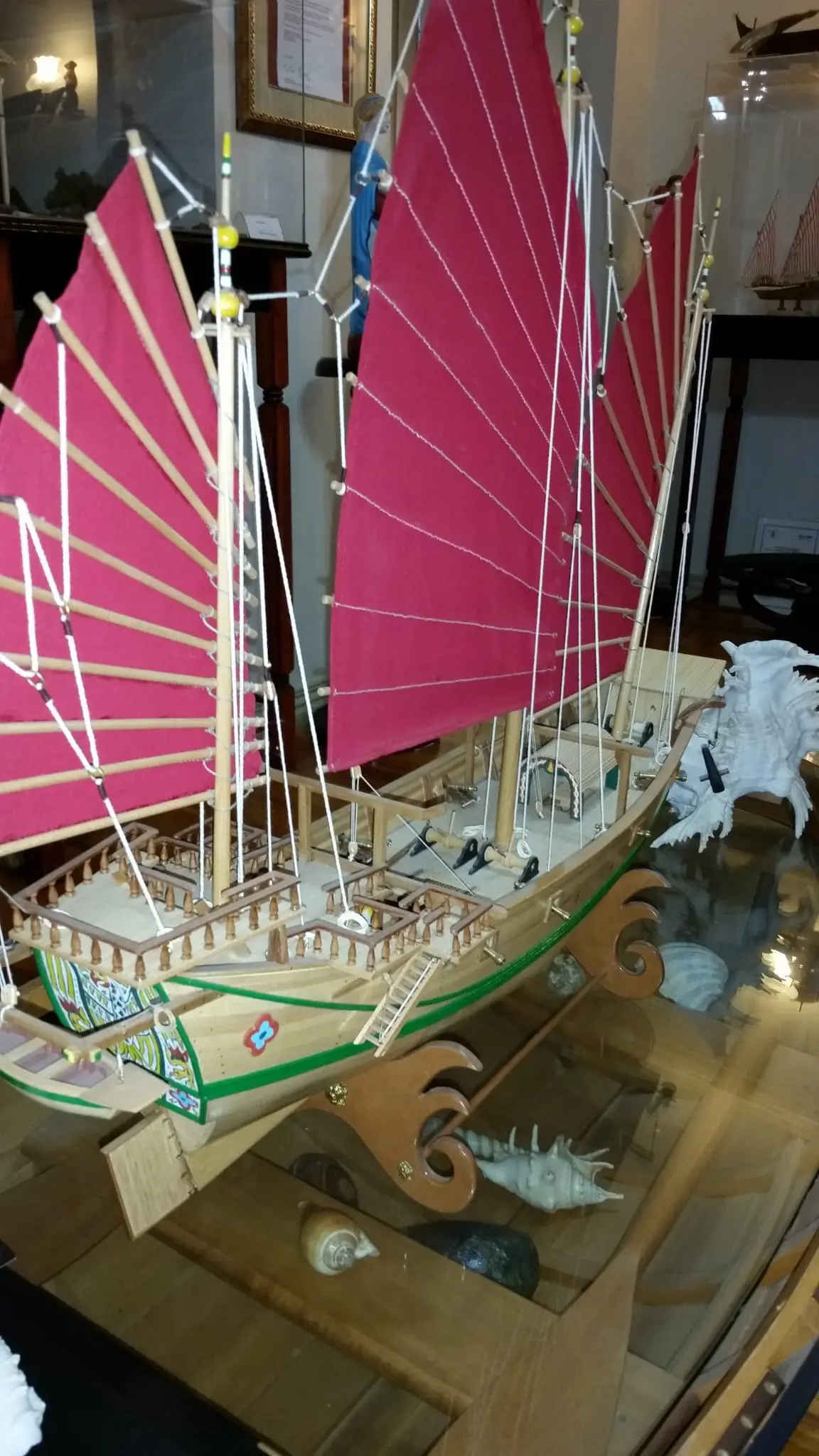
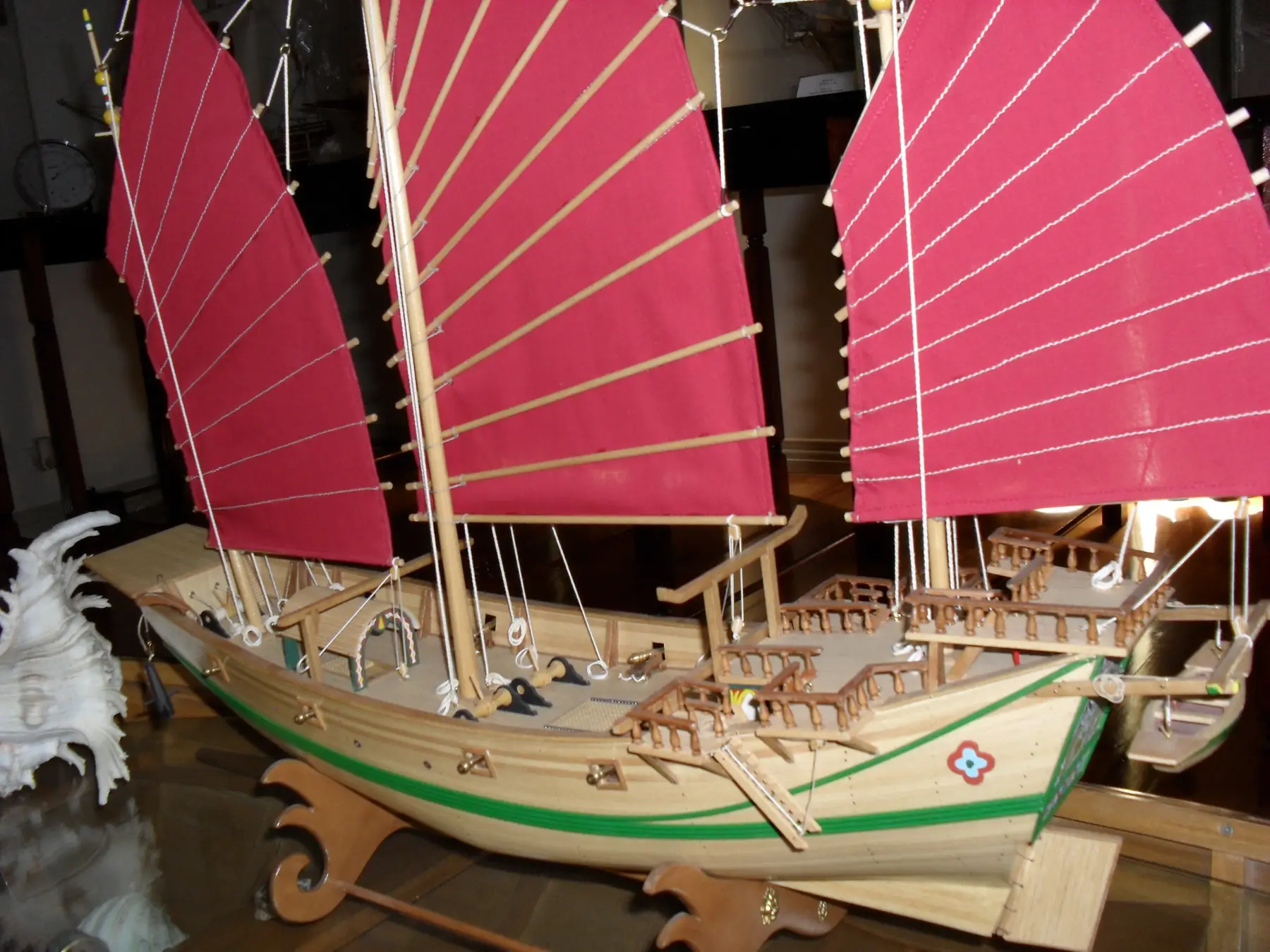
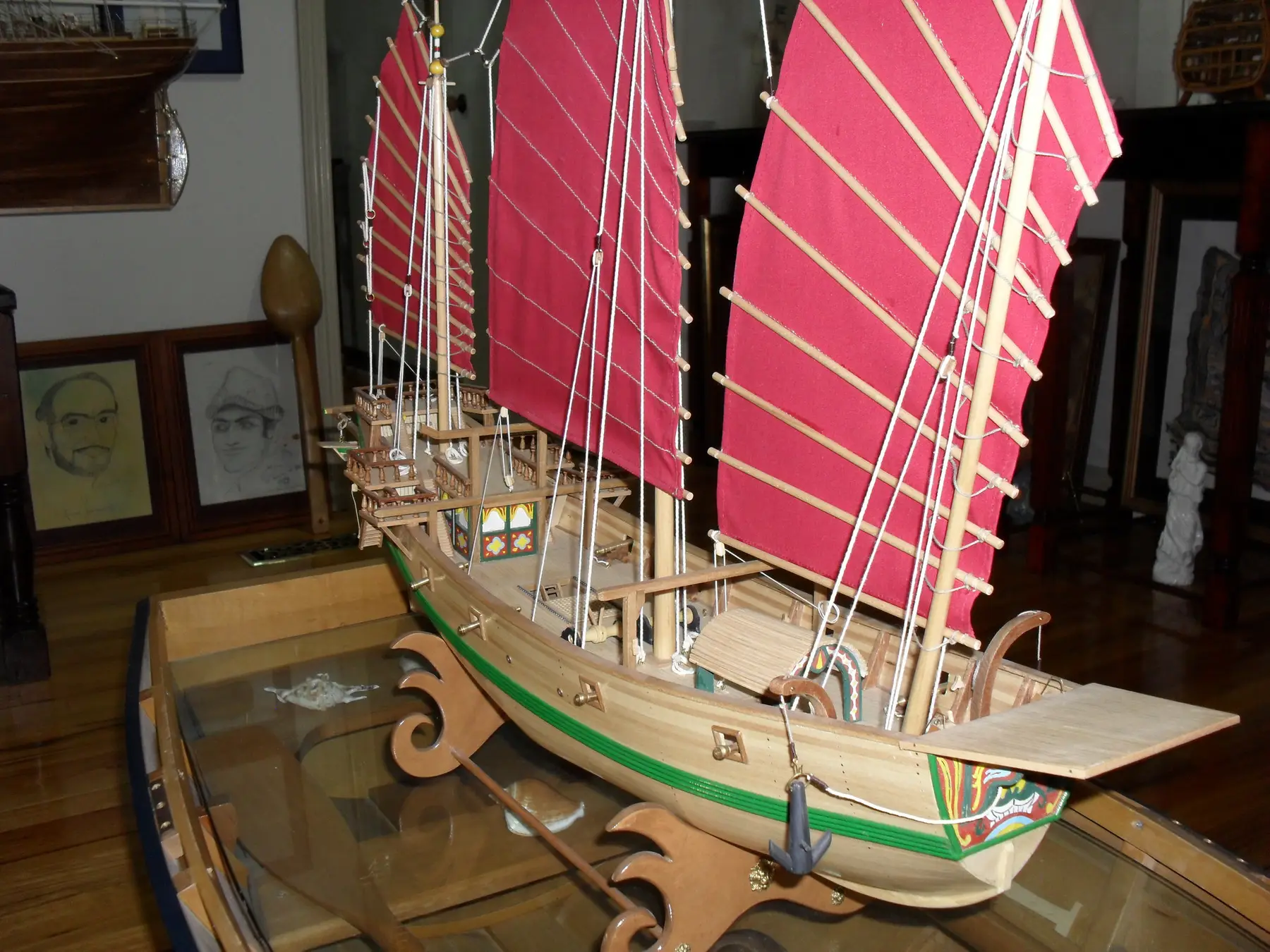
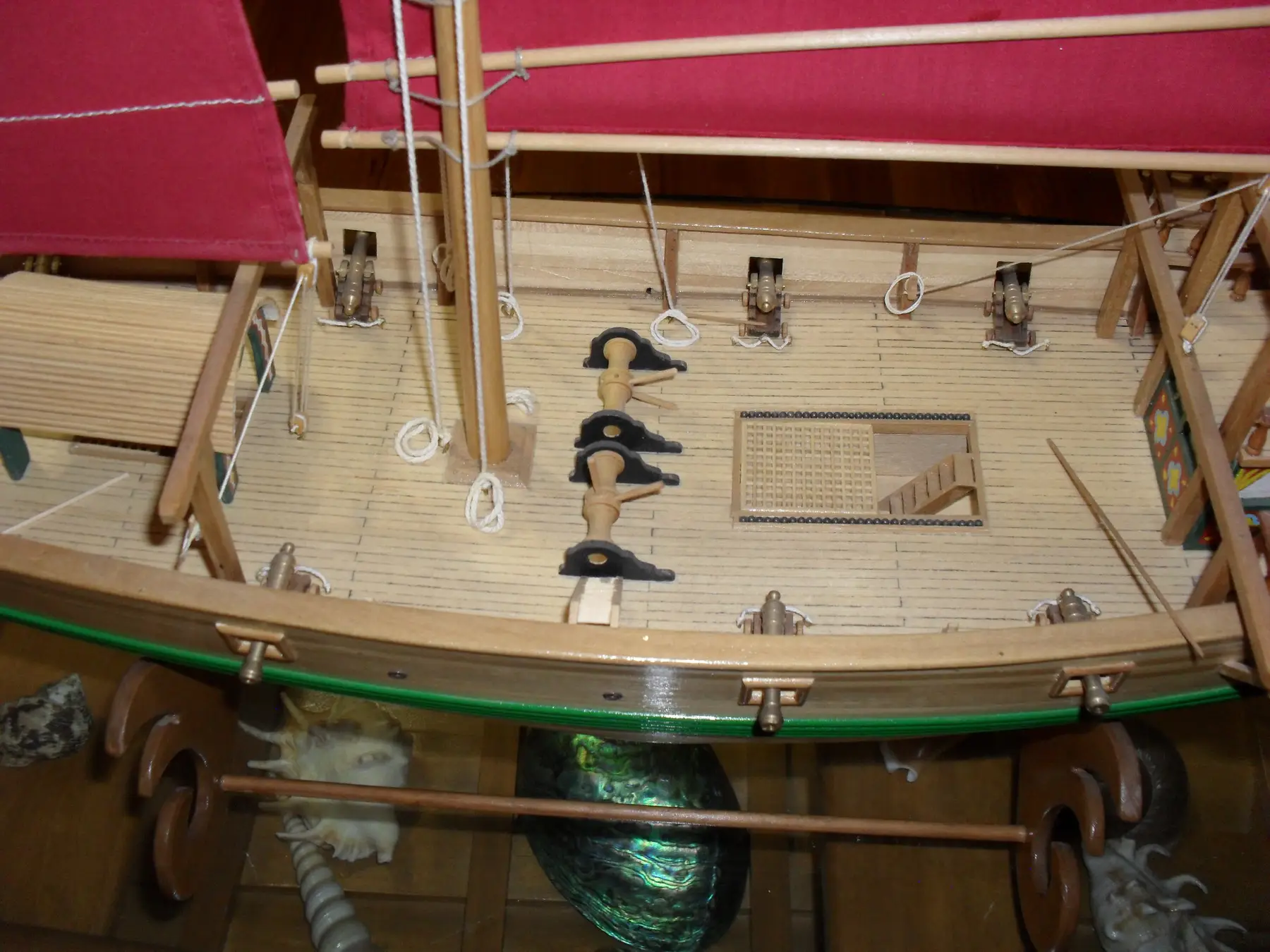
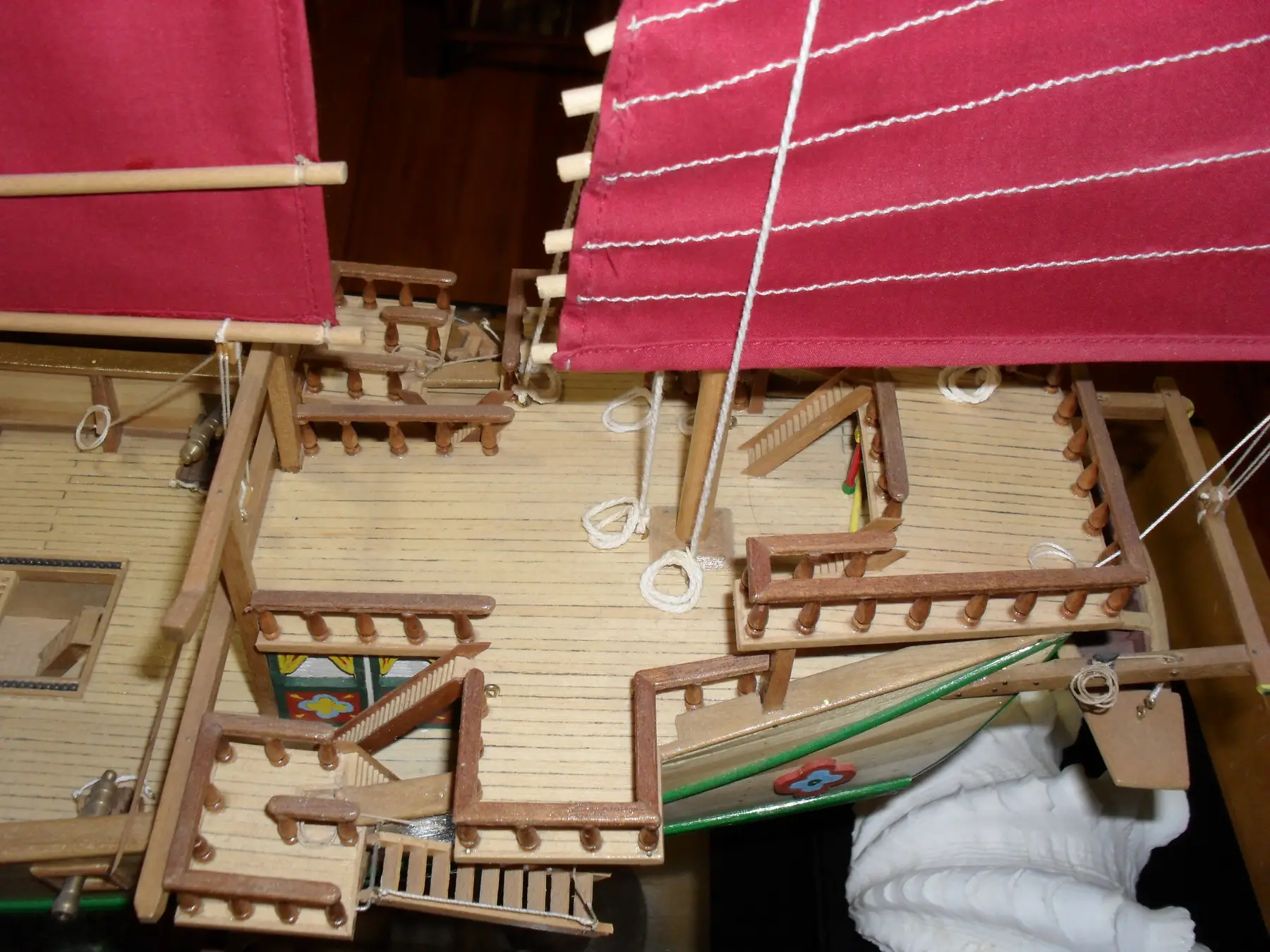
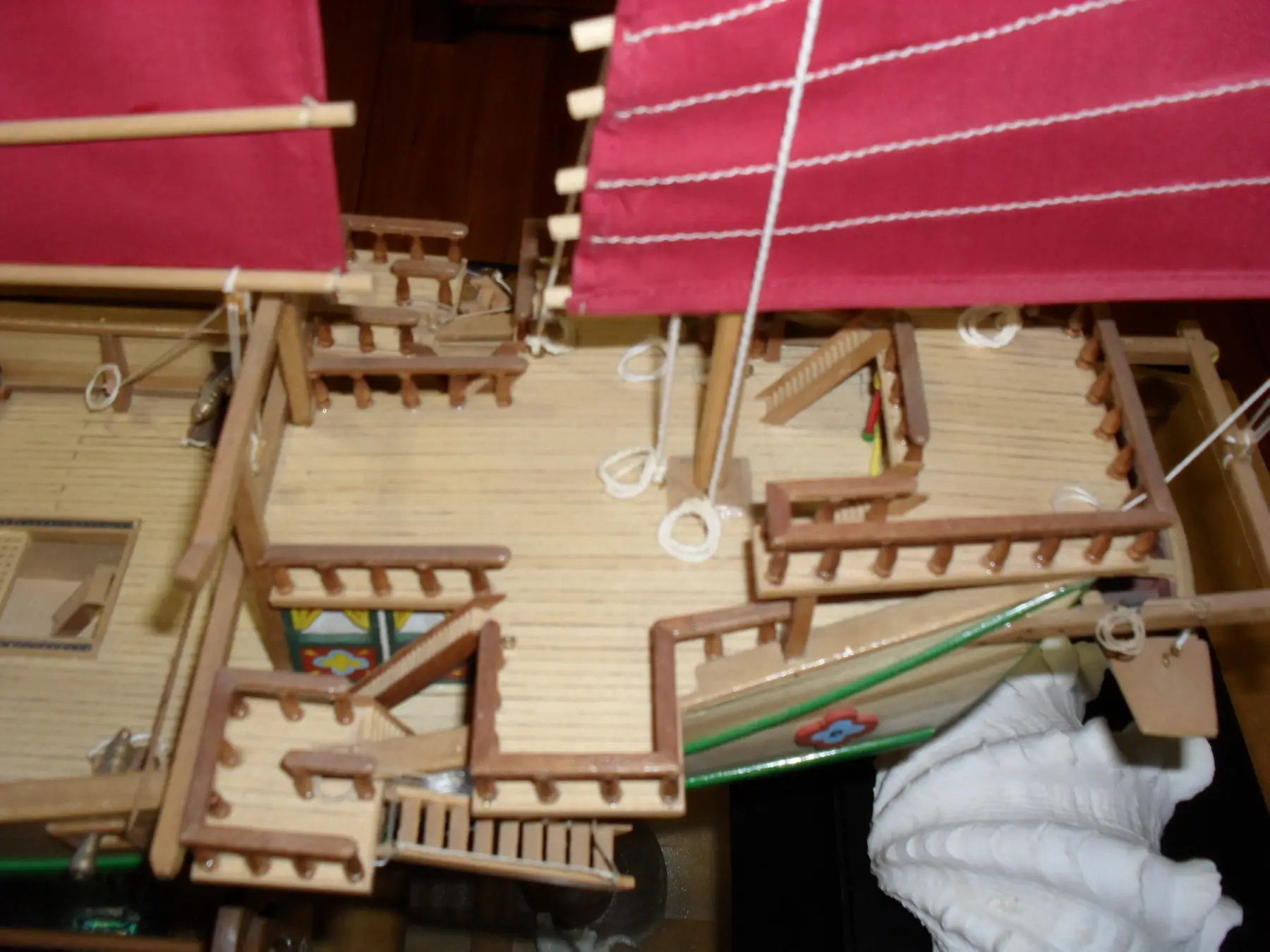
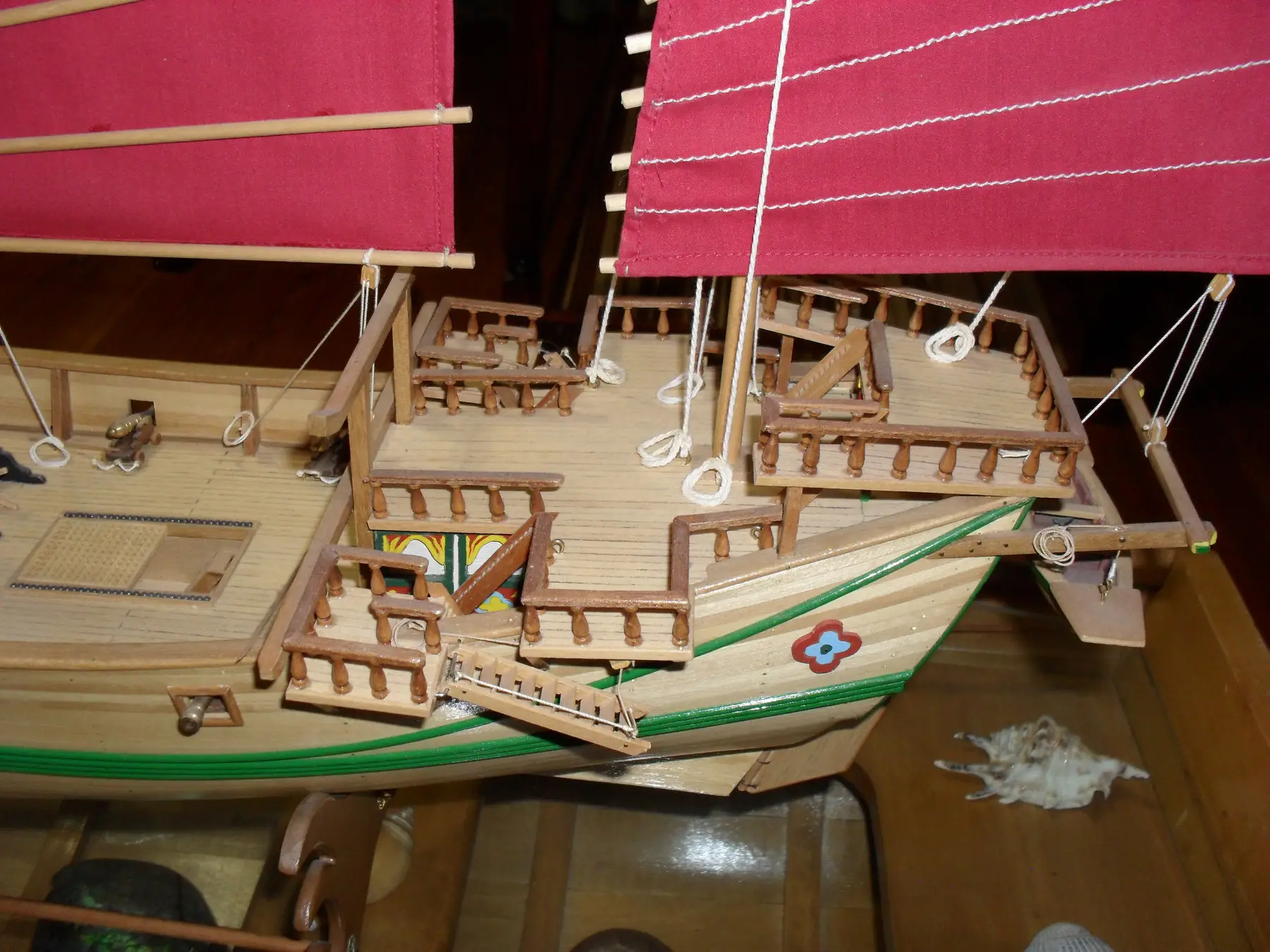
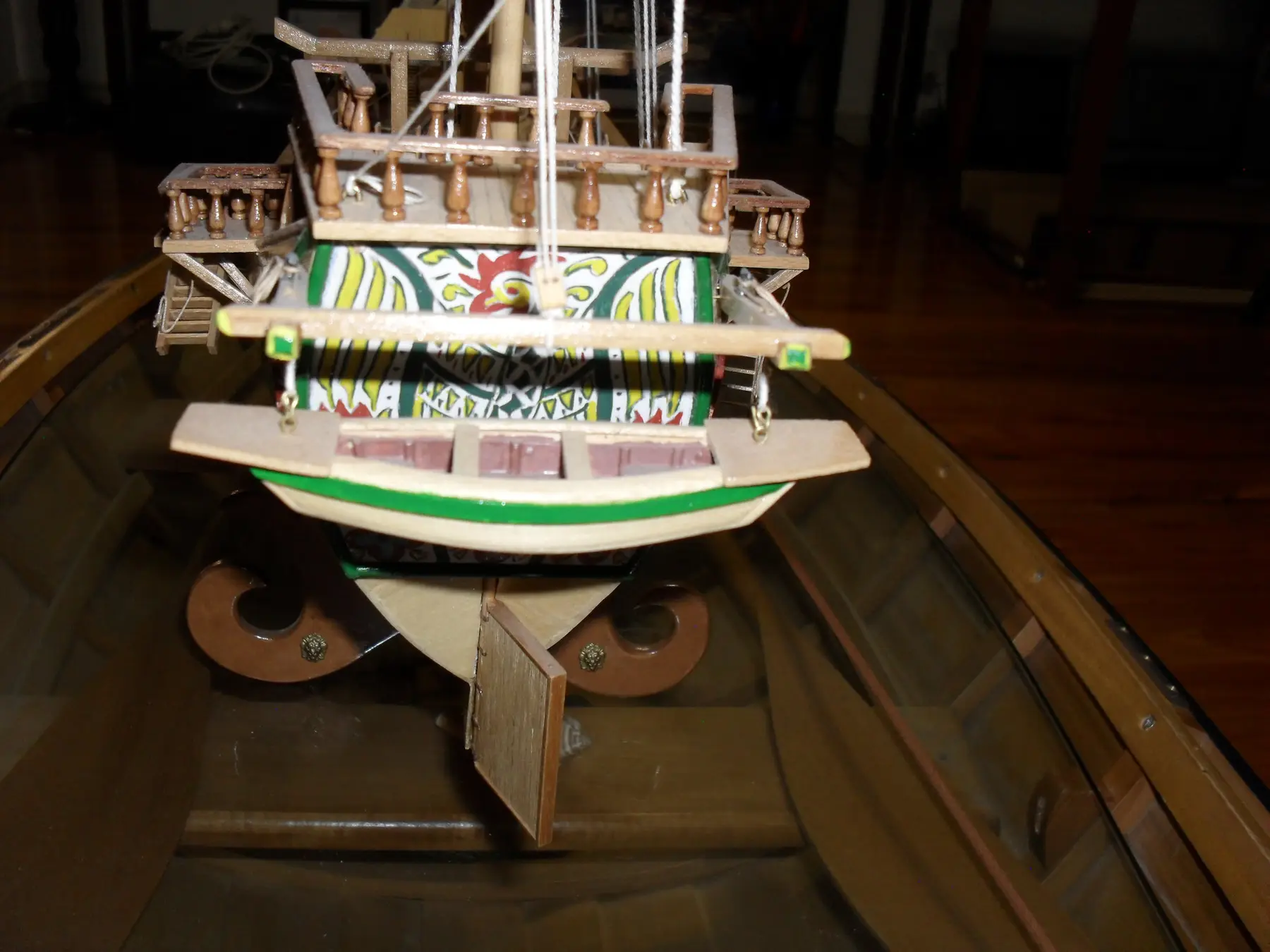
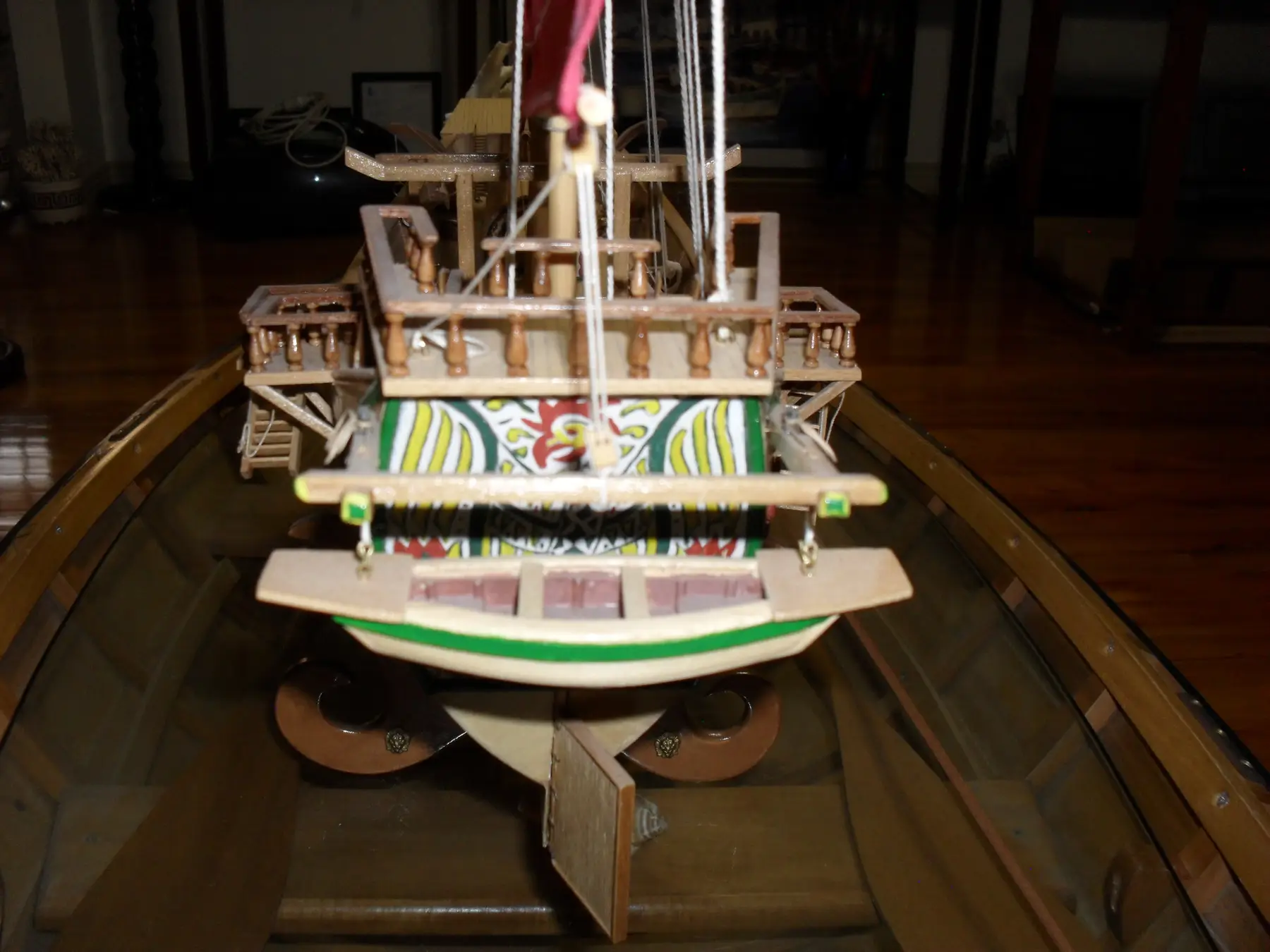


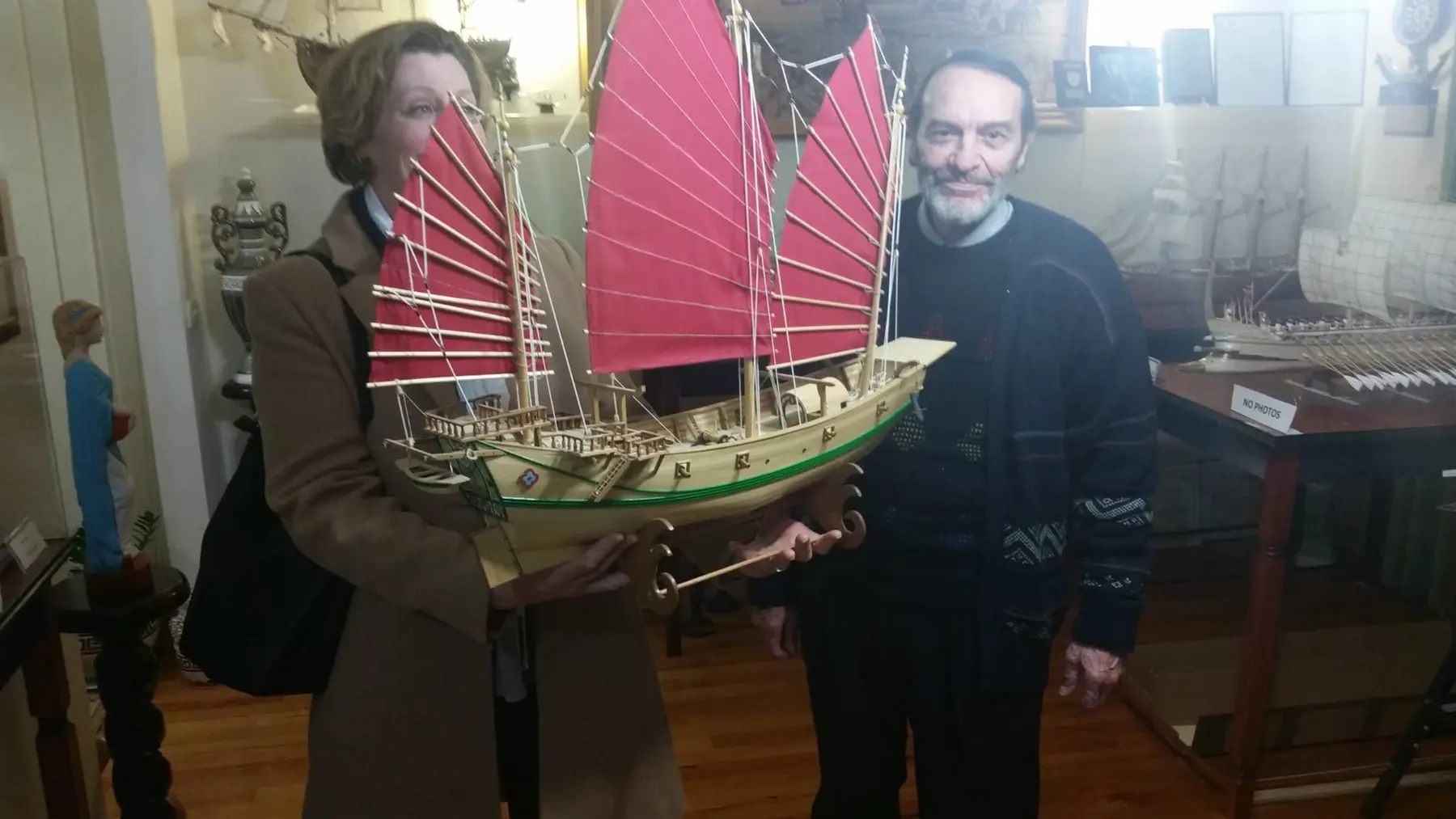
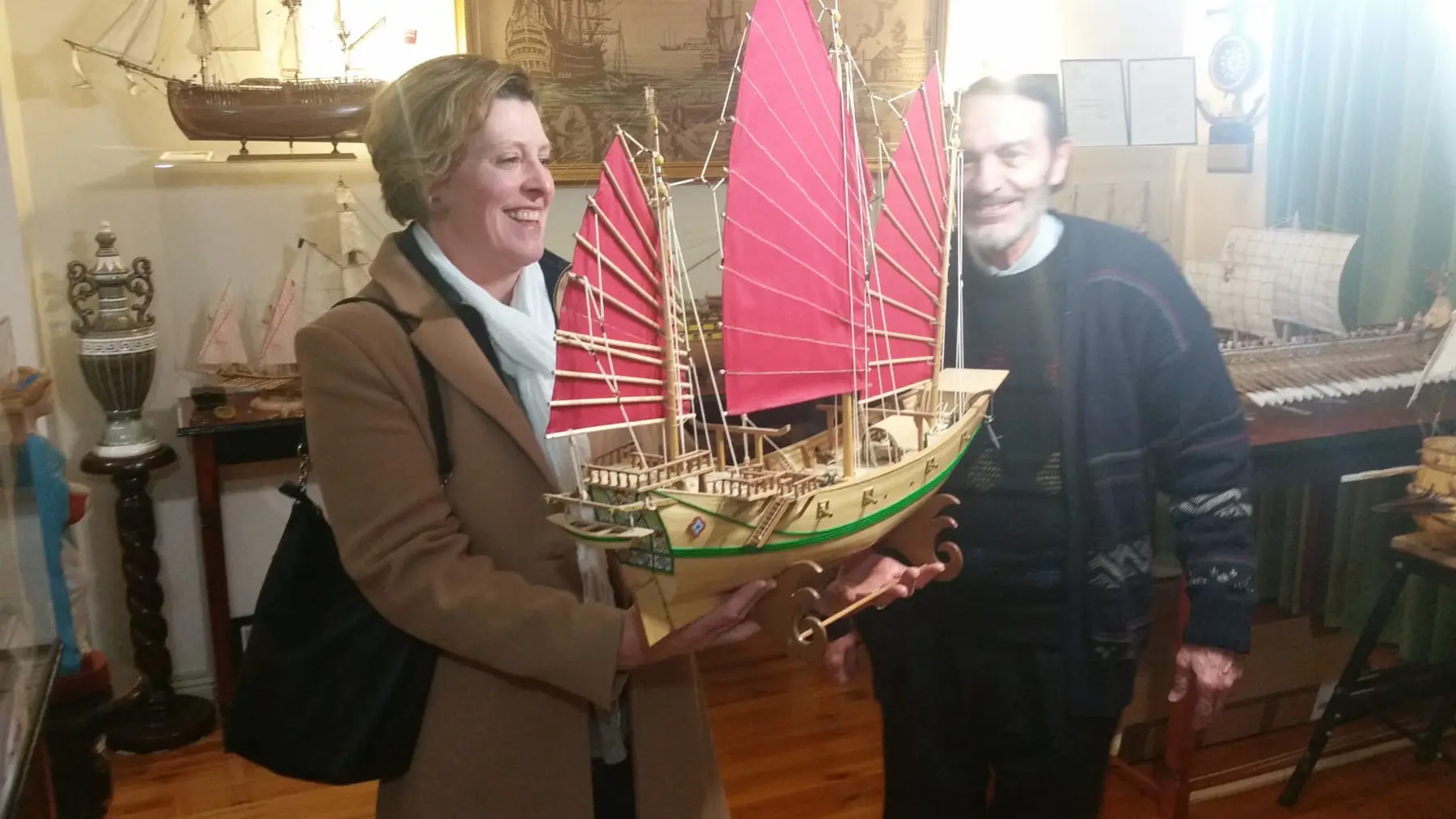
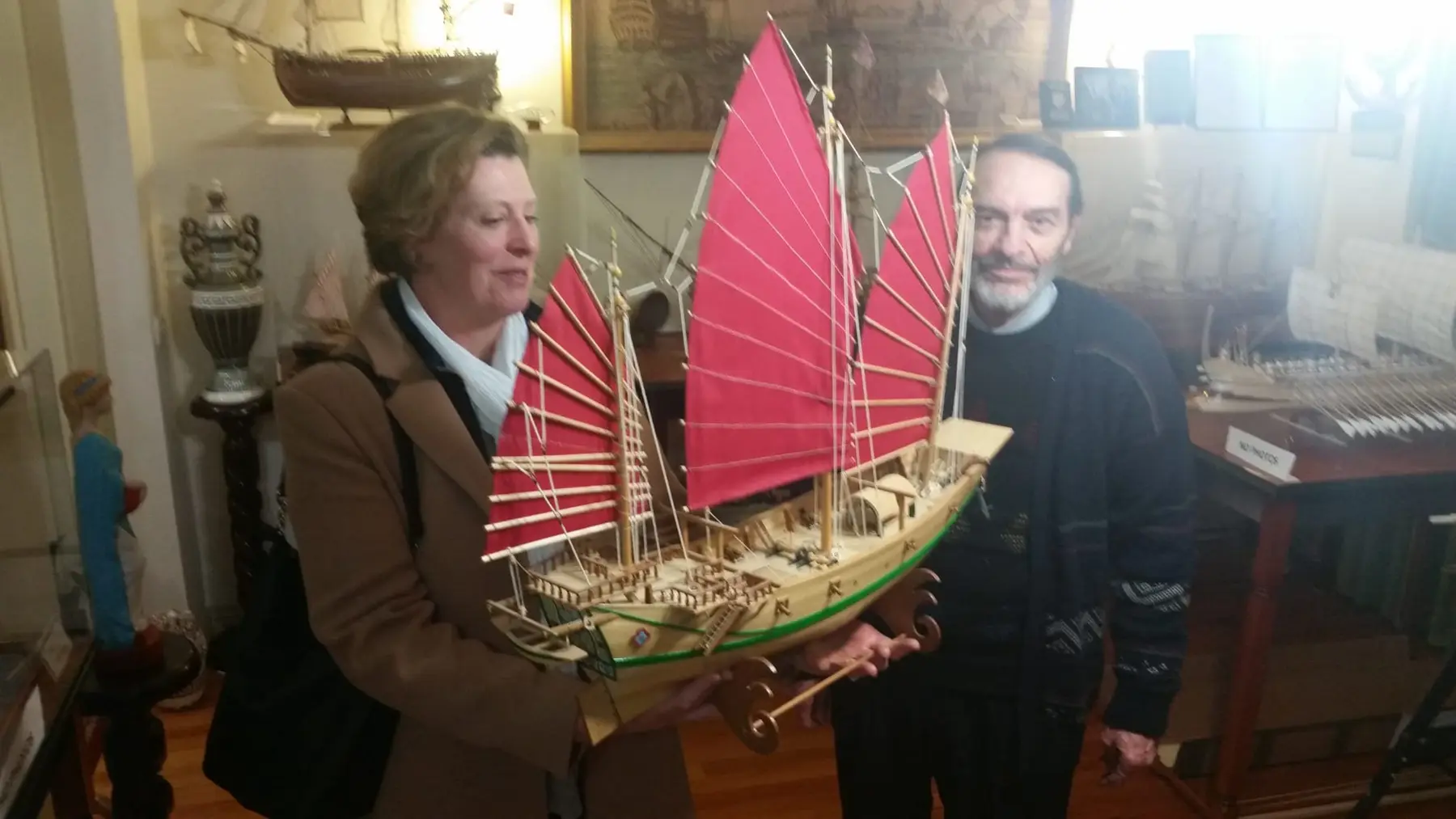
The Chinese junk was first described to Westerners by Marco Polo in 1298. The vessel he described was about 54.9 m long, 9.1 m wide and 5.5 m deep. The design was developed rapidly under the Song dynasty, although its basic form was in use as early as the 2nd century AD. Successive dynasties kept refining the design, but the junk remained mostly a Chinese coastal and sea-ferrying vessel and never came to dominate South-East Asia or India.
The word junk comes from the Chinese chuán, meaning a sailing vessel. Portuguese traders brought it into European languages in the seventeenth century. It covers cargo, fishing and passenger craft of many sizes and regional styles. What they share are the horizontal battened sails, which stand up to strong winds without tearing.
Construction
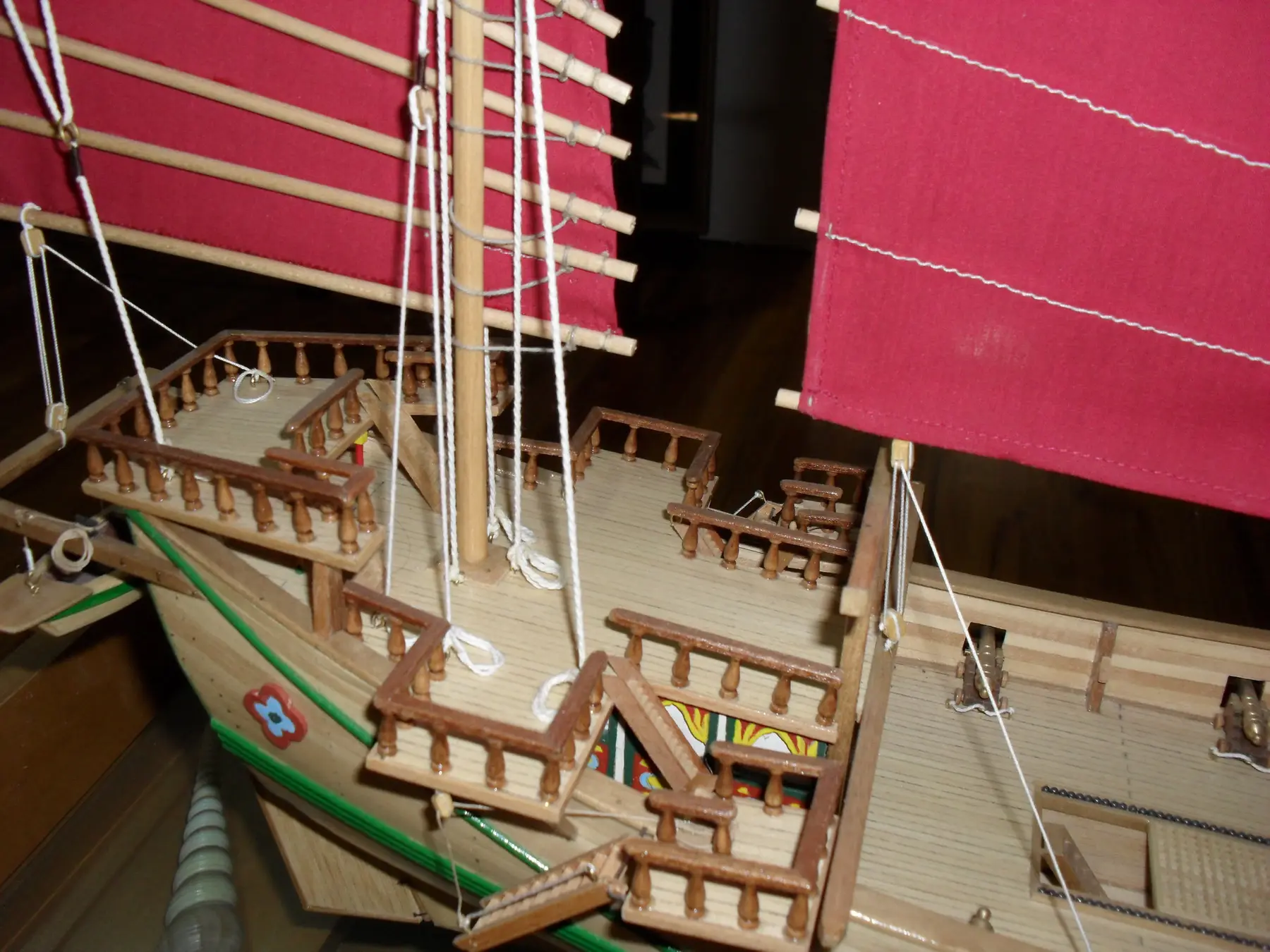
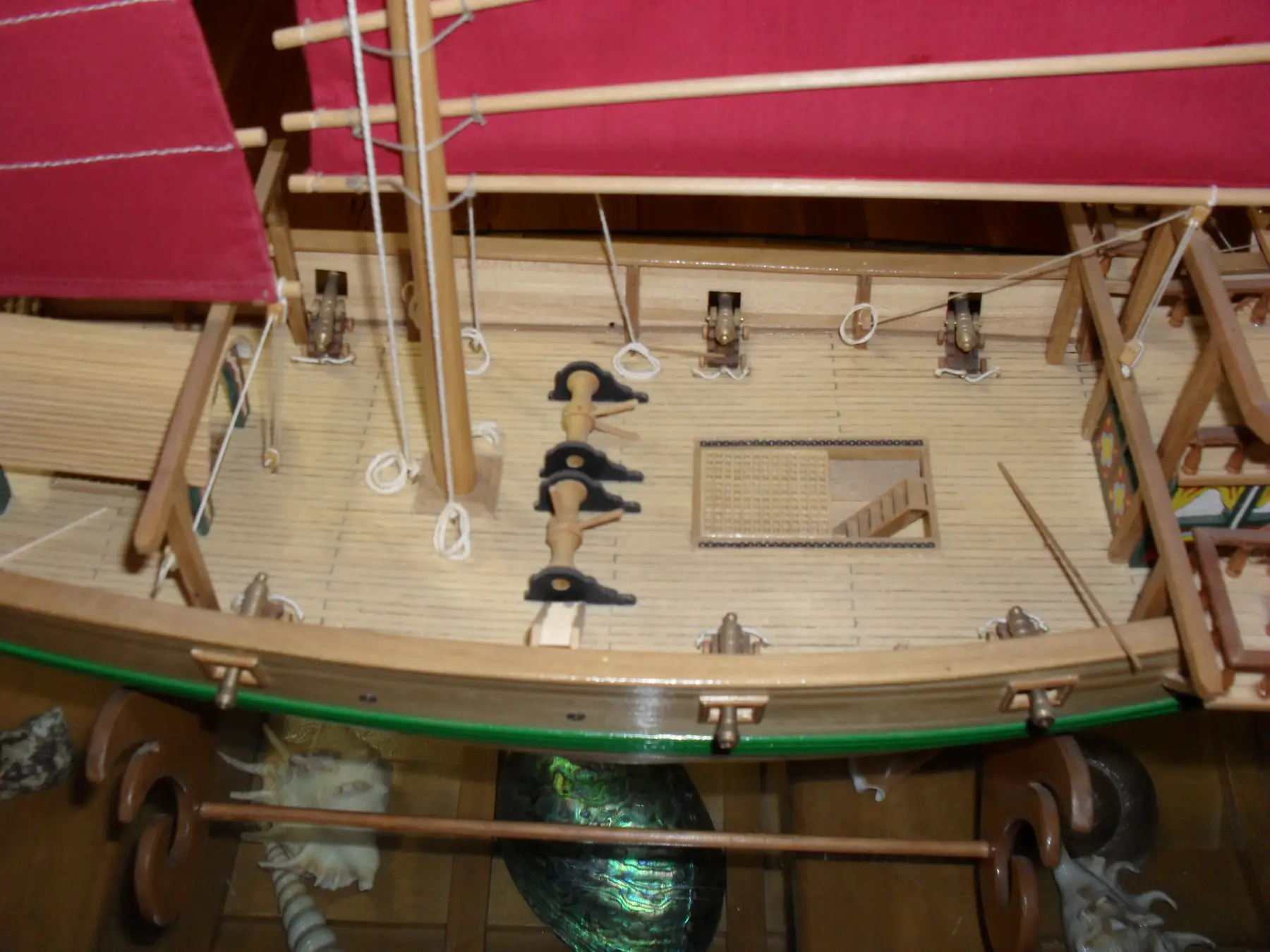
A junk’s hull was typically built of softwoods, and teak was often brought from Guangdong province on the South China Sea coast. The hull was divided into watertight compartments, reached by ladders, so that a holed hull would flood only part of the ship. The horseshoe-shaped stern carries a poop deck, an enclosed cabin on the stern.
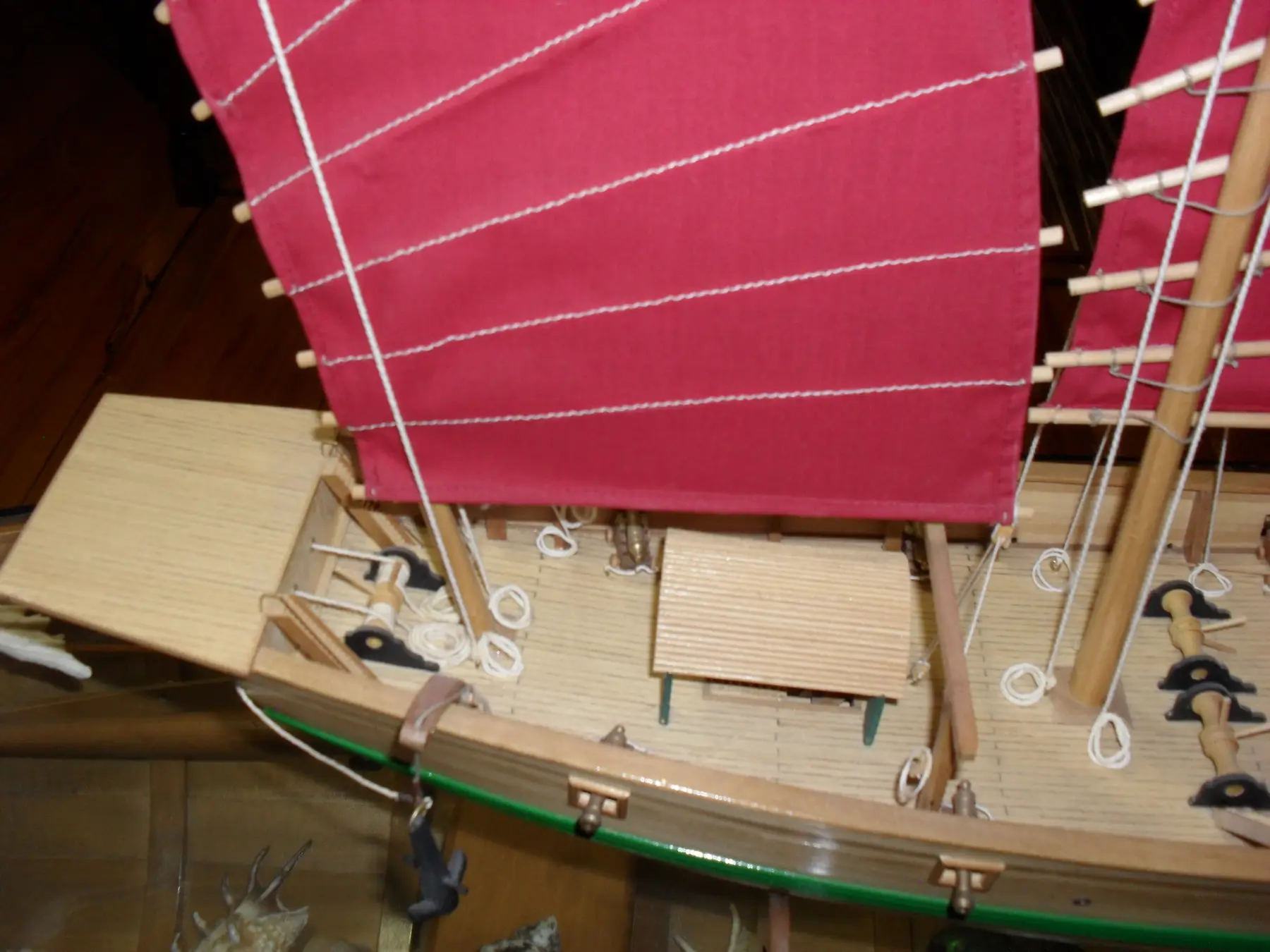
The bottom is flat like a pan, with no keel. Instead the junk uses a leeboard (a lifting foil on the side of the hull) or a daggerboard (a retractable centreboard) to stop it sliding sideways. The stern-mounted rudder, used in China for centuries, makes the ship easy to steer. It can also be raised or lowered to suit the depth of water, or to bring the ship aground.
About the model
Denis built the junk at a scale of 1:70, with its red battened sails, painted stern and fully detailed decks. It is part of his permanent collection in Melbourne.