No. IV
The Galleass
1:57 · Venetian, 1571
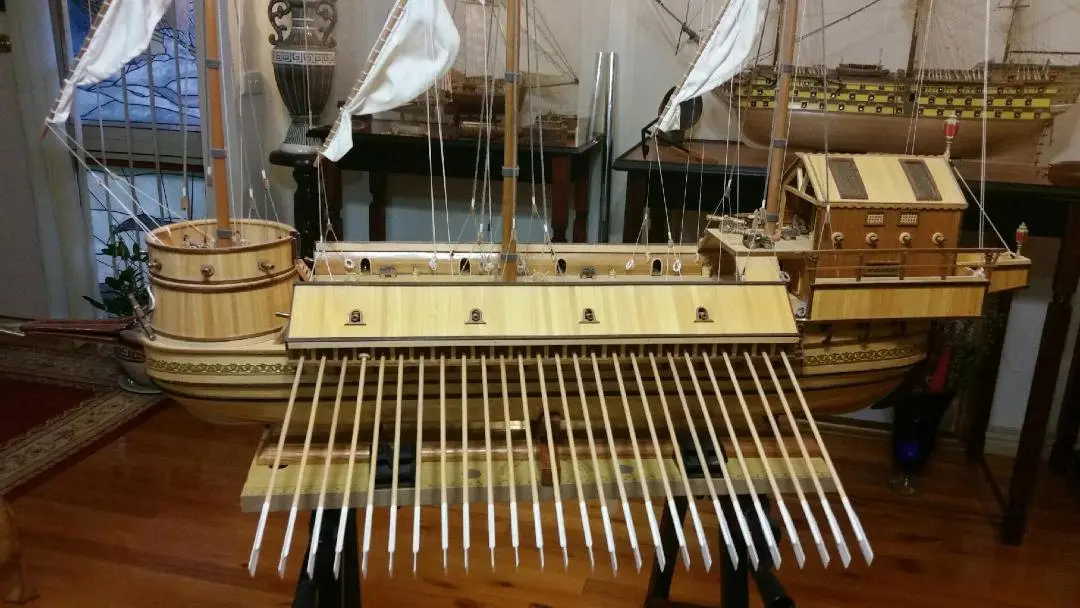
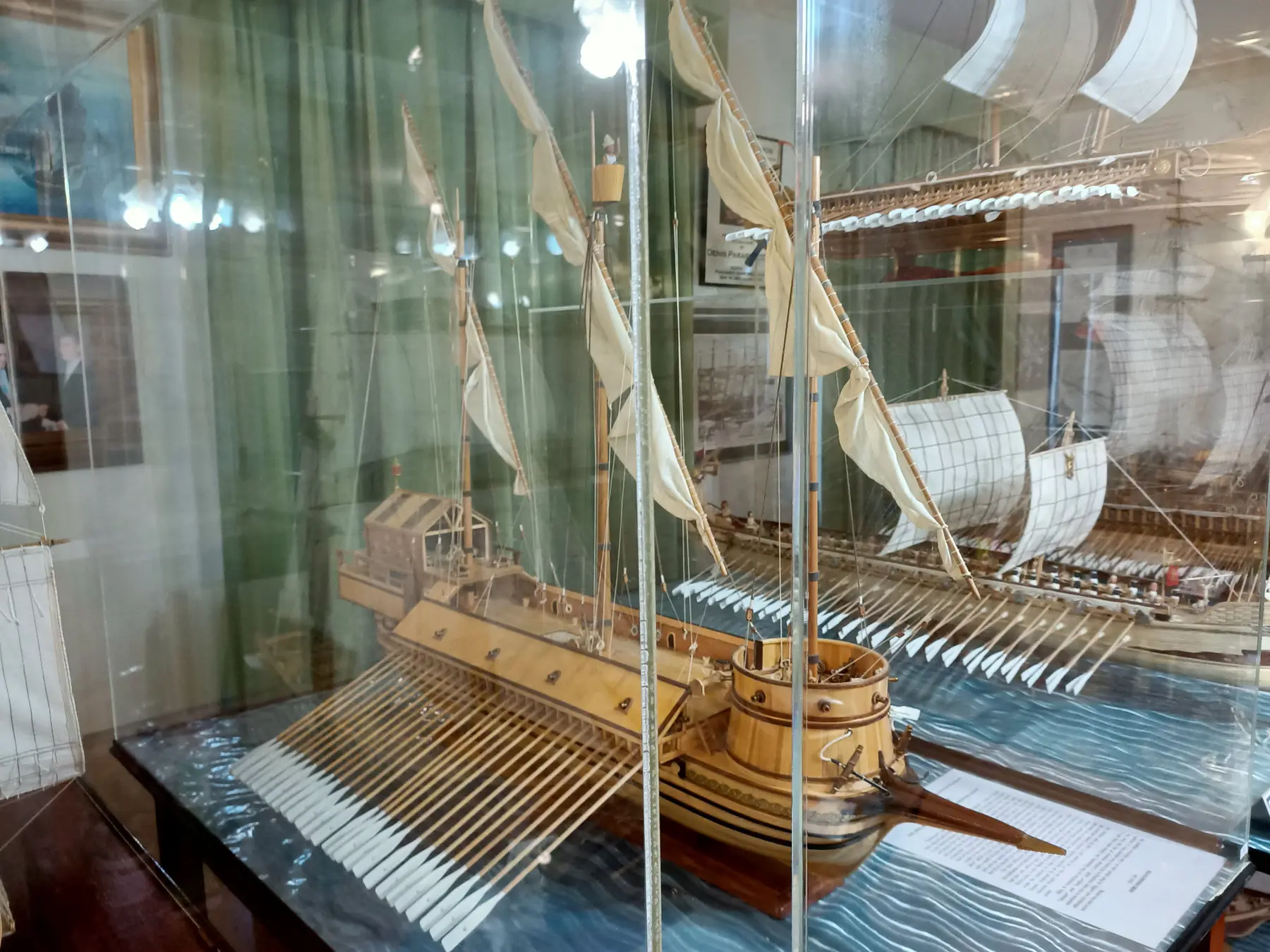
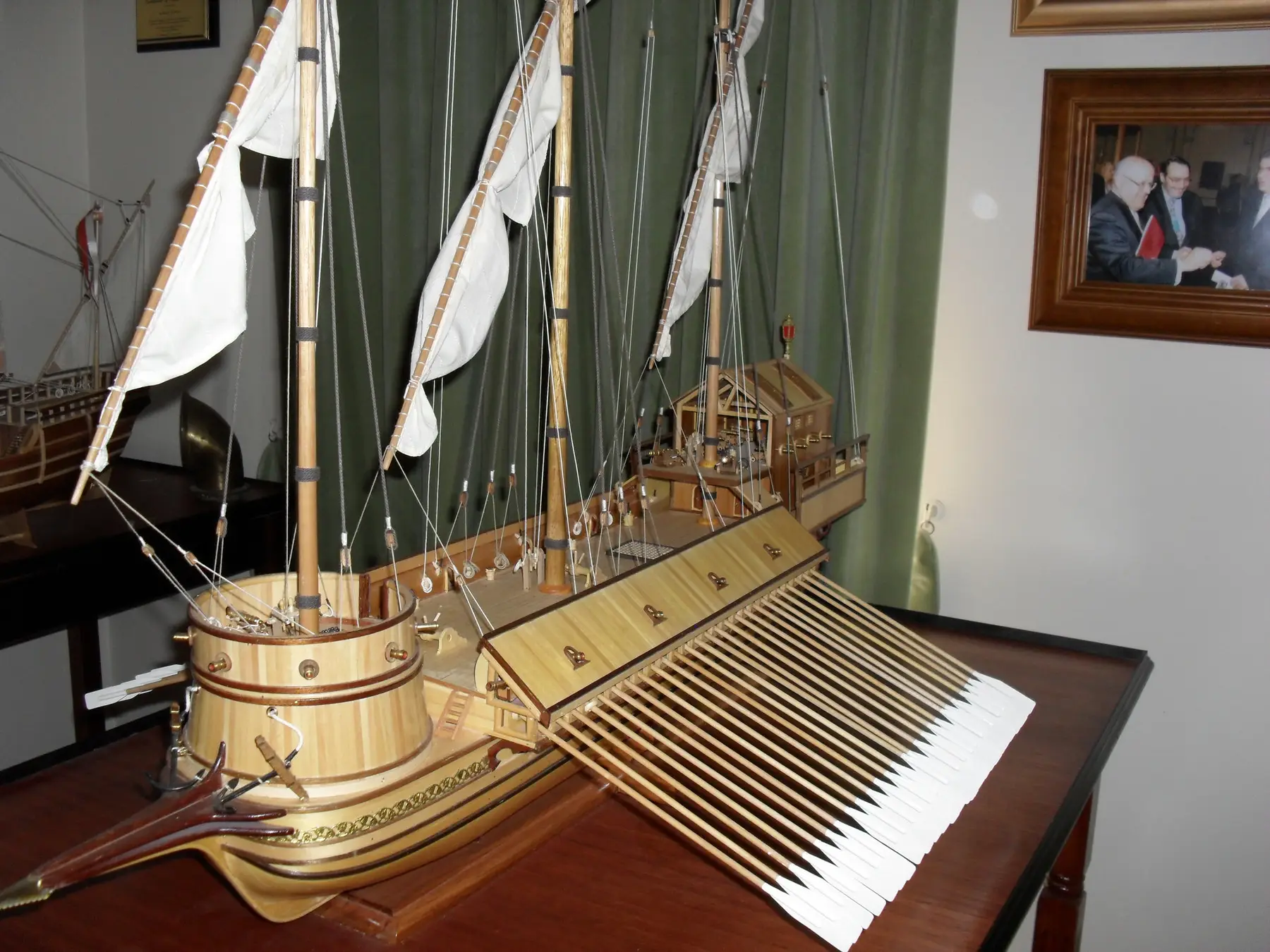
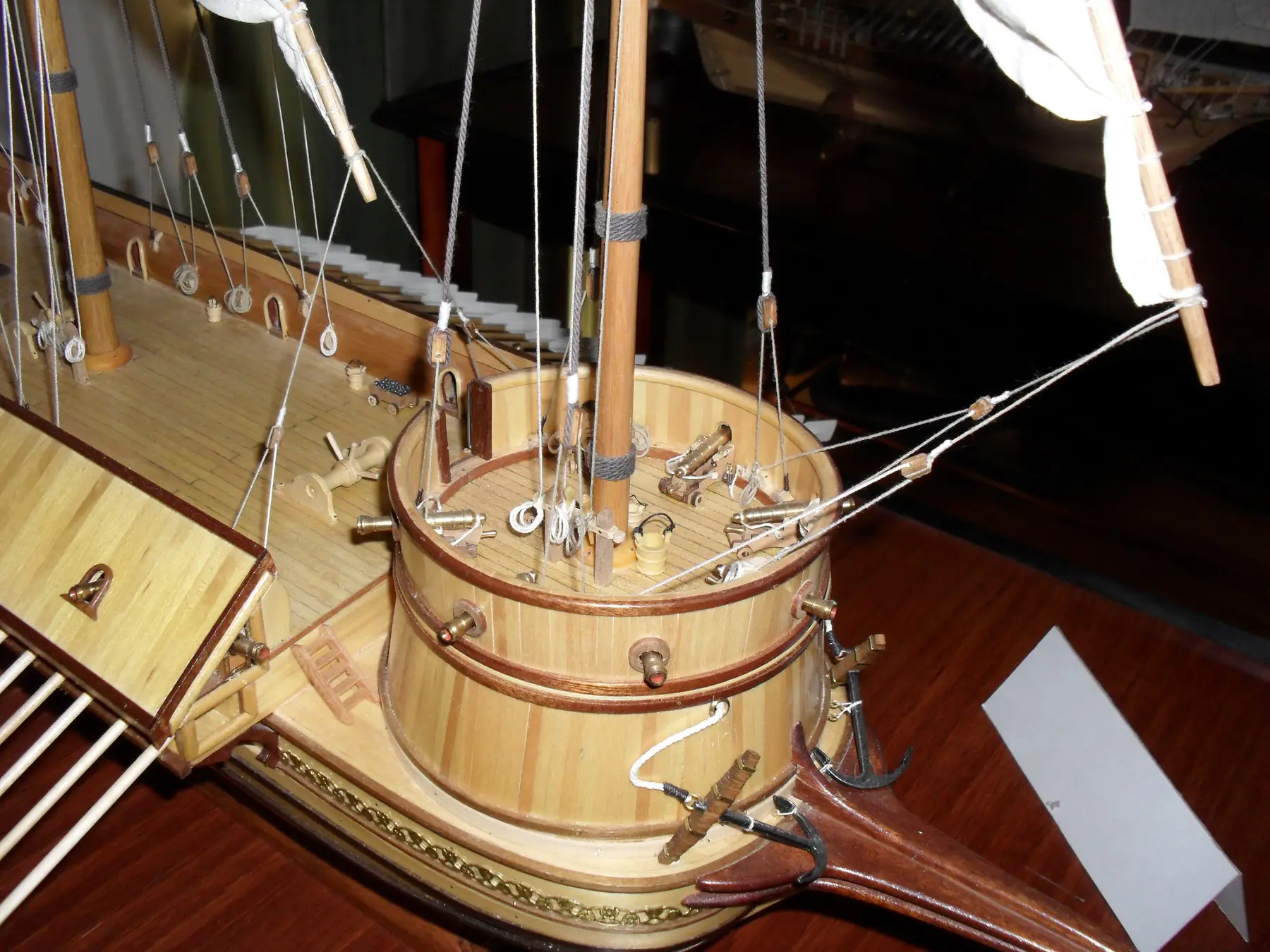
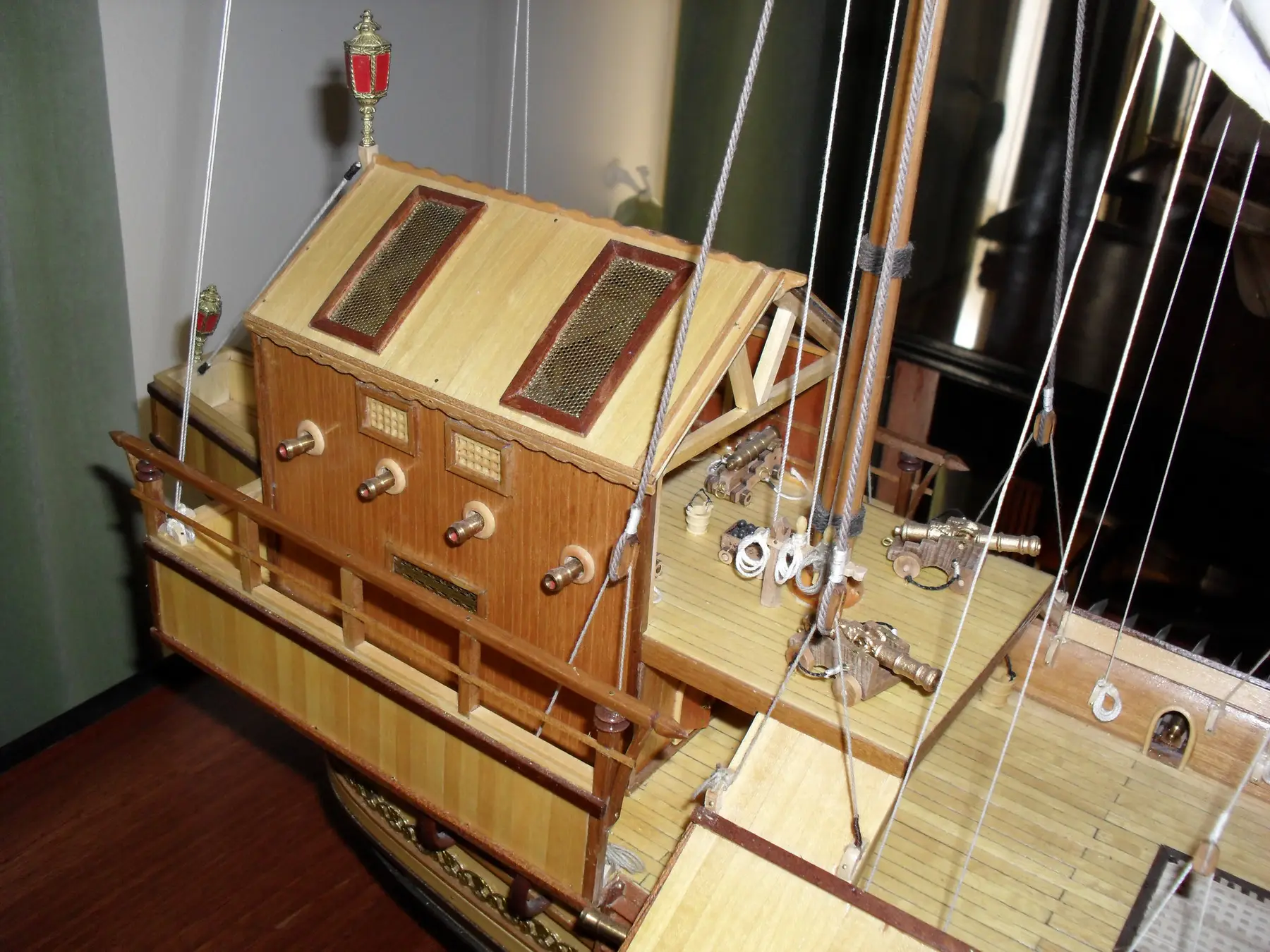
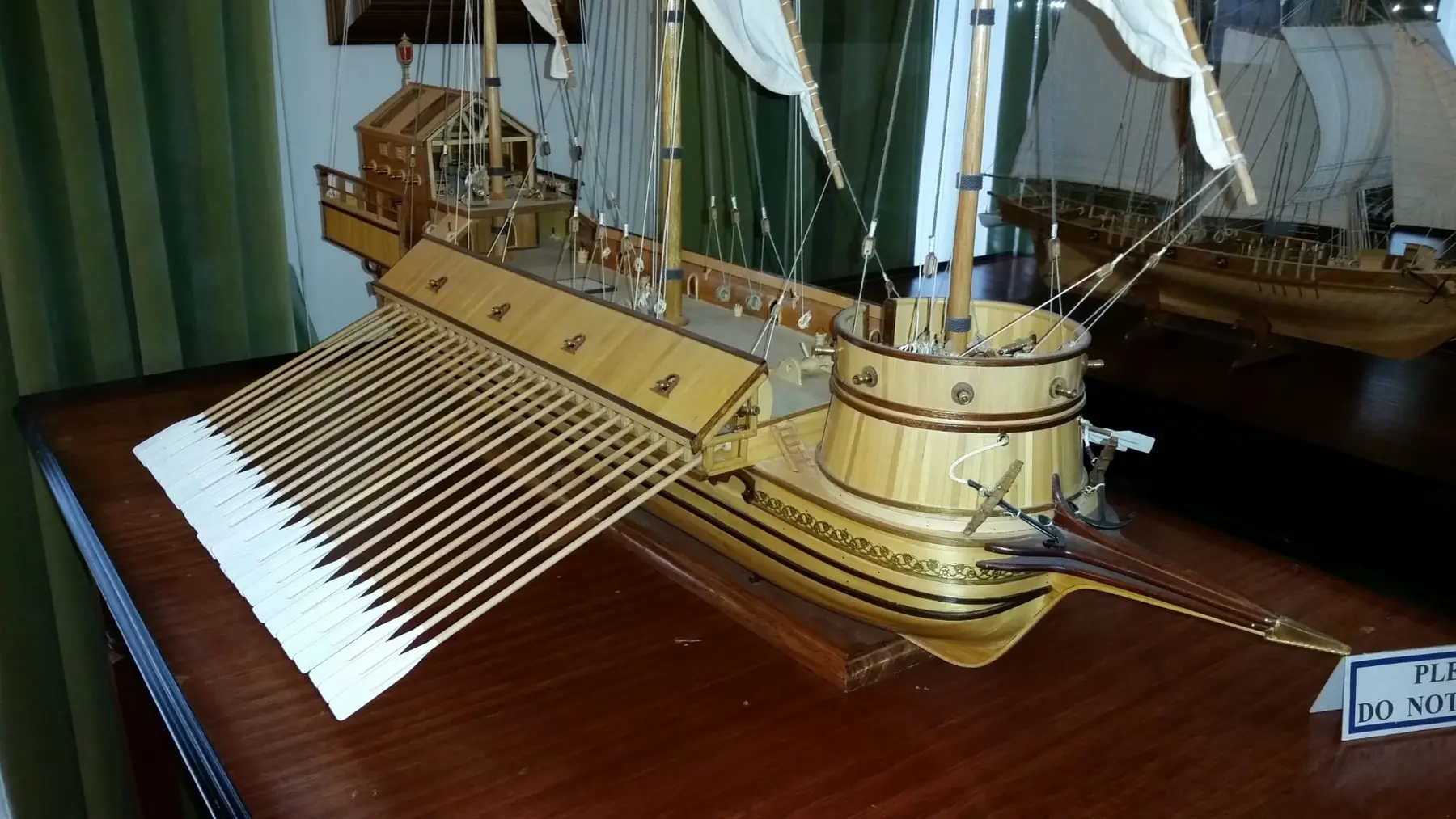
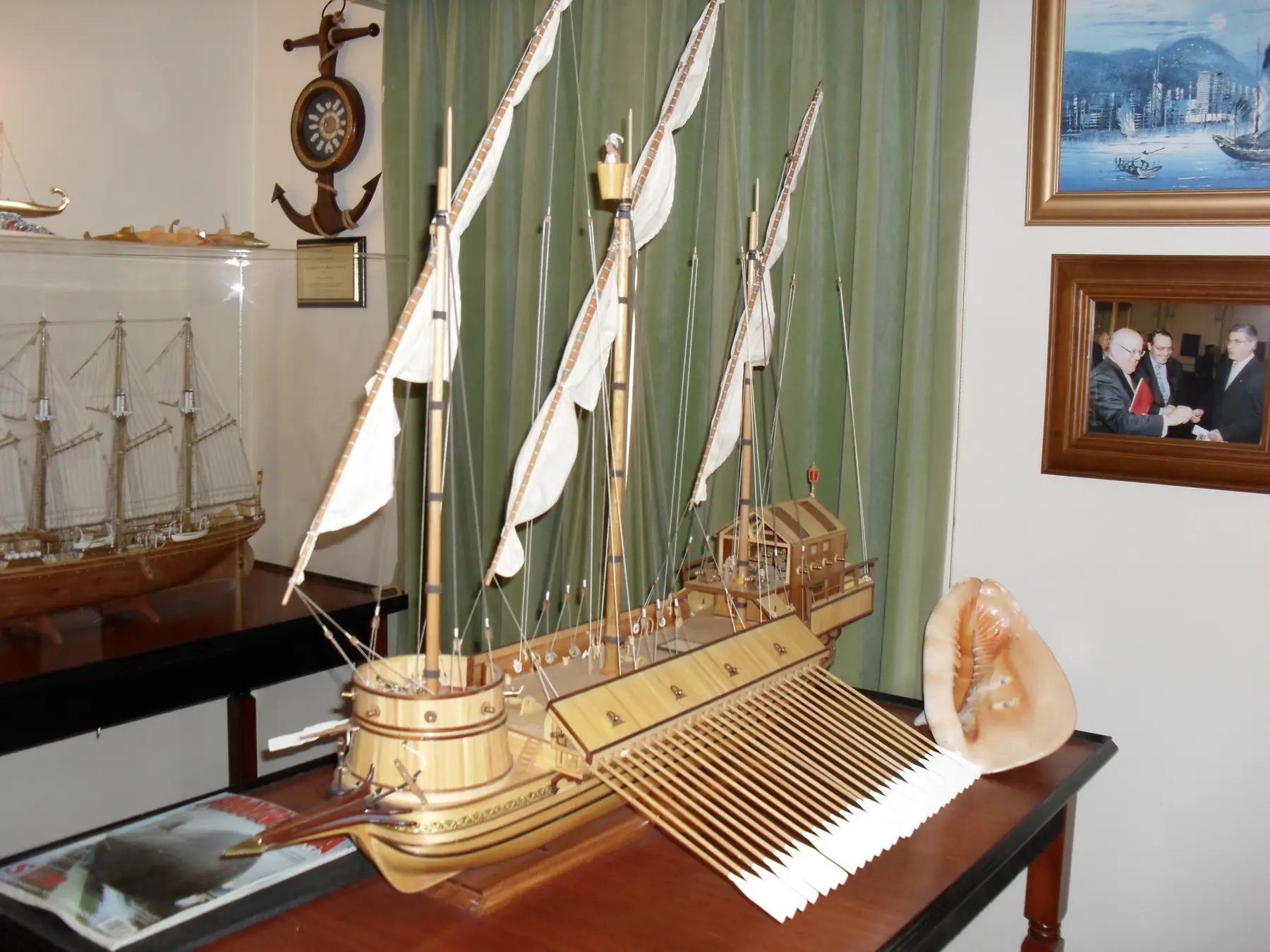
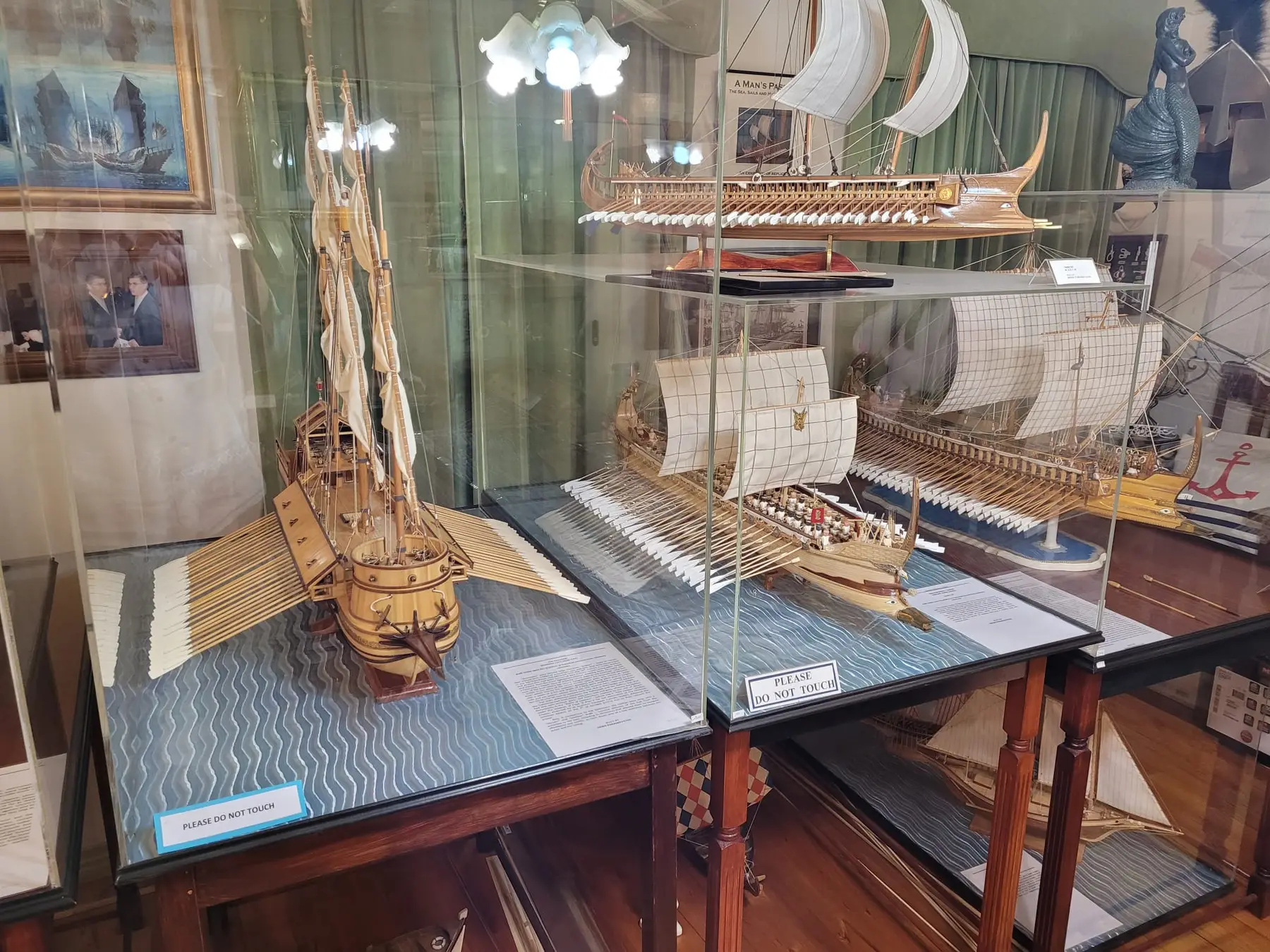
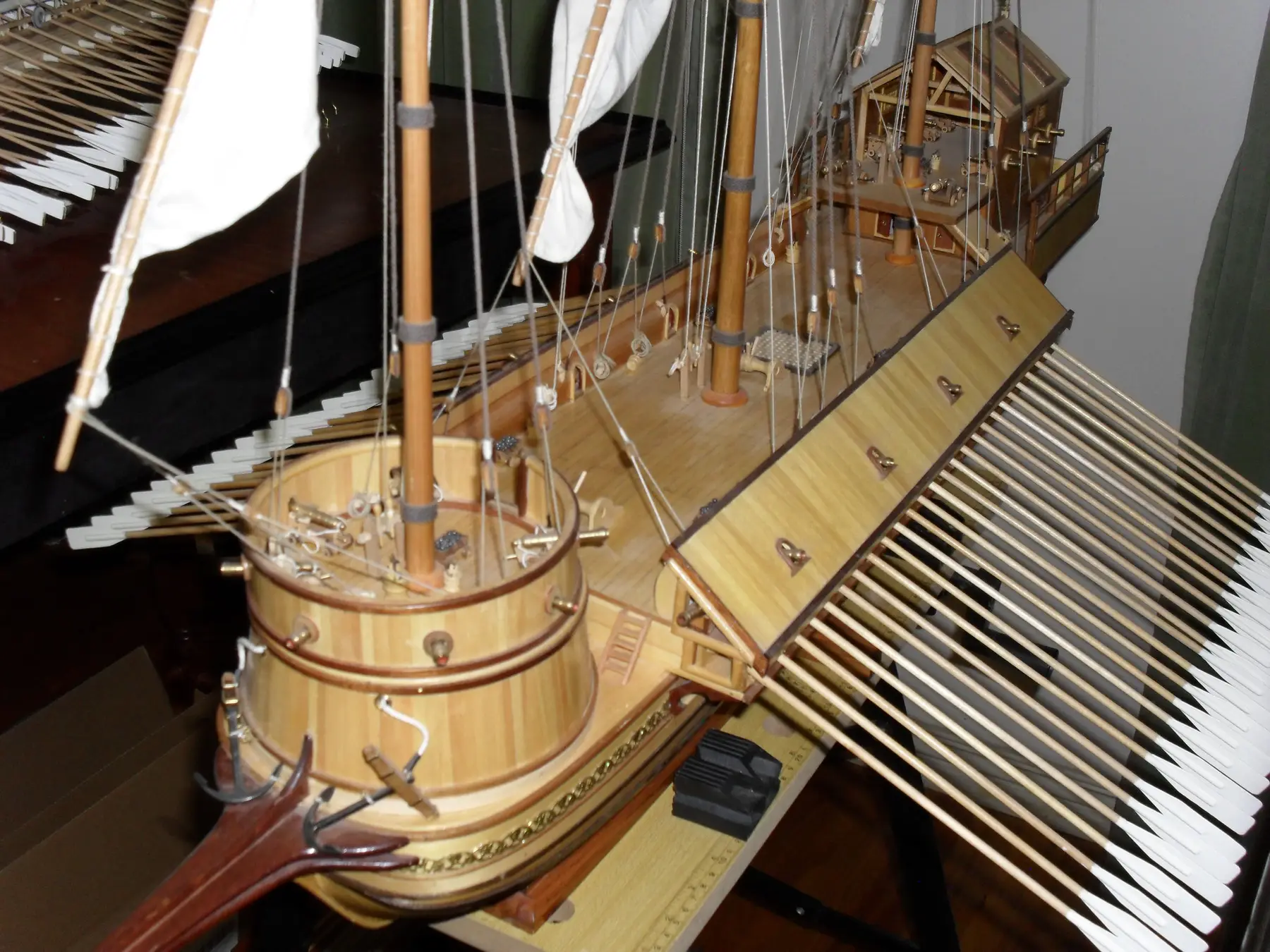
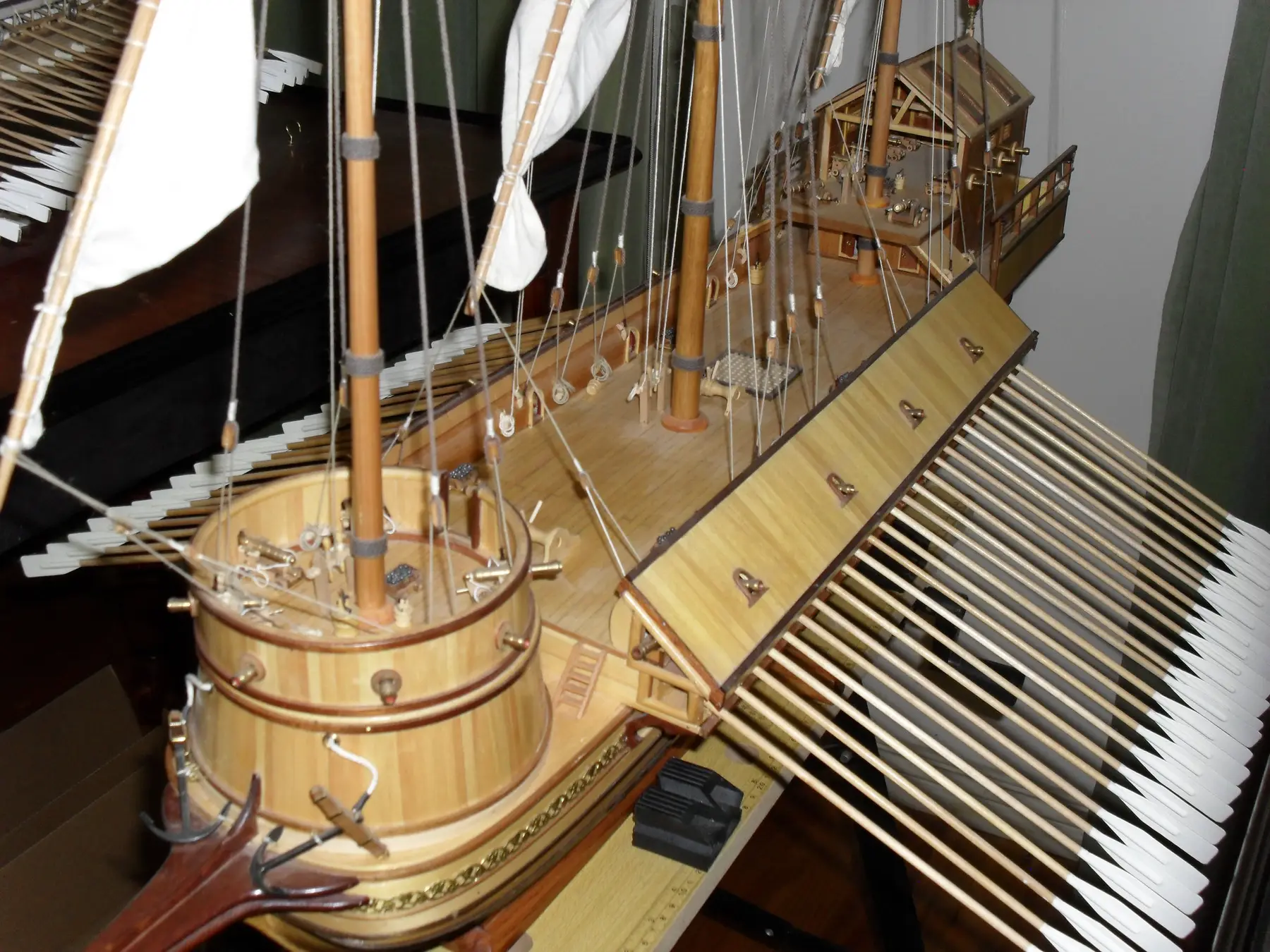
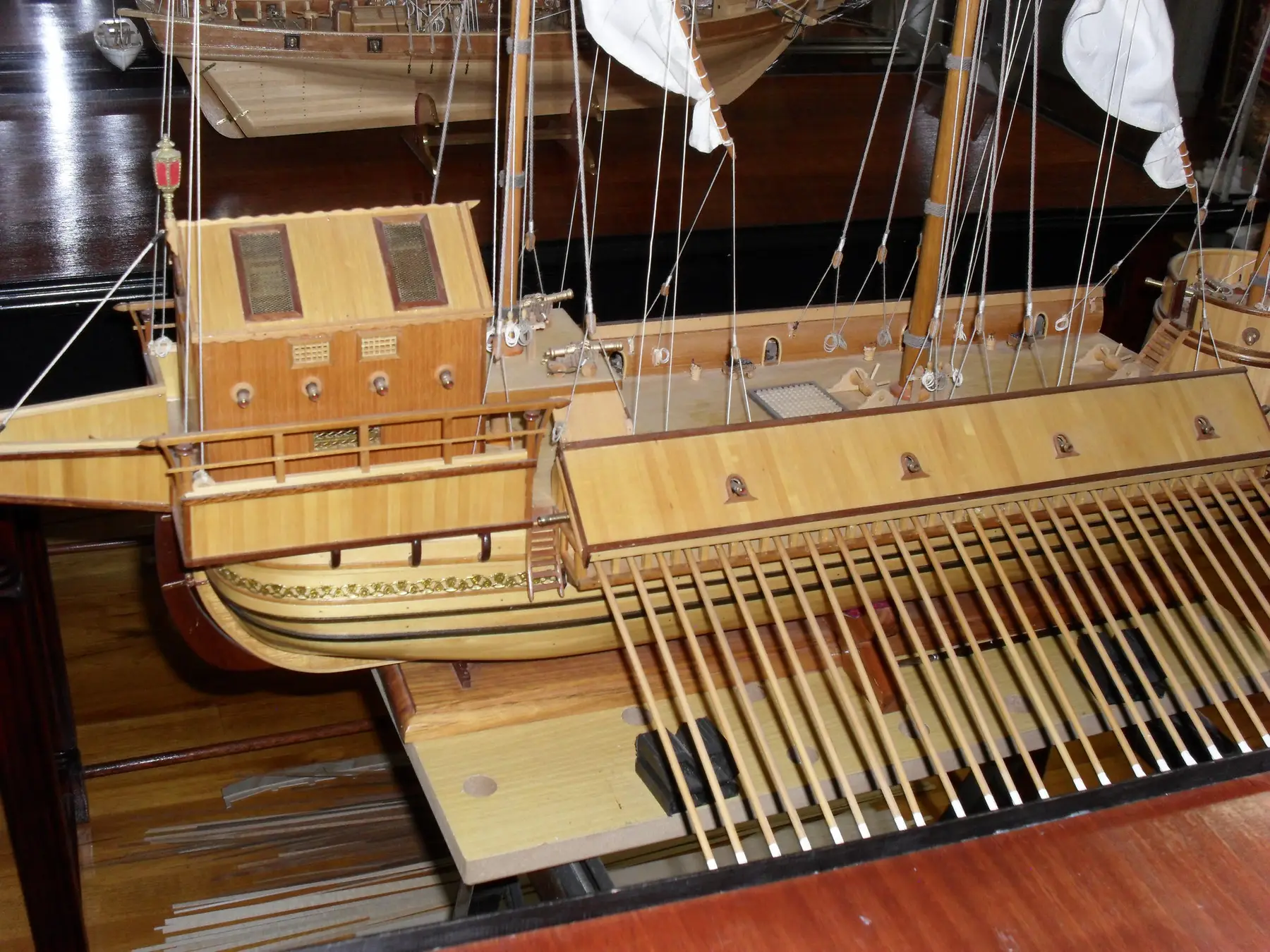
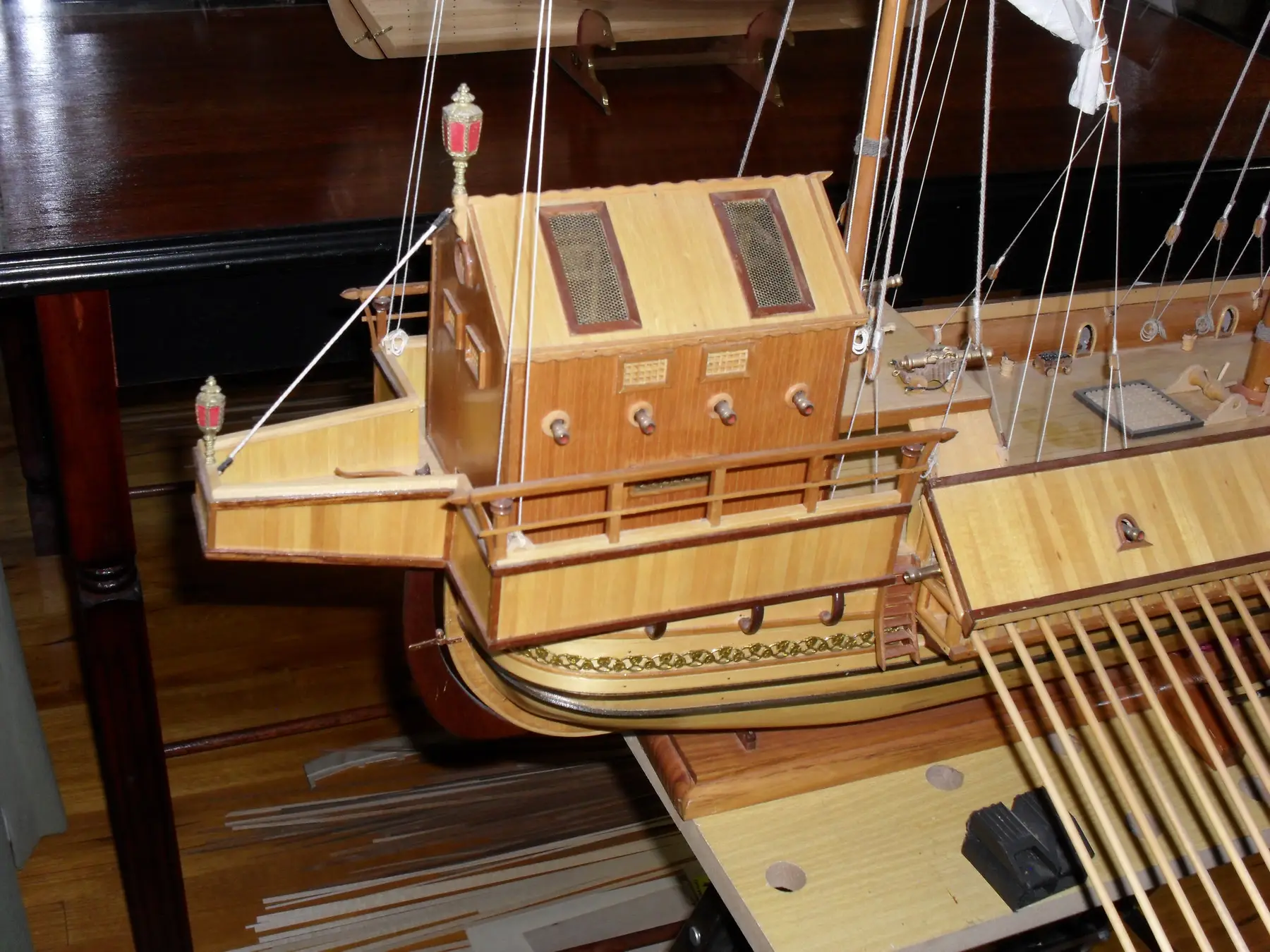
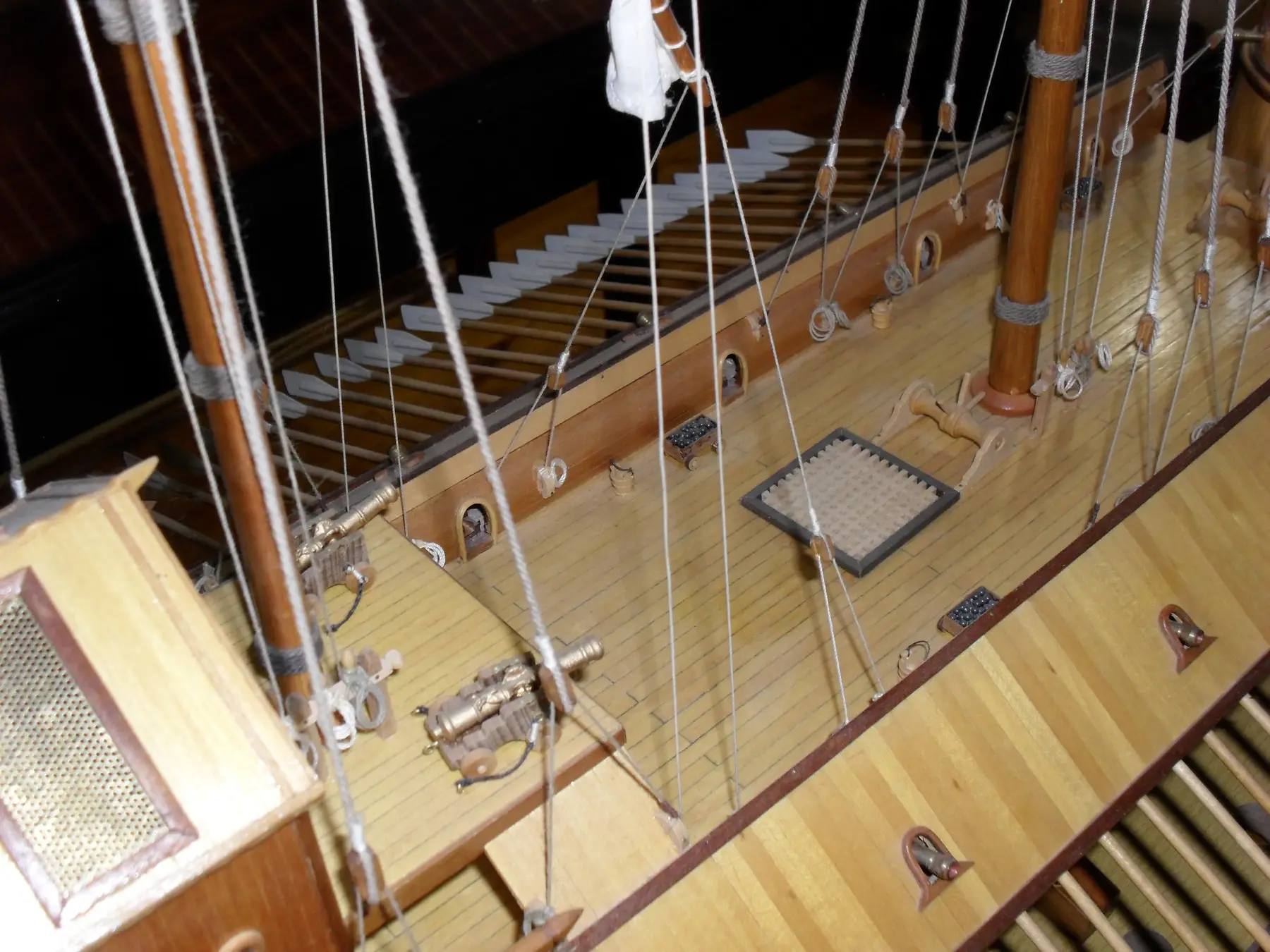
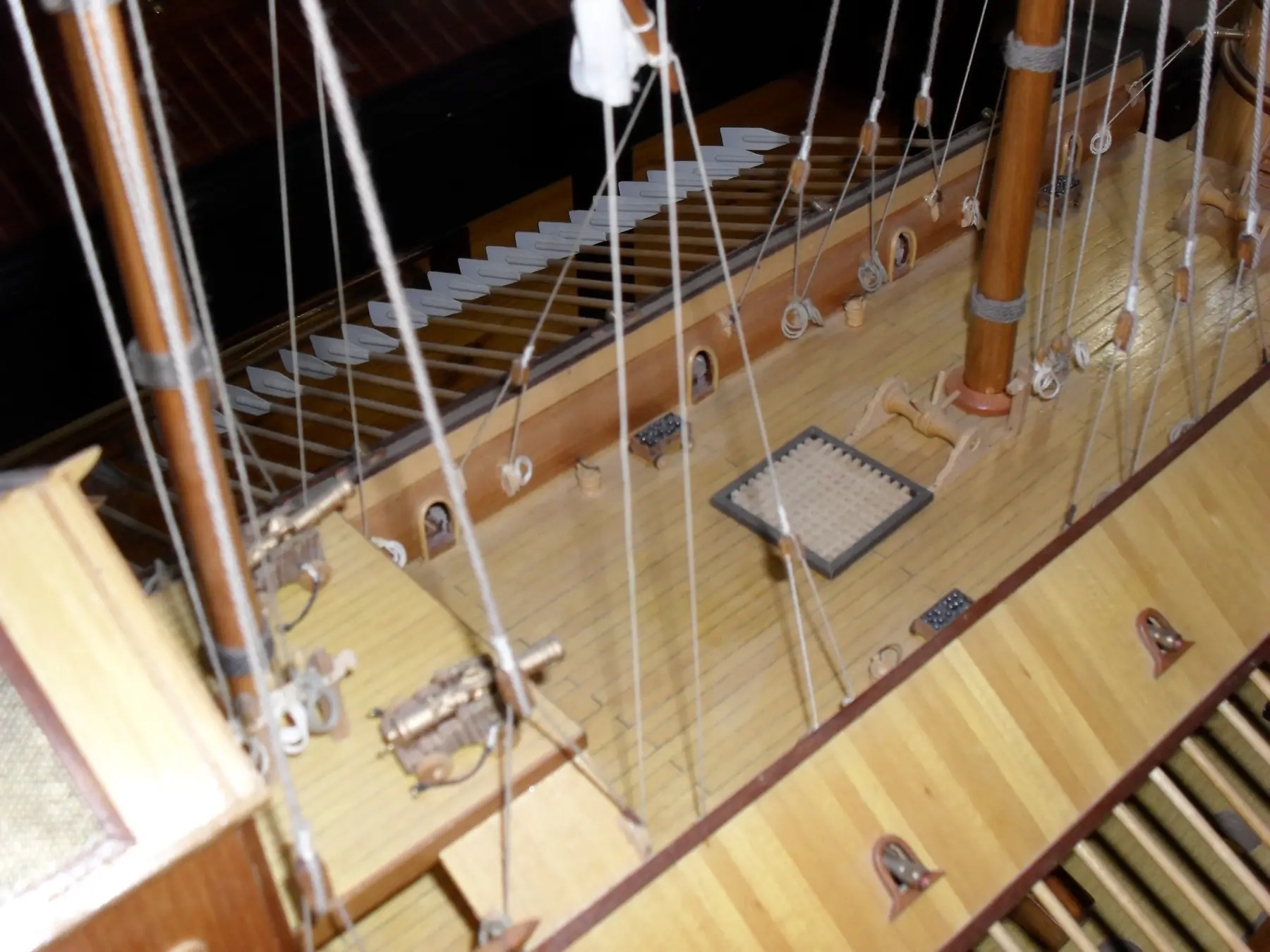
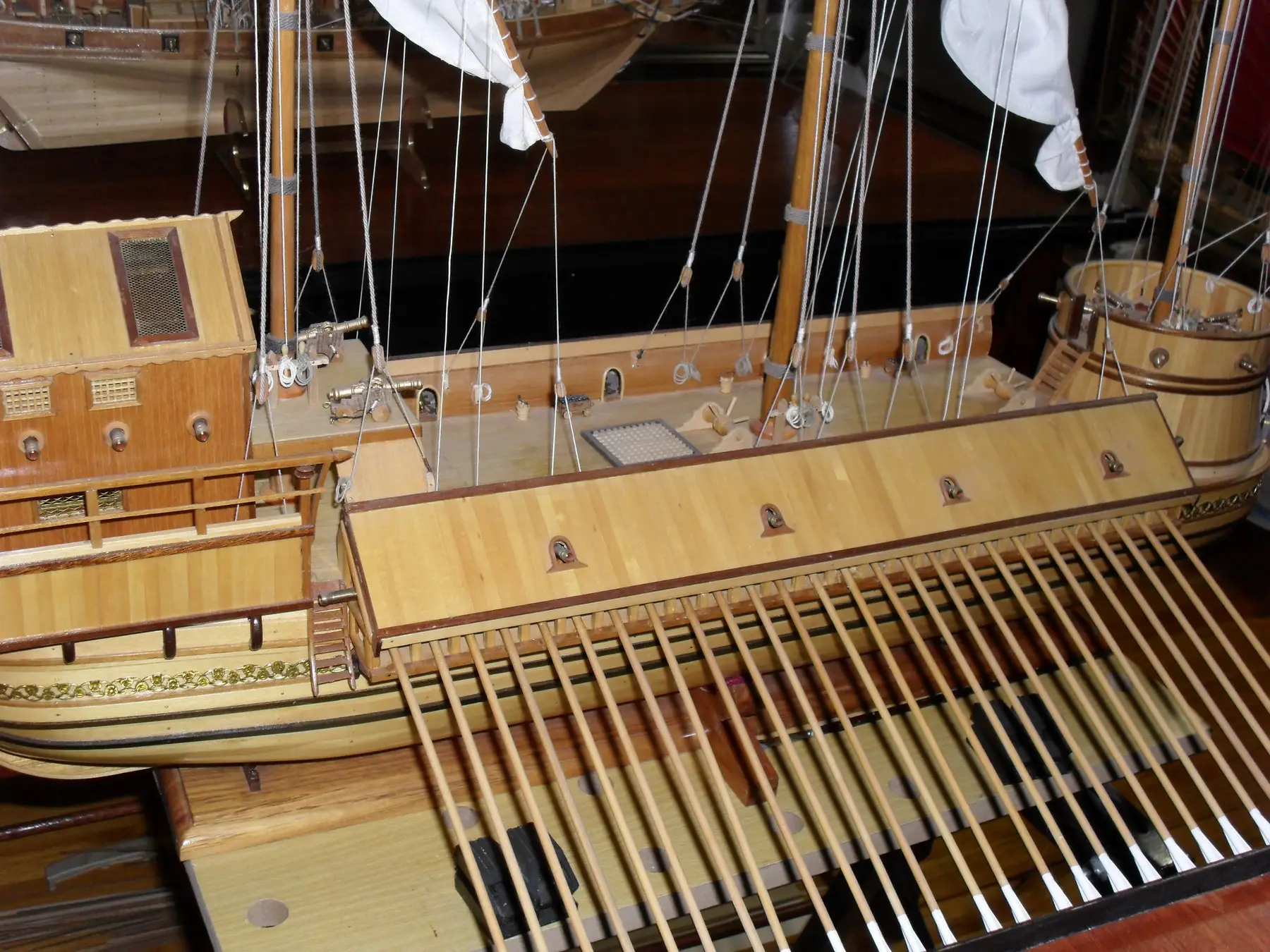
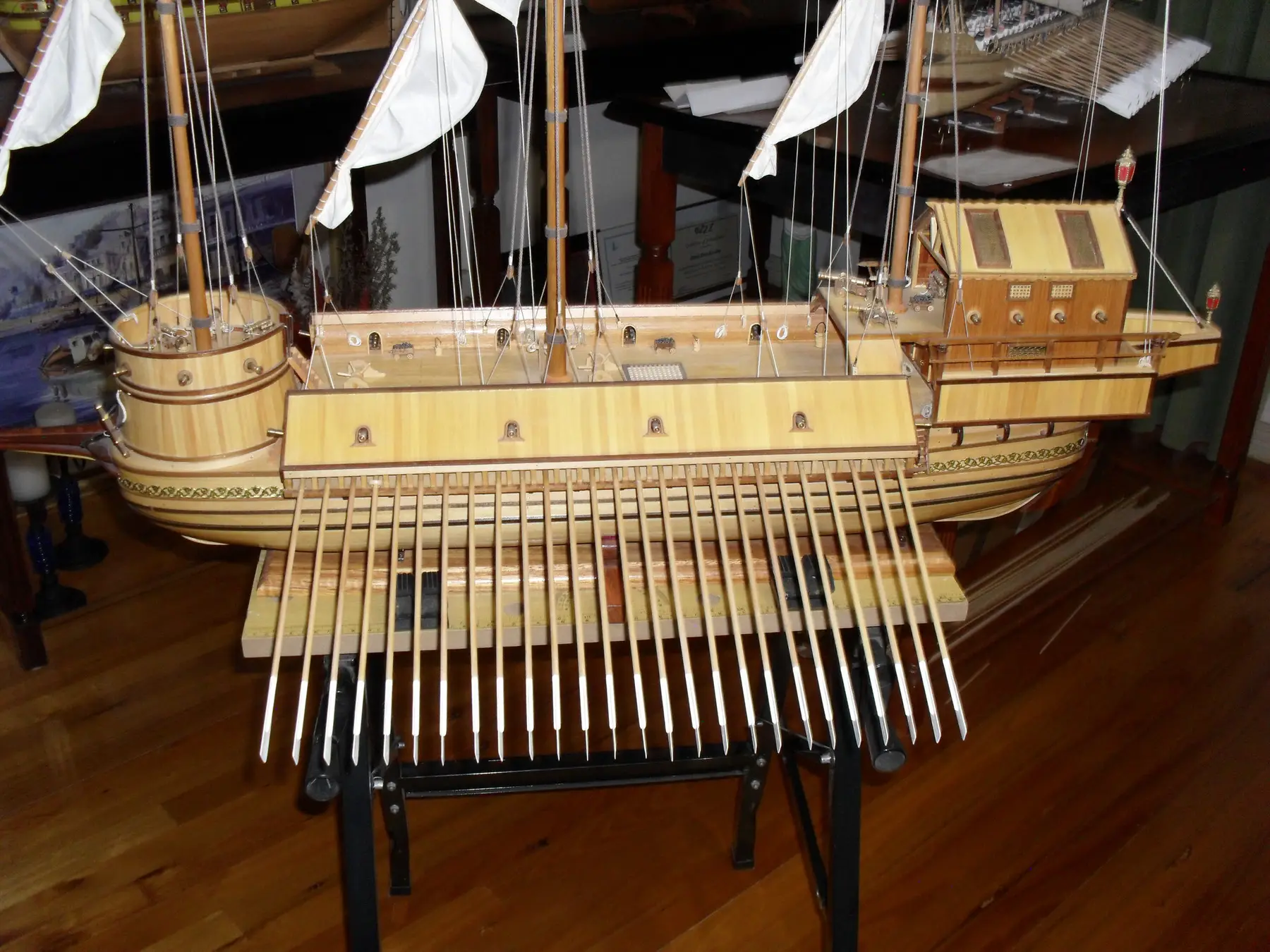
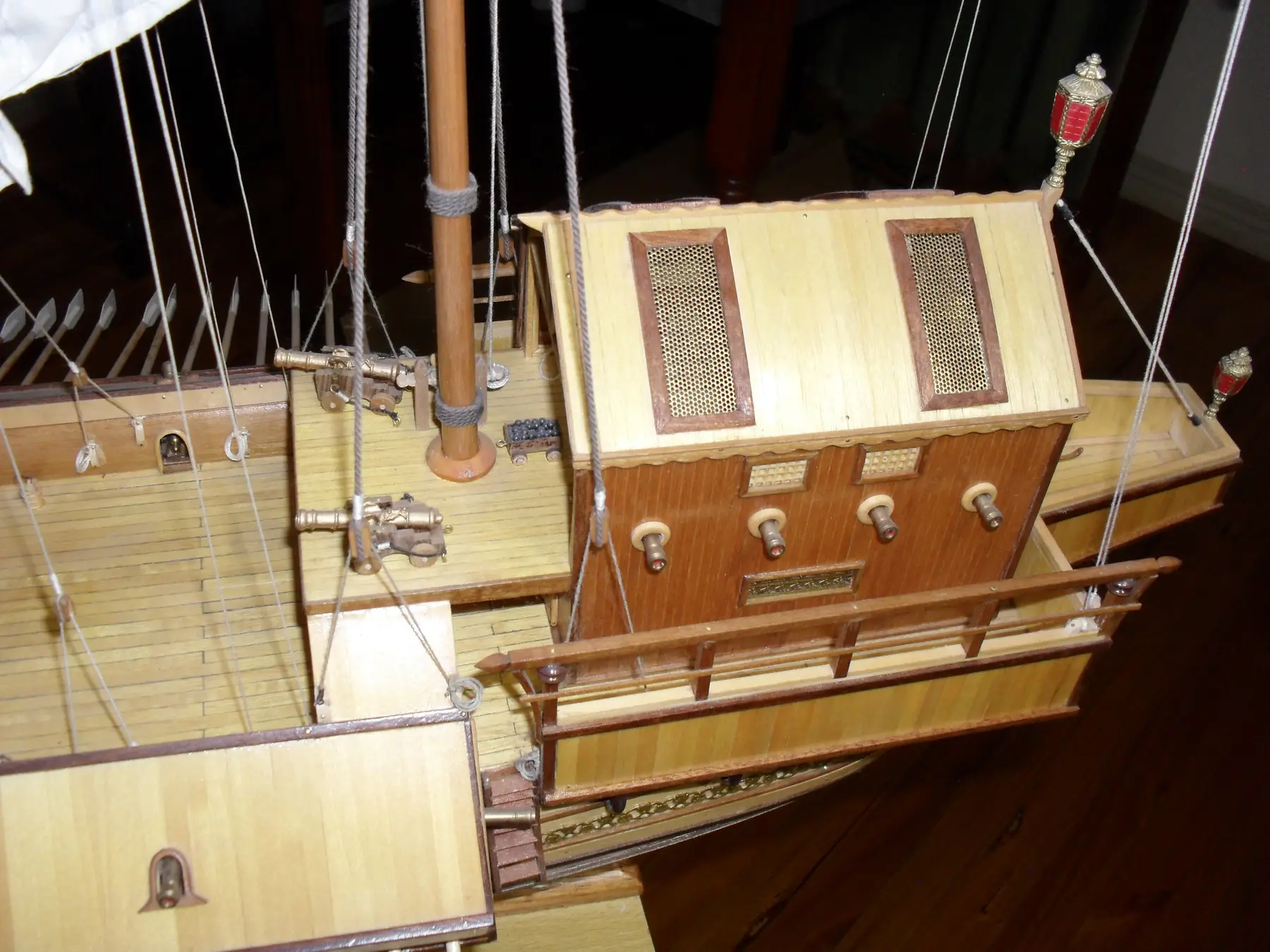
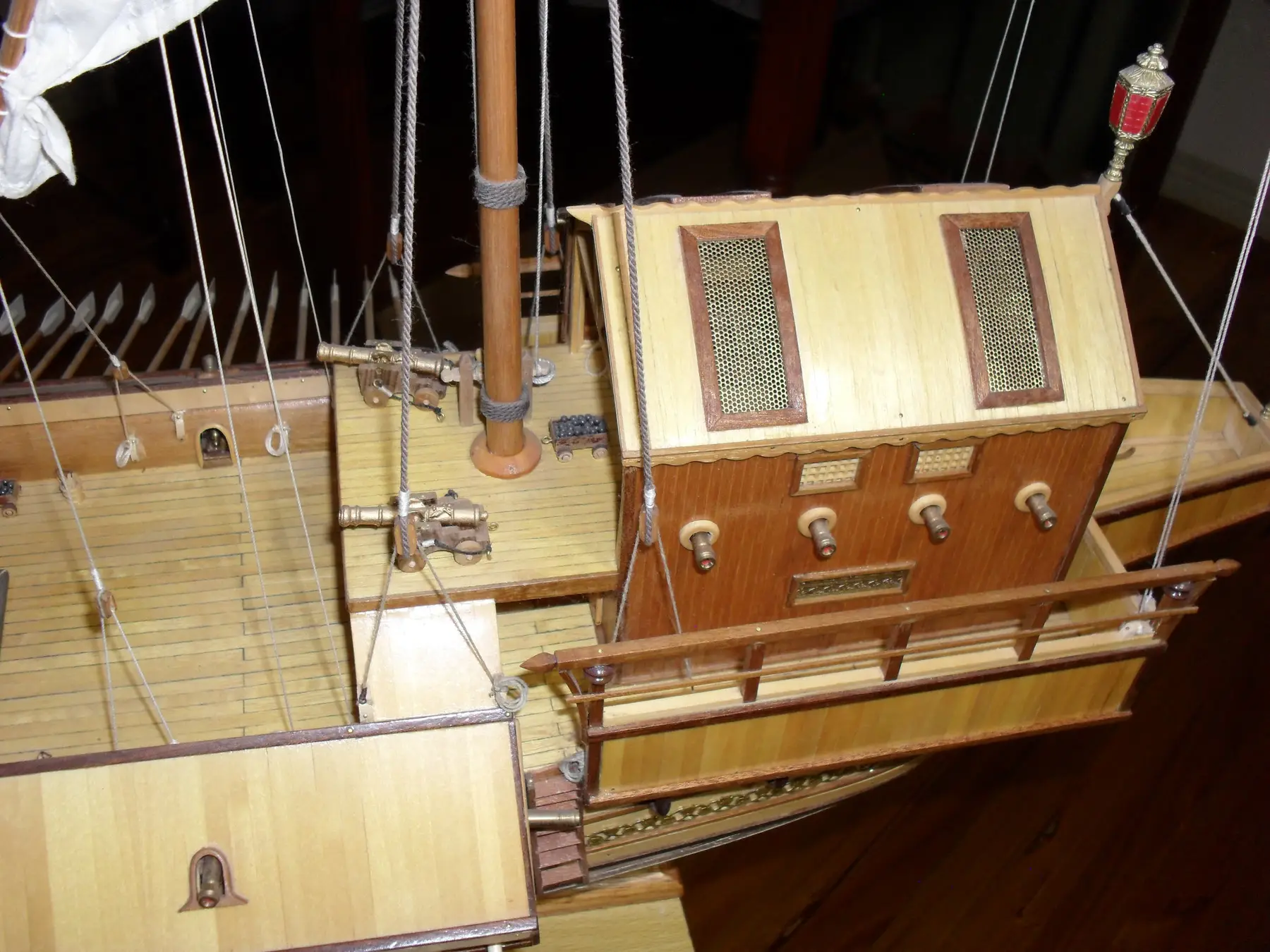
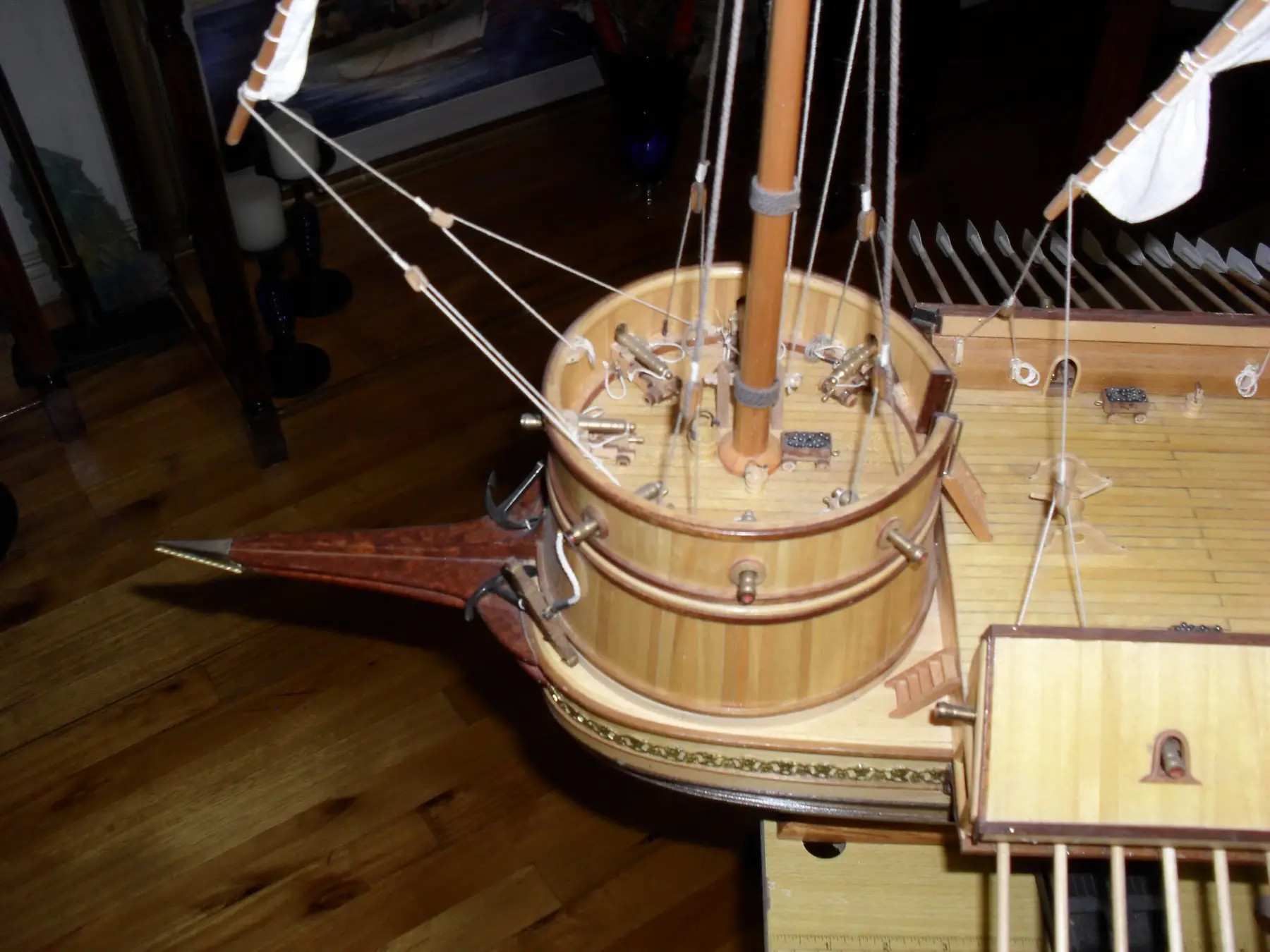
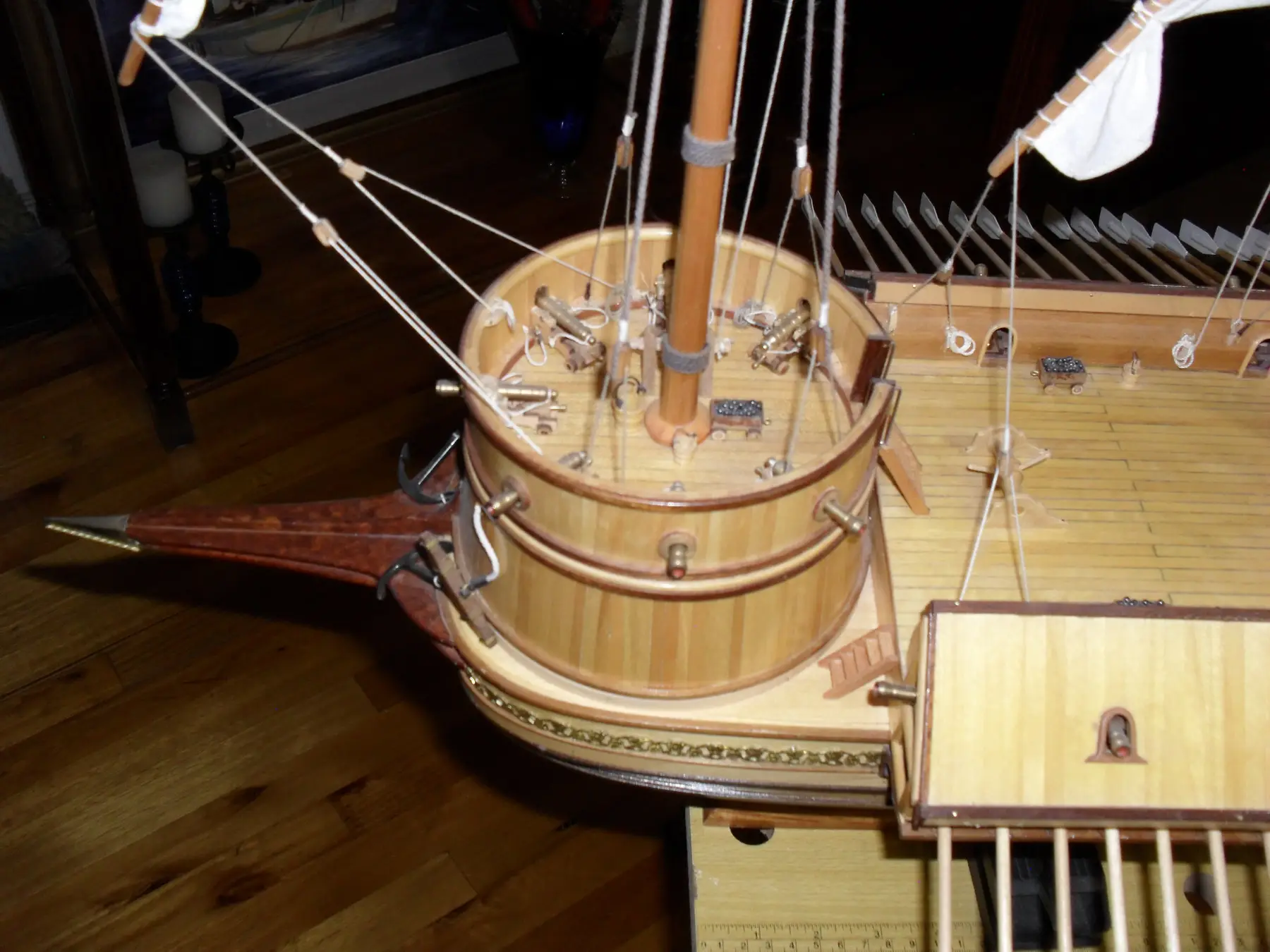
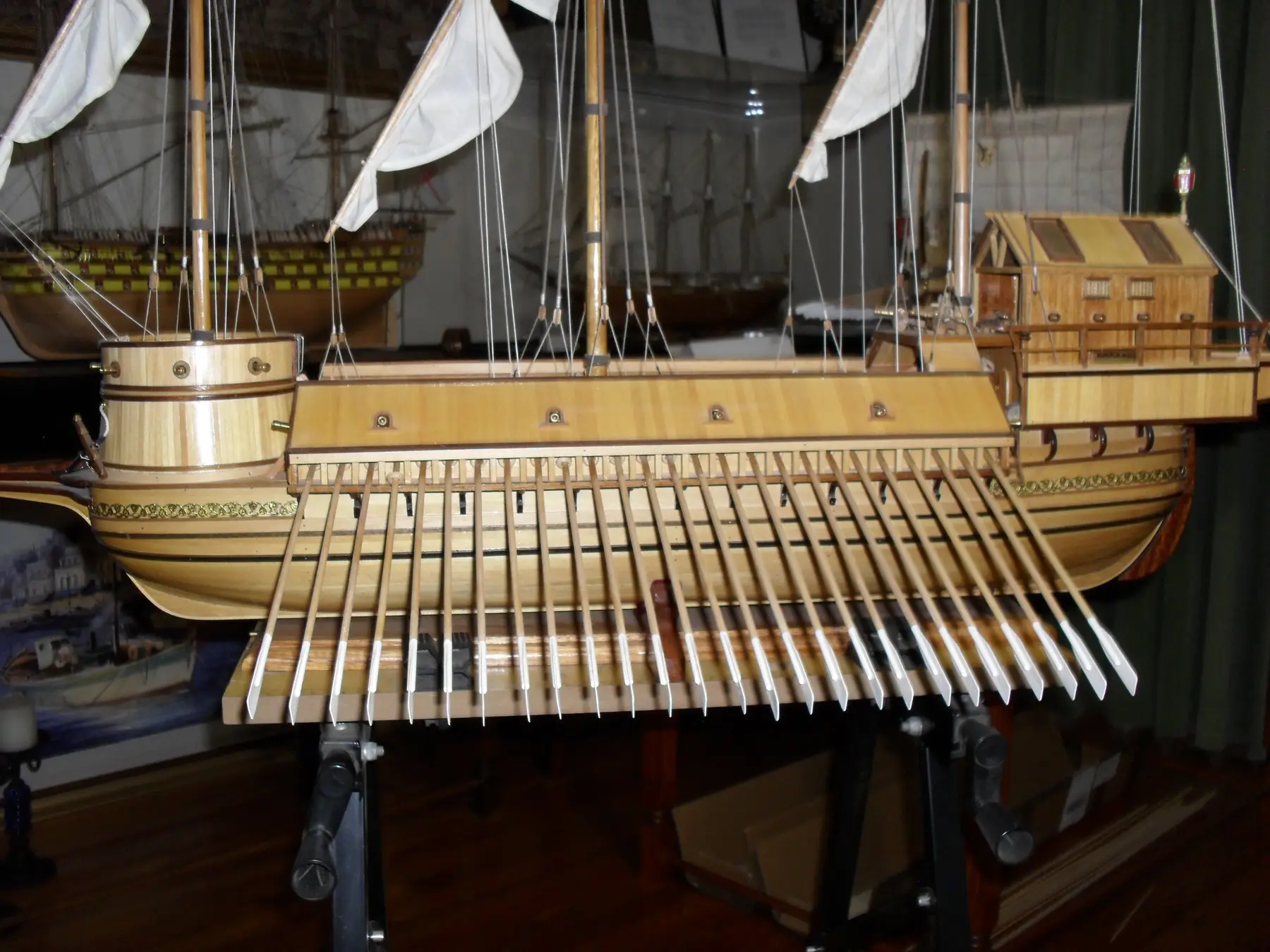
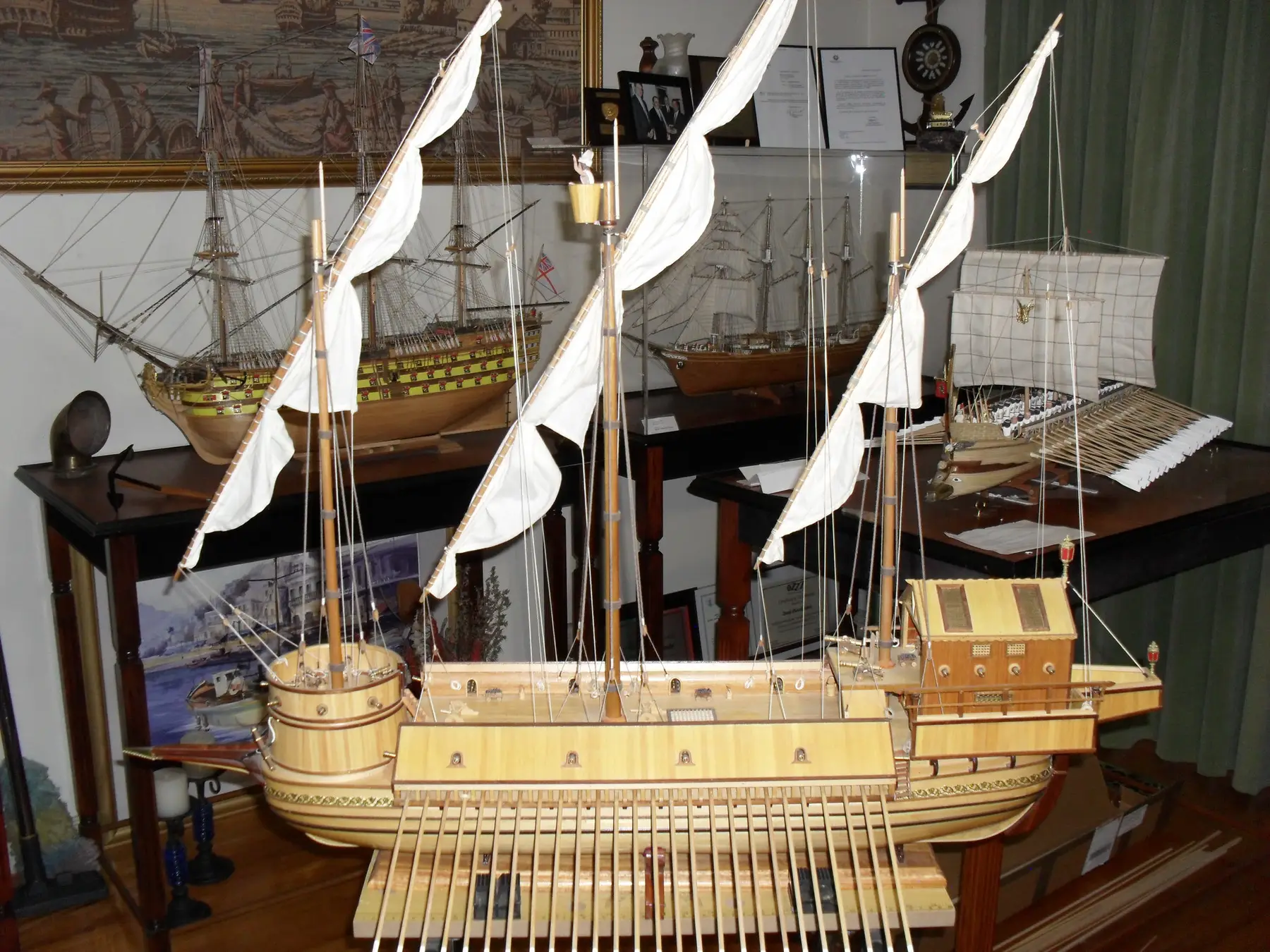
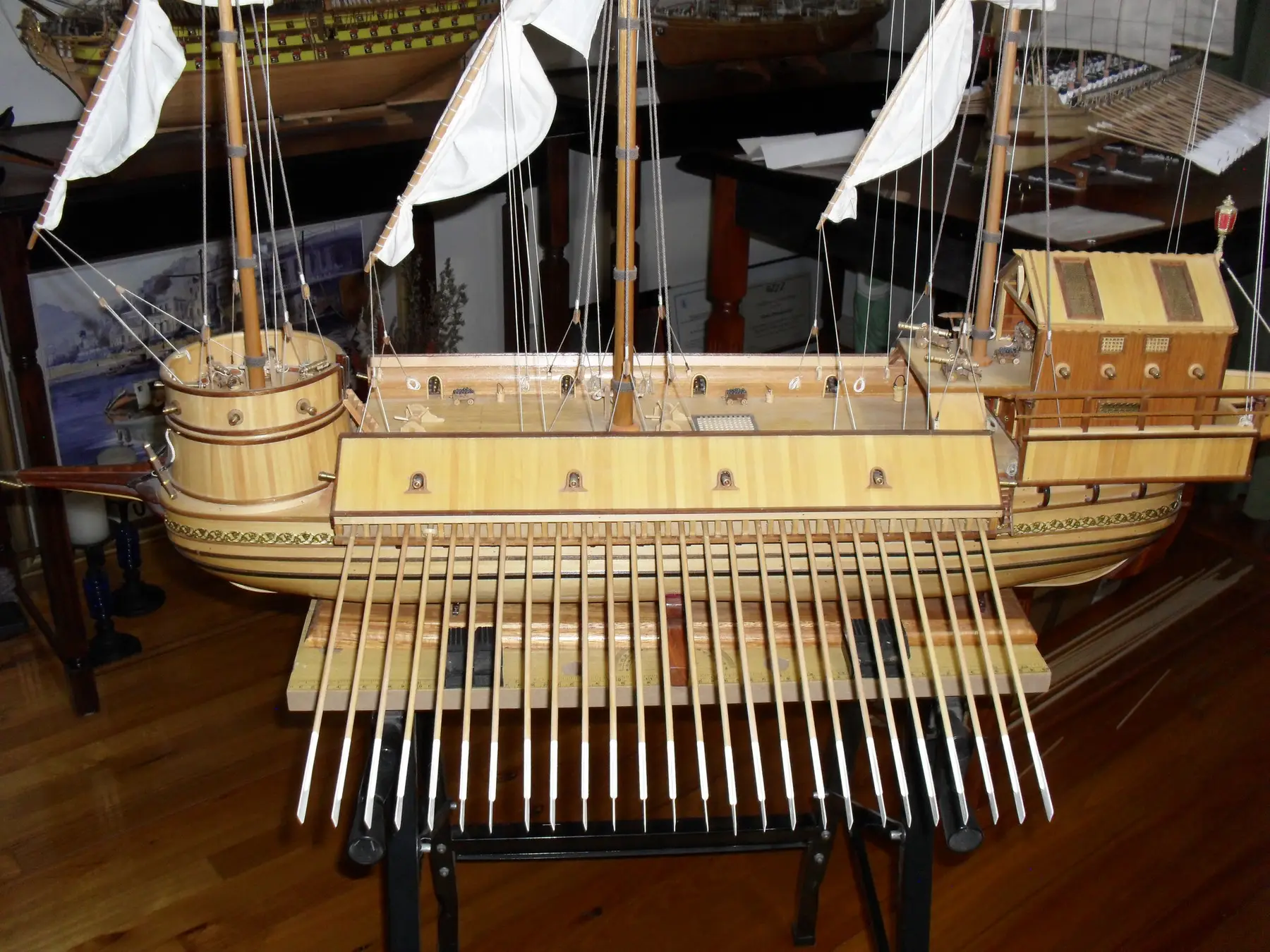
Galleasses began as large merchant galleys: Mediterranean vessels driven by both oars and sails that were used for trade, war and piracy into the 19th century. Converted into warships, galleasses were taller, larger and slower than ordinary galleys. They carried three masts, a forecastle (the raised forward deck where the sailors lived) and an aftcastle or poop deck (housing the captain’s quarters). They were more than 60 m long, 8.2 m wide and 3.3 m deep. Each of their 32 great oars needed five to nine men to work it.
The main difference from a galley was firepower. Galleasses carried more sail and guns, while galleys had less sail, no guns, and were more exposed to attack. Galleys, by contrast, were long, slender and shallow-draughted, which made them fast and nimble.
The galleasses’ firepower proved decisive at the Battle of Lepanto on 7 October 1571, when the Holy League assembled by Pope Pius V defeated the fleet of the Ottoman Empire.
About the model
The galleass is one of the ships Denis designed himself from historical research and scholarly estimates. It shows the round gun platform at the bow, the long oar deck and the high aftcastle.